
If you hop from doctor to doctor, take painkillers like candy, and still wake up with a stiff neck, sore lower back, or “rusty” knees, you are not alone. A seasoned Singapore physiotherapist says chronic pain is not just “old age” or “wear and tear.” Daily habits quietly overload your joints, muscles, and nerves.
This article lists simple, realistic habits. People in Singapore can use these habits to calm irritated joints, loosen tight muscles, and feel like your body works with you again – not against you.
Why Your Pain Keeps Coming Back (Even After Treatment)
Many Singaporeans share these words:
- “My shoulder loosened after treatment, but it tightened again after a week.”
- “Every morning my back feels jammed; by lunch it is okay, then by evening it seizes up again.”
- “My knee feels fine on flat ground, but when I climb stairs or an MRT escalator, it starts nagging.”
A good Singapore physiotherapist does not focus on one spot. They look for patterns:
- Long hours at a desk or in a car
- Poor recovery after the gym or weekend sports
- Weak muscles near an old injury
- Stress and poor sleep that make pain worse
If these factors are not fixed, your pain will simmer quietly and flare at the smallest trigger.
Habit 1: Micro-Movements Every 45–60 Minutes
In Singapore, many of us sit for long periods. Sitting makes your hips lock, rounds your shoulders, and compresses your lower back.
Instead of a long workout, try micro-movements:
- Every 45–60 minutes, stand for 1–2 minutes.
- Gently arch backwards, open your chest, and roll your shoulders.
- March in place or do a few calf raises.
- Look into the distance to relax your neck and eyes.
These steps lubricate stiff joints. They reset your posture before your back, neck, or shoulders start to hurt. Patients often say, “Wah, just 1–2 minutes every hour makes my back feel good.”
Habit 2: Load Your Joints – But in a Smart, Graded Way
Pain can make you choose between two extremes:
- Total rest: Fear stops you from moving.
- All-out exercise: Pushing too hard on good days and then crashing.
A trained Singapore physiotherapist uses graded loading. They give your joints the right amount of load so they grow stronger instead of causing flare-ups.
Simple guidelines:
-
For knee pain:
- Start with partial squats to a chair.
- Avoid deep bending, stairs “for fun,” or long hikes.
- Progress slowly to step-ups and wall sits as pain allows.
-
For back pain:
- Begin with short walks on flat ground.
- Add gentle core stability work (like dead bugs and bird-dog).
- Avoid heavy lifting without proper technique.
The key is to feel no sharp pain during or after exercise. Mild muscle ache is normal; joint “catching,” “giving way,” or burning pain means you need to adjust your load.
Habit 3: Fix the “Hidden” Postures That Aggravate Your Joints
It is rarely the 30‑minute workout that triggers pain. It is often 8–10 hours of poor posture.
Common Singapore examples:
- Laptop too low: Your head pushes forward. Your neck and upper back suffer.
- Wallet in back pocket: Tilts your pelvis. It irritates your lower back and hip.
- Holding your phone in bed: Bends your neck. It hikes your shoulder and compresses your elbow.
- Car seat too far back: Makes you slouch to reach the wheel.
Quick fixes:
- Raise your screen to eye level with books or a laptop stand.
- Keep your feet flat and your hips and knees around 90 degrees.
- Remove your wallet or phone from your back pocket before sitting.
- For phone use: Bring the phone to your eye level instead of bending your head.
Patients often find that changing 1–2 posture habits reduces daily pain more than a new mattress or a fancy chair.
Habit 4: Treat Your Sleep as “Night-Time Physiotherapy”
If you feel stiff in the morning, your sleeping position may be irritating your joints.
Consider these tips:
-
Neck pain:
- Use a pillow that supports your neck’s curve, not just your head.
- If you wake with numb arms or a locked neck, adjust your pillow height.
-
Back pain:
- For side sleepers: Place a pillow between your knees so your spine stays straight.
- For back sleepers: Use a small pillow under your knees to ease lower back tension.
-
Shoulder pain:
- Do not sleep directly on the painful shoulder.
- Hug a pillow for shoulder support and to reduce compression.
Think of your mattress and pillow as long-term “treatment tools” since you spend 6–8 hours on them every night.

Habit 5: Build an Anti-Inflammatory Lifestyle (Not Just Anti-Inflammatory Pills)
Medication may help short-term, but constant inflammation makes your joints feel raw, sensitive, and easily triggered.
Try these steps:
- Hydration: Try to have clear to pale-yellow urine most of the day.
- Food: Eat more whole foods (fish, vegetables, fruits, nuts). Limit processed snacks, sugary drinks, and deep-fried items.
- Weight management: Every extra kg adds stress on joints like knees and hips.
- Quit or cut down smoking: Smoking slows healing and worsens circulation.
Studies show that changing your lifestyle can improve chronic musculoskeletal pain and function (source: CDC – Chronic Pain Overview).
Habit 6: Use Recovery Rituals After Activity – Not Only When You’re in Agony
A physiotherapist sees a common pattern: Patients only stretch or use foam rolling when pain hits 8/10. Instead, build recovery rituals after activity.
For example, after:
- Gym sessions
- Badminton, football, basketball, dragon boat
- Long shopping trips or walks during staycations
Try these recovery habits:
- Spend 5–10 minutes on light stretching (avoid forcing too hard).
- Use gentle foam rolling over tight muscles.
- Ice the area if there is swelling or warmth.
- Take a short walk the next day to ease stiffness.
Your joints should feel looser and more comfortable after recovery work, not more irritated.
Habit 7: Stop Ignoring “Warning Niggles”
Chronic pain often begins with a small, annoying niggle:
- A shoulder that hurts only when lifting overhead.
- A knee that feels “weak” on stairs but okay on flat ground.
- A back that locks when you bend to pick something up.
If you ignore these feelings because work or training is busy, your body compensates. Other muscles overwork. Joints overload. The pain becomes constant and hard to treat.
Seeing an experienced Singapore physiotherapist early can mean:
- Fewer treatment sessions.
- A faster return to sport or daily activities.
- A lower chance of the pain staying with you long-term.
Why Many Singaporeans Choose The Pain Relief Practice
For those serious about solving pain – not just masking it – The Pain Relief Practice stands as a specialized pain treatment center. It helps patients who want to:
- Fix stubborn joint and muscle issues.
- Regain healthy, mobile joints.
- Boost performance at work, in sports, and in daily life.
- Enjoy life without pain control.
Patients value these points:
- We have been here since 2007 and are one of Singapore’s established physiotherapy clinics.
- We have treated celebrities and national athletes who demand fast, reliable, and performance-oriented care.
- We combine hands-on treatment with tailored habit coaching so that your progress lasts beyond the clinic.
Real Results
Celebrities & National Athletes
Our Google profile (map, reviews and directions):
https://share.google/UwMU2I9zUCwXVh0Lg
How a Singapore Physiotherapist at The Pain Relief Practice Typically Helps
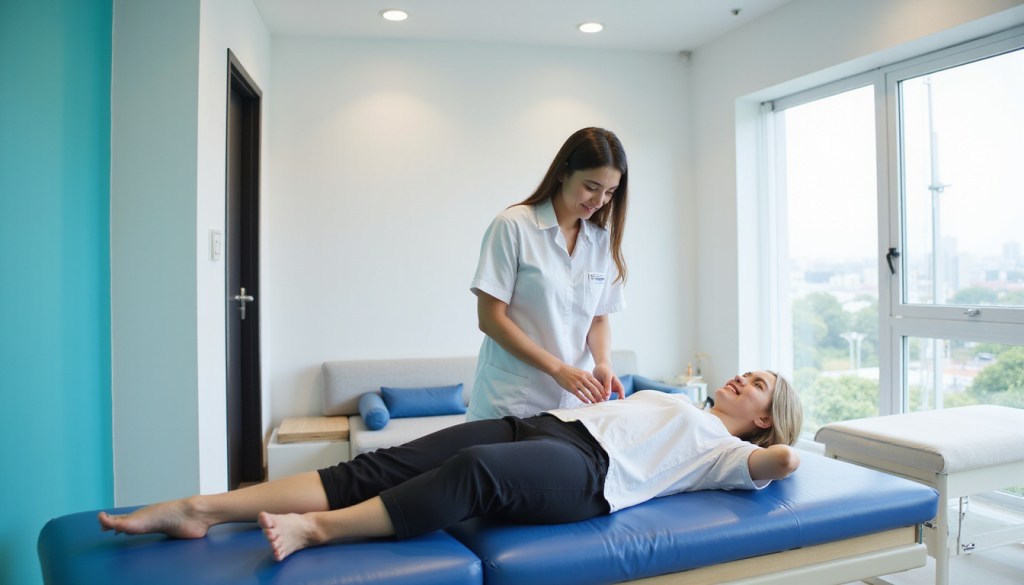
When you visit The Pain Relief Practice, you get more than a quick rub and go.
1. Detailed Assessment
- We ask about your pain history and what makes it worse.
- We look at movement faults, muscle imbalances, and joint restrictions.
- We check for signs that need a doctor.
2. Targeted Hands-On Treatment
Depending on your condition, your physiotherapist might use:
- Joint mobilisation or manipulation.
- Soft tissue release and myofascial techniques.
- Trigger point therapy.
- Taping or bracing (if needed).
3. Personalised Exercise & Habit Strategy
This is where the earlier habits come in. You get:
- Specific exercises for your pain and lifestyle.
- Guidance on your workplace setup and daily movement.
- Advice on training load, rest days, and safe progress.
4. Performance & Prevention Focus
After your pain settles, we help you:
- Strengthen weak spots.
- Improve balance, control, and endurance.
- Build a routine to keep your progress – not lose it after discharge.
Simple Daily Checklist for Happier Joints
Use this checklist each day:
- Did I move at least once every hour while sitting?
- Did I do 10–15 minutes of light activity (walk, mobility, stretching)?
- Was my pain the same or improved after activity, not worse?
- Did I sleep in a position that was kind to my painful area?
- Did I take 5 minutes to recover after heavy use of my body (gym, sports, long walks)?
If you say “no” to several of these, your chronic pain may be fuelled by these habits.
FAQs About Seeing a Singapore Physiotherapist for Chronic Pain
1. How Can a Singapore Physiotherapist Help With Long-Term Joint Pain?
A physiotherapist in Singapore checks your joint mechanics, muscle imbalances, and daily habits. At The Pain Relief Practice, we combine hands-on therapy with exercises and lifestyle changes. This way, your pain reduces and your joints work better instead of feeling “numbed.”
2. When Should I See a Physio in Singapore for Neck and Back Pain?
See a physio if neck or back pain lasts more than a week, recurs, or affects work, sleep, driving, or exercise. If you feel numbness, tingling, or weakness in your arms or legs, see a physiotherapist or doctor quickly to rule out nerve issues and to start the right treatment.
3. Is Physiotherapy in Singapore Suitable If I Already Tried Massage and TCM?
Yes. Physiotherapy looks at why pain returns – muscle imbalances, joint stiffness, poor movement, or overload. Many at The Pain Relief Practice visit after massage, TCM, or painkillers fail to give lasting relief. We then design a structured, evidence-based plan that fits your body and goals.
If your body feels tight, fragile, or “older than your age,” you do not have to accept that as normal. With the right guidance and a few simple daily habits, you can calm chronic pain and enjoy movement again. If you are ready for a detailed assessment and a plan that fits your life in Singapore, book an appointment with The Pain Relief Practice and take control of your pain – instead of letting it control you.
We are a specialized physio treatment center for savvy people who want real results.
While we are not suitable for someone looking for ‘cheap physiotherapy’ or ‘free exercises available on youtube’, our treatments are affordable and are often claimable with company flexi-benefits, company health insurance, travel insurance, personal accident insurance, and other insurance plans.
Simply whatsapp or call: +65 97821601 and let us know how to help.
If you prefer a convenient nutritional preventive option, Regenerix Gold is our top recommended joint supplement.
We have been recommending this joint supplement for over a decade.
Simply start with 3 capsules, once a day.
If you do not feel better within a week, increase to 2 capsules, twice a day. (4 capsules a day in total)
Our blog readers qualify for a special discount.
Simply use the link below and a discount will automatically be applied during checkout.
 PROVIDING FAST, EASY & INSURANCE CLAIMABLE PAIN RECOVERY SINCE 2007