
If you’ve had chest pain, a stent, bypass surgery, a heart attack, or been told you have “weak heart function,” you have likely heard the term cardiac rehabilitation in the hospital. In Singapore, many people hear it as physiotherapy “for the heart.” When done well, cardiac rehabilitation may help you live without constant fear and return to work, life, and sport with confidence.
Below is a practical guide for people in Singapore who know the feeling of joint and muscle aches or stiffness—and now also need to protect a sensitive heart.
What exactly is cardiac rehabilitation?
Cardiac rehabilitation (cardiac rehab) is a medically guided, step-by-step program. It helps you to:
• Recover safely after a heart event or surgery
• Strengthen your heart and blood flow
• Improve stamina without straining your joints and muscles
• Lower the risk of another heart attack or scare
A good cardiac rehab program rests on three parts:
- Individually graded exercise that works like a “training plan” for your heart and body
- Lifestyle and nutrition coaching
- Education and emotional support
If you already face knee pain, stiff shoulders, or a sore lower back, the word “exercise” might worry you. Cardiac rehab is made to work around your joint pain and old injuries; it does not ignore them.
Why people with joint and muscle problems must not skip cardiac rehab
If you live with:
• Knee osteoarthritis (bone-on-bone knees, creaky joints)
• Chronic low back pain
• Hip pain or a hip replacement history
• Rotator cuff or shoulder impingement
• Neck stiffness or pinched nerve symptoms
you may think, “I will rest. Exercise may worsen my pain and my heart.”
But when you avoid movement to “protect” your heart, you usually increase joint stiffness, muscle tightness, and overall weakness. The less you move, the weaker your muscles and heart become. Simple tasks, like walking one block, may feel very hard. This cycle can raise the risk of another heart issue and more chronic pain.
A well-designed cardiac rehabilitation program does the opposite:
• It monitors your exercises (heart rate, blood pressure, and symptoms)
• It adjusts load and intensity to fit your pain level and joint condition
• It teaches you to know your limits without fearing movement
International guidelines strongly recommend structured cardiac rehab after most cardiac events. This program reduces death, recurring heart attacks, and hospital readmissions (source: American Heart Association).
Cardiac rehabilitation in Singapore: what to expect
In Singapore, cardiac rehab takes place in phases:
Phase 1 – In-hospital early mobilisation
Soon after your event or surgery, you start rehab in your hospital ward. You do small tasks such as:
• Sitting and standing gently
• Short corridor walks
• Breathing and circulation exercises
• Basic education about activity limits, warning signs, and when to take medication
This phase is like a physiotherapist helping you walk after knee or hip surgery, while your heart, lungs, and blood flow get careful attention.
Phase 2 – Supervised outpatient cardiac rehabilitation
When your cardiologist agrees, you join a structured program that may last 6–12 weeks. It begins with a baseline assessment:
• ECG, blood pressure, heart rate measurements
• A walking test or treadmill test
• An evaluation of your joints and muscles (how far they move, where you feel pain, and any old injuries)
Then, you attend supervised exercise sessions that combine:
• Treadmill or track walking (with reduced slopes if your knees hurt)
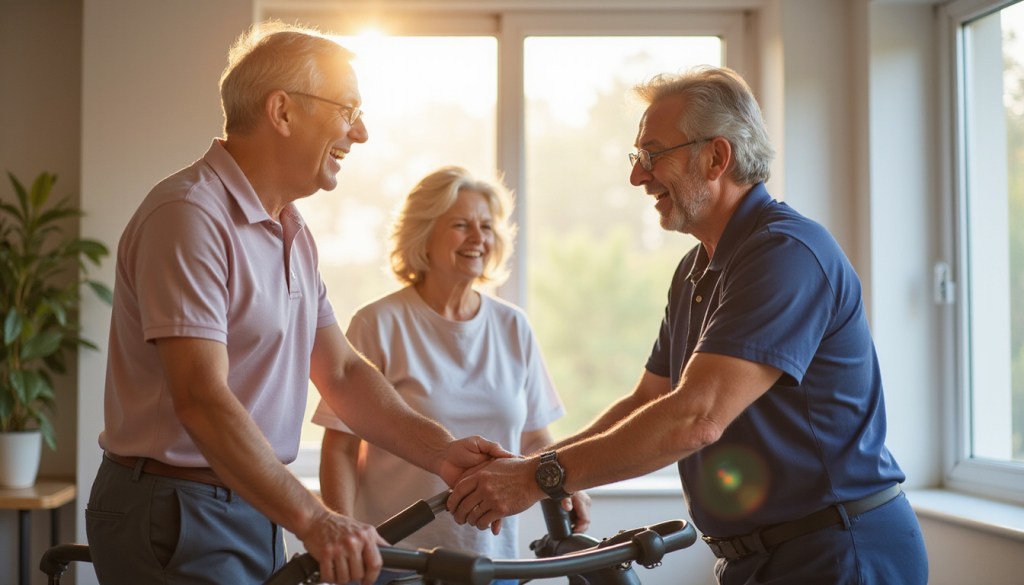
• Stationary cycling (which is often easier on arthritic hips and knees)
• Light resistance training with bands or weights
• Balance and posture exercises to ease neck and lower back strain
You also receive education and coaching on:
• The safe heart rate for you
• Telling heart symptoms apart from joint pain, breathlessness, or fatigue
• Nutrition, sleep, stress management, and weight control
Phase 3 – Long-term maintenance
After the structured phase, you gradually move to self-managed exercise. In this phase you may:
• Follow home or gym-based routines
• Check in regularly with your cardiologist and, when needed, your therapist
• Adjust your routine to protect both your heart and joints
How a pain-focused clinic fits into cardiac rehabilitation
Many patients do not progress well in hospital-based programs because their joints and muscles hold them back. For example:
• Knee pain may limit walking
• A frozen shoulder or neck pain may block proper arm swing or posture
• Old sports injuries might flare up when you increase activity
A specialised pain treatment clinic like The Pain Relief Practice can help to complement your cardiac rehab.
We are a well-established physiotherapy and pain clinic in Singapore that has helped people since 2007. We help people who:
• Suffer from stubborn joint or muscle pain
• Want to avoid a “double disability” (pain plus heart issues)
• Aim to regain performance rather than just get through each day
How we integrate with your cardiac rehabilitation
At The Pain Relief Practice, the goal is not only to control symptoms but also to help you:
• Move with less pain so you can complete your cardiac rehab safely
• Train your muscles and joints to support your heart exercises
• Return to everyday activities—from walking in the park to playing sport
We work closely with your cardiology team. We respect their limits for your heart while:
• Adjusting exercise choices to avoid stressing painful joints
• Using hands-on therapy and targeted techniques to ease pain
• Rebuilding strength and mobility so that later you can handle higher fitness levels
Real Results
Celebrities & National Athletes
The Pain Relief Practice has treated celebrities and national athletes. These clients demand peak performance, fast recovery, and long-term joint health. The same ideas that help an elite runner return to competition can work for someone recovering from a heart attack. Whether you want to walk without pain or play with your grandchildren, our approach fits many needs.

How to rebuild heart health when you also have painful joints
Below is a clear roadmap to discuss with your cardiologist and rehab team.
1. Get a combined heart–joint assessment
Before you begin exercising, know your limits in two areas. For your heart, learn your:
• Maximum recommended heart rate
• Red-flag symptoms (such as chest pressure, pain in the jaw or arm, or sudden breathlessness)
• Blood pressure limits
For your joints and muscles, learn:
• Which actions trigger pain (for example, downhill walking, taking stairs, or standing for a long time)
• How long morning stiffness lasts
• Which muscle groups feel weak (such as thighs, glutes, core, or shoulder muscles)
A pain-focused therapist can build a program that challenges your heart while honoring your joints.
2. Choose joint-friendly cardio for cardiac rehabilitation
Depending on your body, your cardiac rehab may focus on:
• Stationary cycling if walking causes sharp knee pain
• Upright or recumbent biking (recumbent bikes help your lower back)
• Flat treadmill walking if slopes worsen knee pain
• Elliptical training for a smooth, low-impact motion
• Deep-water walking or pool exercises when weight-bearing hurts your hips or knees
The key is to keep your heart in its target rate zone while avoiding painful joint stress.
3. Strengthen key muscle groups without overloading the heart
Modern cardiac rehab includes resistance training. For patients with joint issues, we focus on:
• Hip and glute strength to protect the knees and lower back
• Quadriceps and hamstrings with controlled, pain-free ranges
• Calf strength to support blood flow and balance
• Core stability to ease spine stress
• Upper back and shoulder muscles for better posture and breathing
We keep loads light to moderate. The focus is on control and endurance rather than heavy lifting. The number of sets and rest periods are adjusted so your heart does not work too hard.
4. Use pain management to enable better cardiac rehabilitation
If your joints hurt every time you walk farther, your heart training may stall. At The Pain Relief Practice, we use:
• Manual therapy and joint mobilisations
• Soft-tissue work and myofascial techniques
• Evidence-based electrotherapy or shockwave therapy when needed
• Tailored stretching and mobility drills
Our goal is not just short-term relief. We help you restore better movement patterns to make each cardiac rehab session more effective and less painful.
Simple daily routine to support cardiac rehabilitation
Along with structured sessions, a basic routine can help many patients in Singapore:
-
Morning mobility (5–10 minutes)
• Do gentle movements for your back, hips, and knees to ease morning stiffness.
• Use diaphragmatic breathing to prime your heart and lungs. -
Main exercise block (20–40 minutes)
• Do the cardio exercise prescribed by your cardiac rehab, like walking or cycling.
• Include 2–3 simple strength exercises (for example, sit-to-stand, wall push-ups, or band rows). -
Evening unwind (5–10 minutes)
• Stretch calmly for tight areas (such as calves, hamstrings, hip flexors, or chest).
• Use relaxation breathing to help your heart rate and blood pressure settle.
Your program must be individual. Many patients prefer a little exercise every day, rather than long, exhausting sessions once or twice a week.
Knowing when to stop vs when to push
For those with heart and joint issues, worry can come in two forms: “Am I overdoing it?” and “Is this heart pain or just muscle/joint ache?”
Stop and get help if you experience:
• Chest pressure, squeezing, or burning pain that will not settle with rest
• Pain that spreads to your jaw, arm, or back
• Sudden, unexplained breathlessness
• Dizziness, faintness, or abnormal palpitations
• Cold sweats, nausea, or a feeling of “impending doom”
Milder, more localised discomfort—such as:
• A familiar knee pain when climbing stairs
• Muscle soreness in the thighs or calves the day after exercise
• Tightness around the shoulder blades or neck after posture work
These milder signs can often be managed by adjusting your technique, reducing the load, or using pain management strategies. Your rehab and pain team will help you tell dangerous signs from normal training sensations. This knowledge builds confidence and reduces anxiety.
Why savvy patients choose The Pain Relief Practice
Patients come to us because they are tired of being told to “just rest” or “live with it.” They want to break the cycle of pain and poor fitness. They look for a more integrated way—beyond just taking pills or following generic exercise plans.
As a specialised pain treatment centre, The Pain Relief Practice helps you:
• Solve the pain issues that block your cardiac rehab
• Restore healthy joints and muscles so that heart training lasts over time
• Boost performance and enjoyment in life—whether that means walking along East Coast Park, returning to golf, or climbing stairs without fear
Since 2007, we have helped everyday patients and high-demand performers, including celebrities and national athletes. Our experience means we design rehab that is safe, effective, and practical for Singapore lifestyles.
FAQ on cardiac rehabilitation in Singapore
-
Is cardiac rehabilitation necessary if I already exercise on my own?
Even if you used to be active, post-cardiac-event exercise is not the same as regular gym training. Cardiac rehabilitation gives you medically supervised, gradual training with clear heart-rate and blood-pressure limits. You also get education and monitoring you do not have when you exercise alone. This benefit is very important when joint pain makes it hard to judge safe effort levels. -
Can I do cardiac rehab if I have severe knee or back pain?
Yes. A good cardiac rehabilitation program adjusts exercises to suit your joint and muscle limits. Low-impact activities like cycling, pool work, recumbent biking, or carefully chosen strength drills can protect your joints while still challenging your heart. Working with a pain and physiotherapy clinic like The Pain Relief Practice ensures that your joints get proper care. -
How long should I continue cardiac rehabilitation exercises?
Most structured programs last for 6–12 weeks. However, cardiac rehabilitation is a lifelong mindset. The formal phase teaches safe exercise. After that, you keep using the same principles long-term and adjust the intensity and type of exercise as your heart and joints grow stronger.
See what others say
You can read more patient experiences and practical details about our services on our Google profile:
https://share.google/UwMU2I9zUCwXVh0Lg
If you are recovering from a heart event in Singapore and feel stuck between protecting your heart and easing your joint pain, you do not have to choose. With the right mix of cardiac rehabilitation and targeted pain treatment, you can rebuild your heart health, protect your joints, and regain the active life you deserve.
We are a specialized physio treatment center for savvy people who want real results.
While we are not suitable for someone looking for ‘cheap physiotherapy’ or ‘free exercises available on youtube’, our treatments are affordable and are often claimable with company flexi-benefits, company health insurance, travel insurance, personal accident insurance, and other insurance plans.
Simply whatsapp or call: +65 97821601 and let us know how to help.
If you prefer a convenient nutritional preventive option, Regenerix Gold is our top recommended joint supplement.
We have been recommending this joint supplement for over a decade.
Simply start with 3 capsules, once a day.
If you do not feel better within a week, increase to 2 capsules, twice a day. (4 capsules a day in total)
Our blog readers qualify for a special discount.
Simply use the link below and a discount will automatically be applied during checkout.
 PROVIDING FAST, EASY & INSURANCE CLAIMABLE PAIN RECOVERY SINCE 2007