
If you’re in Singapore and worry about your knees, try gait analysis. It helps when your knees give way, lock, or flare up after a short walk. Many people take painkillers, supplements, or injections right away. Still, few get checked for how they walk and move. That is where the real cause hides.
At The Pain Relief Practice, we see stubborn knee pain every week. We fix it by correcting simple gait faults like over-striding, foot collapse, or hip weakness.
Why your knees still hurt despite scans, meds and “rest”
If you have had:
- X-rays or an MRI that show “nothing serious” or “just wear and tear”
- Many rounds of painkillers or anti-inflammatory gels
- Courses of physio with generic strengthening exercises
- Advice to “just rest” your knee
…yet your knees are still sore going downstairs, stiff after sitting, or achy after a mall visit, your movement mechanics are likely the issue.
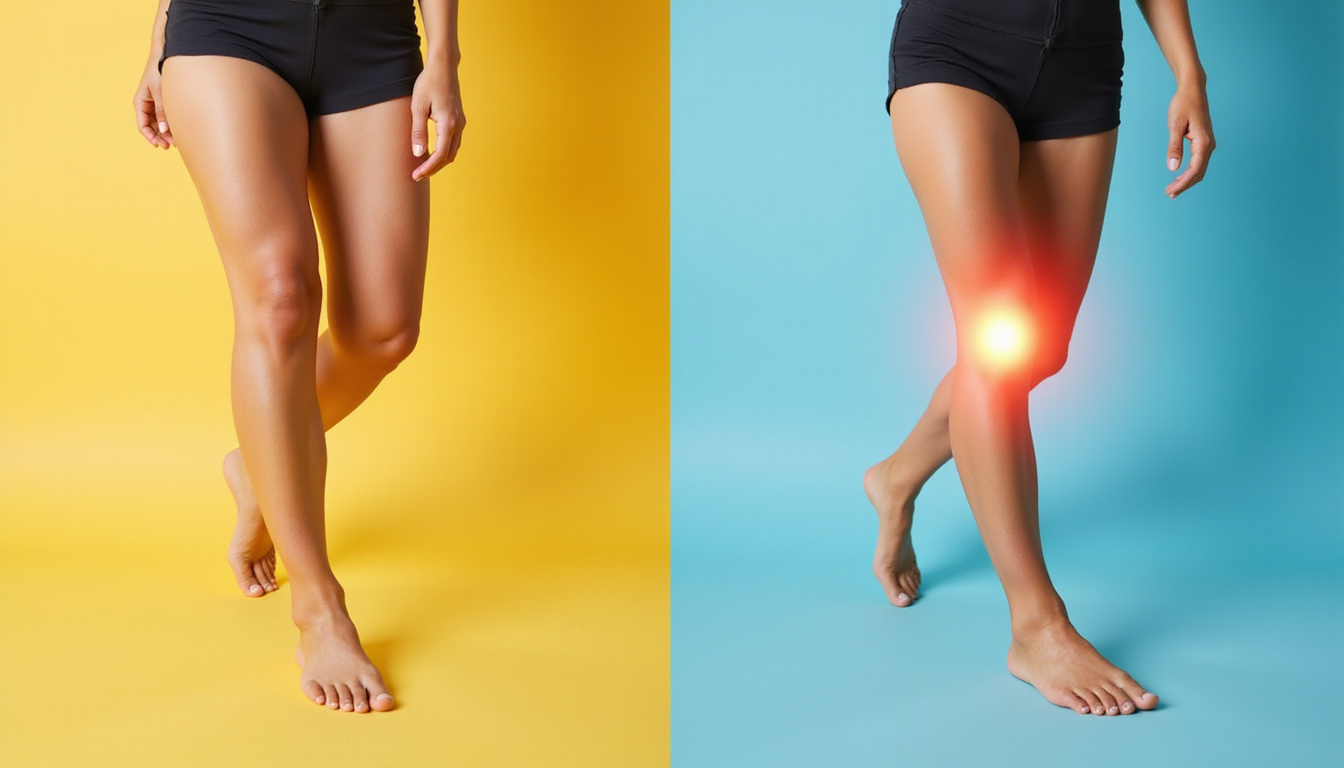
Your knee sits between your hip and foot. When the hip or foot fails you, the knee takes extra load. A proper gait analysis can reveal:
- Why your knee hurts after 10–15 minutes of walking
- Why one knee feels more “worn out” than the other
- Why running or brisk walking irritates your kneecap or the back of the knee
Often, the fixes are very simple.
What exactly is gait analysis?
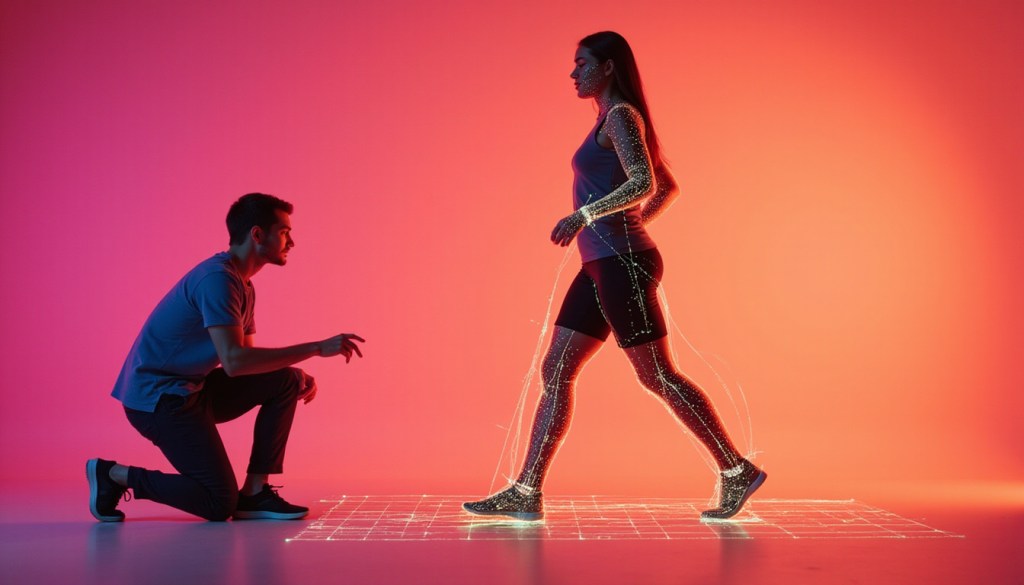
Gait analysis studies how you walk or run. It follows these steps from when your heel touches the ground to when your foot lifts off. At The Pain Relief Practice, we use:
- High-definition video from many angles
- Slow-motion views of each step
- Checks on hip, knee, ankle, and foot alignment
- Measurements of stride length, cadence, and loading pattern
- Comparisons of left and right leg movement
For knee pain, we do more than watch your steps. We spot which movement errors overload your knee joint, kneecap, or its supporting tissues like ligaments, meniscus, or tendons.
Common gait faults that quietly destroy your knees
These gait patterns show up often in Singaporeans with chronic or recurring knee pain:
1. Knee collapsing inwards (dynamic valgus)
You may see your knee “cave in” when you step or squat. This is due to:
- Weak hip stabilisers (especially the glutes)
- Flat feet or over-pronation
- Poor control during single-leg stance
This collapse stresses your kneecap and the inside of the joint. It may cause:
- Front knee pain when descending stairs or slopes
- A “grinding” feeling behind the kneecap
- Sharp pain when turning or pivoting
2. Over-striding and heel-pounding
Some people take long steps and land hard on the heel. This sends shocks through the knee and forces your quads to work hard. It may irritate joint surfaces and tissues. Patients often report:
- A dull ache after walking on hard surfaces
- Knees that feel “bruised” or “jammed” after a long day
3. Stiff, “robotic” walking with little hip movement
When your hips do not rotate or extend properly, your knee and lower back must compensate. This pattern shows as:
- Short, choppy steps
- Trunk swaying side-to-side to move the leg forward
- Knees overworked despite little exercise
4. Asymmetrical loading – one leg taking more load
Many people favor one leg without realizing it. Gait analysis may show:
- Longer stance time on one leg
- One side that over-rotates or over-strides
- A subtle limp
Over time, this unequal load can wear one knee faster and cause uneven joint space narrowing or cartilage wear (source: Arthritis Foundation).
How gait analysis reveals simple fixes (with big impact)
Once we record your walking pattern, we find the 1–3 main causes of your knee pain. We then fix them with targeted changes such as:
1. Micro-adjustments to your walking pattern
Small changes can greatly relieve your knees:
- Take slightly shorter steps instead of long ones
- Land on your midfoot rather than with an aggressive heel-strike
- Keep your knees tracking over your second toe, not caving in
We show you these changes in real time. Video feedback helps you see and feel the difference.
2. Strengthening what matters for your gait
We do not hand you generic “knee exercises from YouTube.” Instead, we give you precision exercises based on your gait issues. For example:
- For knees that collapse: work the glute medius and hip external rotators
- For over-pronation: strengthen your foot and ankle stabilisers
- For over-striding: do drills to improve cadence and hip extension, not just quad strength
3. Increasing mobility where you are stiff
Sometimes, the knee suffers because of other limits. Limited ankle dorsiflexion, hip extension, or hamstring/calf flexibility can force the knee to twist or bend awkwardly. Improving mobility in these areas helps the knee move better and with less pain.
4. Footwear and surface tips
We also check your shoes and walking surfaces. A simple footwear change, combined with gait correction, can dramatically relieve knee irritation.
Real Results
What a typical gait analysis session at The Pain Relief Practice looks like
For someone in Singapore with knee pain during walking, stair-climbing, or long standing, a session usually includes:
-
Detailed history-taking
- Pinpoint where your knee pain is
- Describe if it is sharp, dull, aching, or “stabbing”
- Identify what worsens it – stairs, slopes, long walks, squats, running
-
Hands-on knee assessment
- We check your ligaments, meniscus signs, and kneecap tracking
- We test your joint motion and muscle strength
-
Video gait analysis
- You walk at your normal pace on flat ground or a treadmill
- We film you from the front, side, and back
- We review the footage in slow motion to spot small compensations
-
Movement re-education on the spot
- You try small tweaks to your walking pattern
- You see in real time how these changes ease knee load and boost comfort
-
Customised plan
- Get exercises tailored to your gait faults
- Receive advice on walking technique, activity level, and progression
- Sometimes, we add manual therapy or targeted methods to calm pain and inflammation for better training results
Many patients say, “No one has ever shown me this before,” even after years of other treatments.
Why choose The Pain Relief Practice for gait analysis in Singapore?
If you seek to fix the root cause and return to your active life, consider The Pain Relief Practice. We:
- Are one of Singapore’s well-established physiotherapy clinics, treating patients since 2007
- Specialise in pain treatment that resolves musculoskeletal issues, not just manages them
- Are trusted by celebrities and national athletes who need clear movement analysis and strong recovery plans
We mix clinical experience with modern technology. This lets you know:
- What is wrong with your gait
- How this links to your knee pain
- Which steps can fix it
Celebrities & National Athletes
Signs that you could benefit from gait analysis
If you are in Singapore and notice:
- Your knees ache after 10–20 minutes of walking
- Your knees feel “old”, “rusty”, or “unsteady” on stairs
- You feel pulling, tightness, or heaviness around the kneecap when standing for a long time
- You have tried generic strengthening and your pain remains
- You limp slightly when tired, even if you try to hide it
- You have nagging knee pain that comes and goes for months or years
Then a structured gait analysis may help you.
Simple habits that can protect your knees after gait analysis
After correcting your movement pattern and easing knee pain, protect your progress by:
- Doing regular strength work for your hips, quads, and calves (even twice a week helps)
- Practicing mindful walking: check that your knee tracks over your toe, not collapsing inwards
- Not ignoring early warning signs: stop if you feel “sharp” or “pinching” pain
- Gradually increasing load: follow a 10–15% weekly progression when increasing walk or run distances
A quick recap checklist:
- [ ] Knees track straight; they do not cave in.
- [ ] Stride length is comfortable; you do not over-reach.
- [ ] Feet land softly; they do not slam the pavement.
- [ ] Hips and ankles move freely.
FAQ: Gait analysis and knee pain in Singapore
1. Is gait analysis worth it for long-standing knee pain?
For many with chronic knee pain, yes. If scans, meds, and generic therapy have failed, gait analysis often finds mechanical issues that tests miss. Fixing these can ease pain, improve joint health, and delay invasive treatments.
2. How is clinical gait analysis different from just filming myself walking?
Self-filming is a start. A clinical gait analysis uses trained eyes, structured testing, and slow-motion breakdown. We also assess the knee, hip, ankle, and foot by hand. This makes your treatment plan precise rather than guesswork.
3. Can gait analysis help runners with recurring knee issues?
Yes. Running gait analysis is very useful if you get pain around the kneecap, the outer knee, or under the kneecap after running certain distances or speeds. We check your cadence, foot strike, hip control, trunk posture, and any asymmetries. Correcting these issues reduces joint stress, helps you run longer, and lessens pain.
If your knees hold you back from comfortable walking in your neighbourhood, chasing your kids at East Coast Park, or returning to your favourite sport, a detailed gait analysis at The Pain Relief Practice can find the simple fixes that standard tests miss.
To see where we are and read reviews from other patients in Singapore, view our Google profile here:
https://share.google/UwMU2I9zUCwXVh0Lg
We are a specialized physio treatment center for savvy people who want real results.
While we are not suitable for someone looking for ‘cheap physiotherapy’ or ‘free exercises available on youtube’, our treatments are affordable and are often claimable with company flexi-benefits, company health insurance, travel insurance, personal accident insurance, and other insurance plans.
Simply whatsapp or call: +65 97821601 and let us know how to help.
If you prefer a convenient nutritional preventive option, Regenerix Gold is our top recommended joint supplement.
We have been recommending this joint supplement for over a decade.
Simply start with 3 capsules, once a day.
If you do not feel better within a week, increase to 2 capsules, twice a day. (4 capsules a day in total)
Our blog readers qualify for a special discount.
Simply use the link below and a discount will automatically be applied during checkout.
 PROVIDING FAST, EASY & INSURANCE CLAIMABLE PAIN RECOVERY SINCE 2007