
If nagging back pain, stiff shoulders, or a locked neck trouble you, clinical pilates can help.
It resets your posture and eases your joints.
This method works quickly.
It helps many Singaporeans who sit too long, drive daily, or recover from old sports injuries.
Clinical pilates gives you a targeted, medically informed way to move without flaring pain.
Unlike generic gym classes, clinical pilates adjusts to you.
It is joint‑friendly and led by clinicians who know the pain when your back locks, your knees click, or your neck feels compressed by the end of the day.
What Exactly Is Clinical Pilates?
Clinical pilates is a form of pilates that is:
- Assessed, prescribed, and supervised by clinicians (such as doctors, physiotherapists, or rehab-trained experts).
- Tailored to your diagnosis – be it a slipped disc, facet joint irritation, sciatica, neck spondylosis, frozen shoulder, knee meniscus wear, or post‑surgery rehab.
- Progressed based on your pain, stiffness, and strength levels.
In other words, this is not a one‑size‑fits‑all class.
It is careful, evidence-informed exercise that:
- Targets weak stabiliser muscles.
- Unloads overworked joints.
- Trains your body to move with better alignment.
Research shows that when pilates-based exercises are properly prescribed, they can reduce chronic low back pain and improve function (source: National Institutes of Health).
Why People in Singapore End Up With Stubborn Back & Neck Pain
If you suffer from this pain, you are not alone:
- You sit long hours over laptop screens.
- You ride the MRT or bus, often looking down at your phone.
- You drive with poor posture and rounded shoulders.
- You play sports on weekends – sudden badminton, golf, running, or gym work.
Over time, your body develops:
- Tight hip flexors and hamstrings.
- Weak glutes and deep core muscles.
- Stiff mid‑back joints.
- Overworked neck and lower back muscles that try to hold everything up.
Then, you start to complain:
- “My back seizes up when I stand too long.”
- “My neck feels locked, and I get headaches.”
- “My posture is so bad I see my slouch in every photo.”
- “I get massages, but the tightness soon returns.”
Clinical pilates breaks this cycle.
It strengthens the right muscles, improves joint control, and retrains your movement patterns.
How Clinical Pilates Fixes Back Pain and Posture – Fast but Safely
The goal is not to crack your joints or offer temporary relief.
Instead, clinical pilates restores:
- Segmental spinal control – each spine part moves and shares the load, instead of one overworked segment taking the stress.
- Deep core activation – especially the transverse abdominis and multifidus, which support your spine like an internal brace.
- Hip and shoulder mechanics – so your back does not overcompensate when you bend, twist, or reach.
- Breathing patterns – proper diaphragmatic breathing reduces neck tension and rib stiffness.
When designed and supervised well, many patients feel:
- Less pinching when bending forward.
- Easier upright sitting and standing.
- Reduced morning stiffness.
- More space in their neck and upper back.
5 Clinical Pilates Exercises to Target Back Pain & Poor Posture
These examples show exercises often used in a clinical pilates session.
Always get an assessment before trying any new exercise, especially if you have disc issues, nerve pain, or recent surgery.
1. Imprinted Spine & Pelvic Tilt (Base for Core Control)
Helps with: Aching lower back, sway back, and poor core engagement.
- Lie on your back with knees bent and feet hip‑width apart.
- Exhale gently and tighten your lower tummy, like zipping up tight pants.
- Lightly tilt your pelvis so that your lower back flattens softly into the mat (do not push forcefully).
- Hold for 5–8 seconds while breathing steadily.
- Relax and repeat 10 times.
You should feel your deep abdominal muscles work, without tension in the neck, buttocks, or holding your breath.
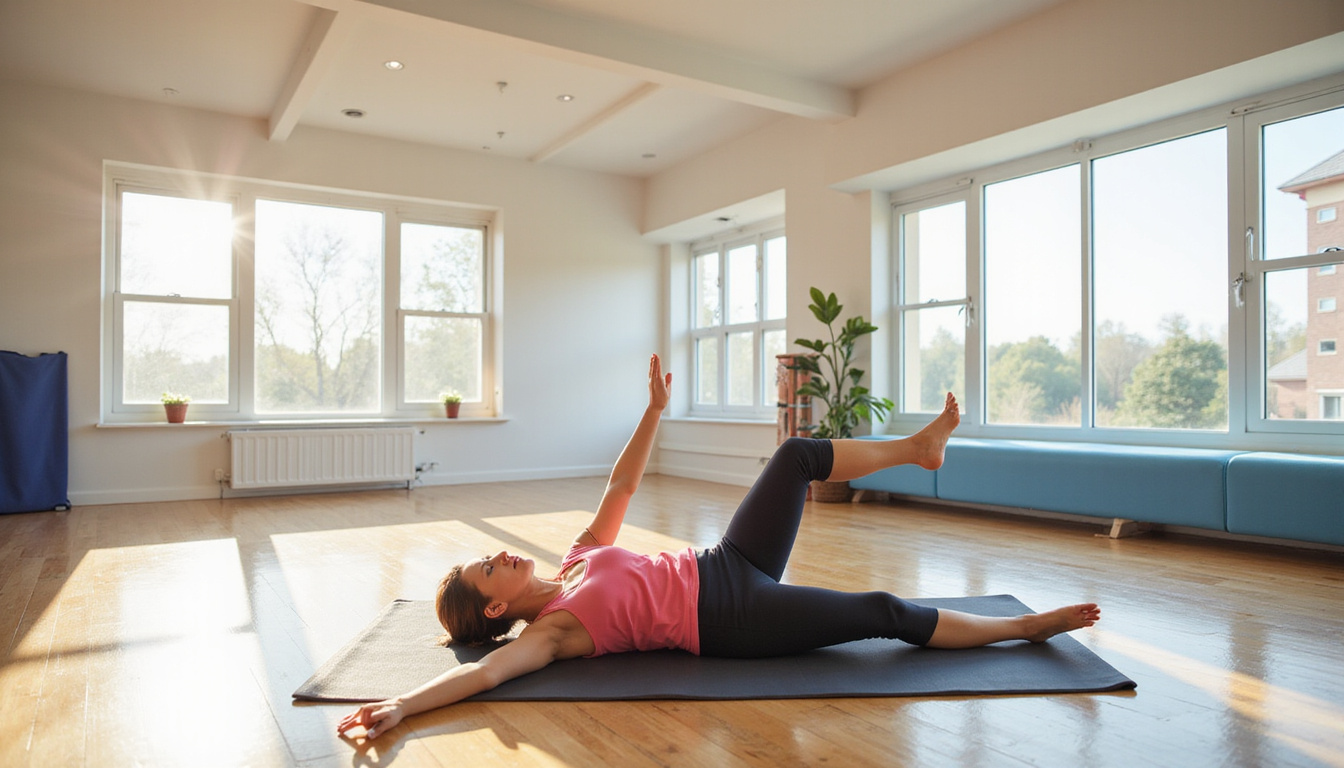
2. Clinical Pilates Dead Bug
Helps with: Core endurance and reducing strain from arching your back.
- Lie on your back in the imprinted spine position.
- Lift both legs to a tabletop position (hips and knees at 90°).
- Let your arms point to the ceiling above your shoulders.
- Slowly lower the opposite arm and leg toward the floor while keeping your back stable.
- Return to the start and switch sides.
- Do 6–8 reps on each side.
Stop if your back arches or if you feel pinching in your lower back or hips.
3. Modified Spine Extension (Joint-Friendly Back Strengthener)
Helps with: A rounded upper back, stiff mid‑back, and slouched posture.
- Lie on your stomach with a folded towel under your forehead.
- Place your hands lightly by your sides or just outside your shoulders.
- Gently draw your shoulder blades down and back.
- On an exhale, lift your chest slightly off the towel and reach the crown of your head forward as if lengthening your spine.
- Keep your lower back relaxed and your glutes gentle (do not clench).
- Hold for 3–5 seconds, lower slowly, and repeat 8–10 times.
You should feel this exercise more in your mid‑back than in your lower back.
4. Clinical Pilates Bridge with Glute Activation
Helps with: Weak glutes, overloaded lower back, and hip/tailbone tightness.
- Lie on your back with your knees bent, feet hip‑width apart.
- Exhale, engage your core, and gently squeeze your glutes.
- Roll your spine up one vertebra at a time into a bridge.
(Your shoulders should line up diagonally with your knees.) - Do not flare your ribs or arch excessively.
- Hold for 3–5 seconds, then slowly roll back down.
- Repeat 10–12 times.
If your hamstrings cramp, it may mean your glutes and core are not doing their job.
This is what clinical pilates aims to fix.
5. Wall Angel for Posture Reset
Helps with: Rounded shoulders, text neck, and tight chest muscles.
- Stand with your back against a wall and your feet slightly forward.
- Tuck your chin gently and lengthen the back of your neck.
- Raise your arms like a goalpost against the wall (if possible).
- Slowly slide your arms up and down the wall, keeping your ribs down and your spine neutral.
- Do 8–10 slow repetitions.
This exercise helps you become aware of your shoulder blade and upper back positions.
It encourages an upright and open posture.
Who Is Clinical Pilates For?
Clinical pilates helps if you experience:
- Chronic or recurrent low back pain – including disc bulges, nerve irritation, or a managed slipped disc.
- Neck and shoulder pain from poor ergonomics or old whiplash injuries.
- Postural problems such as rounded shoulders, a flat back, or sway back.
- Hip or knee issues like meniscus wear, early arthritis, patellofemoral pain, or ITB tightness.
- Sports injuries, such as runner’s knee, golfer’s back, or tennis shoulder.
- Post‑operative rehabilitation after joint surgery or spinal procedures (with medical clearance).
If your body often complains with stiffness, pinching, or the feeling of weakness, clinical pilates can help restore your confidence in moving.
Why Choose The Pain Relief Practice for Clinical Pilates in Singapore
The Pain Relief Practice is a specialised pain treatment centre in Singapore that combines medical insight with targeted rehab.
Since 2007, we have been an established physiotherapy‑type clinic, aiding people to:
- Relieve stubborn pain when standard care levels off.
- Regain healthy joints and muscles.
- Boost performance at work, in daily life, and in sports.
Our clinical pilates approach is different because:
- Every session starts with a proper clinical assessment of your joints, muscles, and movement.
- Programs are personalised.
They are not cookie‑cutter routines from the internet. - We focus on joint health and long‑term function rather than just burning calories.
Real Results
We work with busy professionals, active seniors, and weekend warriors who wish to ease pain without giving up the activities they love.
Celebrities & National Athletes
The Pain Relief Practice has treated celebrities and national athletes who need their bodies to perform at the highest level with minimal downtime and maximum safety.
What a Clinical Pilates Session at The Pain Relief Practice Looks Like
A typical session includes:
-
Detailed Assessment
- A review of your pain history, flare‑up patterns, and past treatments.
- An analysis of joint mobility, muscle strength, and posture.
- Functional tests that check how you bend, sit, stand, and lift.
-
Clinical Pilates Plan
- Exercises chosen specifically for your diagnosis.
- Clear do’s and don’ts, especially if you have disc, nerve, or arthritic changes.
- A frequency and intensity plan that fits your schedule and pain level.
-
Guided Sessions
- Hands‑on corrections to prevent overloading the wrong joints.
- Coaching on breathing and proper alignment.
- Use of pilates equipment or mat‑based work as per your needs.
-
Progression & Maintenance
- Step‑by‑step progressions once your pain stabilises.
- A home exercise plan so you are not entirely dependent on appointments.
- Ongoing advice to keep your spine and joints healthy for the long term.
Simple Daily Habits to Support Your Clinical Pilates
To get the most from clinical pilates, add these simple changes:
- Change position every 30–40 minutes to avoid long sitting sessions.
- Use a lumbar roll when sitting to support your lower back.
- Keep screens at eye level to reduce neck flexion.
- Stretch your hip flexors and chest briefly during breaks.
- Walk regularly – even short walks keep your joints supplied with movement.
Quick Checklist: Are You a Good Candidate for Clinical Pilates?
You might benefit from clinical pilates at The Pain Relief Practice if:
- You have persistent or recurring back/neck pain despite rest and medication.
- You feel stiff, locked, or misaligned, especially after sitting or driving.
- You notice your posture slouching or rounding over the years.
- You feel your core is weak or your back takes excess strain during simple tasks.
- You have tried random exercises or YouTube videos that only worsen your pain.
- You want structured, medically informed guidance rather than trial and error.
FAQ: Clinical Pilates in Singapore
1. Is clinical pilates good for chronic back pain?
Yes.
When it is prescribed and supervised correctly, clinical pilates helps to activate deep stabiliser muscles, reduces strain on irritated joints, and retrains your spine to move more efficiently.
It is especially useful when back pain keeps returning despite massage or rest.
2. What is the difference between clinical pilates and regular pilates classes?
Clinical pilates in Singapore is led or overseen by clinicians.
They assess your condition, diagnose movement problems, and prescribe exercises for your joints and muscles specifically.
Regular group classes are mainly general fitness and might not consider disc issues, nerve symptoms, or post-surgical needs.
3. How often should I do clinical pilates exercises?
Most people start with clinical pilates sessions 1–2 times per week, along with a short home programme.
The key is to be consistent and to use proper technique rather than force your body.
At The Pain Relief Practice, we adjust the frequency based on your pain sensitivity, lifestyle, and joint responses.
To learn how clinical pilates can help your back pain and improve your posture safely and quickly, visit The Pain Relief Practice and read real patient feedback on our Google profile:
https://share.google/UwMU2I9zUCwXVh0Lg
If your joints keep complaining, you do not have to live with pain.
With the right clinical pilates approach and expert guidance, your body can move better, feel lighter, and stay stronger for years to come.
We are a specialized physio treatment center for savvy people who want real results.
While we are not suitable for someone looking for ‘cheap physiotherapy’ or ‘free exercises available on youtube’, our treatments are affordable and are often claimable with company flexi-benefits, company health insurance, travel insurance, personal accident insurance, and other insurance plans.
Simply whatsapp or call: +65 97821601 and let us know how to help.
If you prefer a convenient nutritional preventive option, Regenerix Gold is our top recommended joint supplement.
We have been recommending this joint supplement for over a decade.
Simply start with 3 capsules, once a day.
If you do not feel better within a week, increase to 2 capsules, twice a day. (4 capsules a day in total)
Our blog readers qualify for a special discount.
Simply use the link below and a discount will automatically be applied during checkout.
 PROVIDING FAST, EASY & INSURANCE CLAIMABLE PAIN RECOVERY SINCE 2007