
Below is the rewritten text. It uses a dependency grammar style. Each sentence links words closely to help readers understand the ideas. The language is also kept simpler for a Flesch Reading Ease score of about 60–70. The original formatting remains.
──────────────────────────────
If you care for an older parent or loved one in Singapore, you worry about a bad fall that changes everything. You are not alone. Falls harm joints, muscles, and nerves as we grow older. Wobbly knees, weak ankles, or a frozen lower back can make each step feel unsafe.
Below are falls prevention secrets. Musculoskeletal doctors and physiotherapists wish every family caregiver knew these tips – especially if your loved one has creaky joints, recurring back twinges, or long-lasting knee pain.
──────────────────────────────
Secret 1: Falls are usually a symptom, not an accident
Most caregivers see a fall as a one-time mishap. They think, “He just slipped,” or “Her leg gave way.” In fact, a fall builds up over time.
• Stiff hips and knees do not bend well.
• Weak thigh and calf muscles fail to support the body.
• Poor ankle control creates a “wobbly ankle” feeling.
• Numb or tingling feet do not send clear signals.
• A stiff lower back cannot react fast enough.
Many older adults in Singapore carry joint issues from years of walking and injuries. Each problem chips away at balance and reaction time.
Key idea: Treat not just the fall, but also the joints and muscles that led to the fall.
──────────────────────────────
Secret 2: Painful joints mean a higher risk of falls
When a knee aches or an ankle feels weak, the body cheats. It shifts weight away from pain, takes small steps, and grips railings for support.
• You shift weight away.
• You take cautious, shorter steps.
• You hold onto railings or furniture.
• You hesitate when turning or climbing stairs.
This “pain-avoidance walking” weakens stabilizing muscles in hips, thighs, and calves. That is why older adults sometimes look as if they walk on a rocking boat.
Common pain patterns linked to falls include:
• Knee pain or arthritis (especially pain when starting to stand or going downstairs).
• Hip pain or groin ache (which makes lifting the leg hard).
• A frozen lower back (causing stiffness in bed or after bending).
• Ankle instability (with a history of sprains and an “insecure” step).
• Foot pain (from heel spurs or plantar fasciitis that leads to limping).
Treating these pains well is key for falls prevention. The treatment should be targeted. Simply waiting for the pain to ease does not help enough.
──────────────────────────────
Secret 3: Home hazards are more than loose rugs and wet floors
Standard advice asks you to remove clutter and secure carpets. This is useful but not complete. In Singapore homes, falls may come from:
• Low sofas or soft couches that make one hard to stand up from.
• Narrow doorways with a small step up to the toilet.
• Slippery floor tiles when air-con causes moisture.
• High bed frames where feet do not reach the floor when sitting.
• A clutter of shoes and umbrellas near the entrance.
• Dim corridor lighting at night to save on electricity.
Walk the house with your loved one. Follow the daily route: from bedroom to toilet, then kitchen, living room, and finally the gate. Watch where they grab furniture or hesitate. These are red flags.
──────────────────────────────
Secret 4: Muscle loss after 60 is faster than many think
After age 60, muscles can decline by 3–5% each year if they are not trained. This decline can quickly cause problems for someone with “jelly legs.”
• They may use their hands to push off thighs or chairs.
• They might need a quick burst to get off a sofa.
• Climbing stairs may force them to stop often.
• Rising from sitting can involve a slow, rocking motion.
• They may get off balance when carrying groceries or a handbag.
Thus, falls prevention must include active strengthening. Walking builds stamina. Yet, specific stabilizer muscles need training to hold joints and stop sudden give-way moments.
──────────────────────────────
Secret 5: The right exercises matter more than “just exercise”
Many caregivers say, “Just walk more” or “go outside and jalan-jalan.” That is a start, but more walking may worsen pain if knees hurt. For effective falls prevention, exercises should:
• Strengthen key muscles around the hips, knees, ankles, and core.
• Be gentle on arthritic joints and past injuries.
• Begin simple and grow more challenging over time.
• Be supervised at first, especially if there was a previous fall.
Examples include (under proper guidance):
- Sit-to-stand drills from a firm chair, with controlled lowering.
- Heel raises near a counter or sink to build calf and ankle strength.
- Hip abduction exercises with resistance bands to support the side-hip.
- Step-ups on a low step for safe stair-climbing strength.
- Balance holds, like standing on one leg while holding a counter.
If pain, locking, or past falls are present, learn these exercises with a physiotherapist first. Then continue safely at home.
──────────────────────────────
Secret 6: Vision, dizziness, and medications can sabotage balance
Caregivers often focus on “weak legs” and ignore vision or dizziness. Yet, these factors affect safety:
• Poor or outdated glasses can distort how far a step is.
• Bifocals or progressives may trick depth perception on stairs.
• Vertigo or sudden dizzy spells make position changes risky.
• Blood pressure or sleeping pills can make one feel light-headed.
If your parent says, “My head feels heavy,” or “I blur when I stand,” treat it as a red flag. Combined with joint pain, the risk of a fall increases.
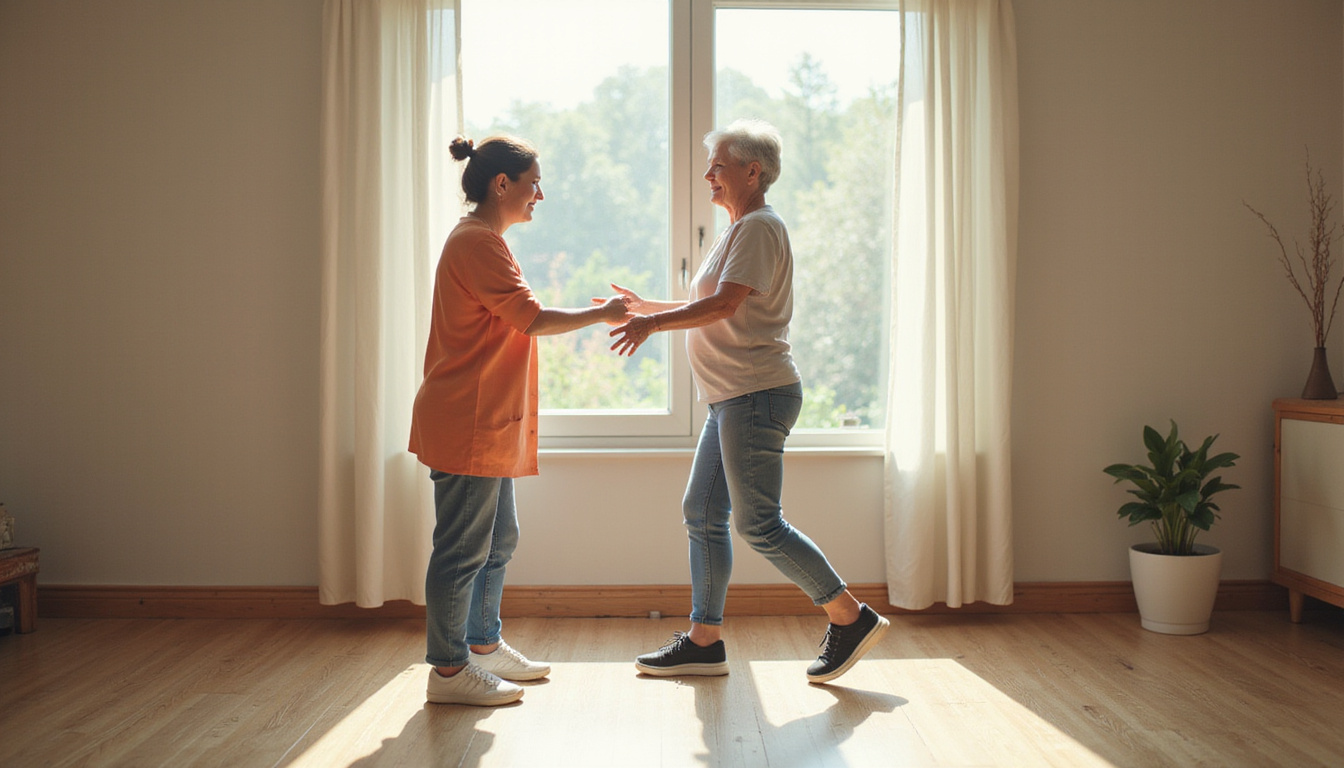
A good plan reviews medications, checks the eyes, and treats joints and balance together.
──────────────────────────────
Secret 7: Early professional help beats post-fall rehab
Many families wait for a fracture or hospital visit before seeking physiotherapy. By then, muscles weaken more, and confidence falls.
• Muscles are spent.
• Confidence is lost – “I do not dare to walk.”
• Pain rises after injury or surgery.
• Fear of falling makes each step more stiff.
It is better to treat early signs like near falls, stumbles, or complaints of weak knees, tired legs, and a tight back. Then targeted joint treatment, pain relief, and muscle retraining help most.
──────────────────────────────
How The Pain Relief Practice supports falls prevention in Singapore
The Pain Relief Practice is an established clinic in Singapore that has helped patients since 2007. We help people who want to:
• Solve pain issues instead of just masking pain.
• Regain healthy joints and muscles.
• Boost confidence and performance in daily life.
• Enjoy an active lifestyle regardless of age.
Our patients include celebrities, national athletes, and everyday Singaporeans who want to walk without fear.
Our falls prevention plan includes:
• Detailed assessment of joints and movements – we find which joints are stiff and which muscles are weak.
• Targeted pain treatment – we reduce inflammation, muscle spasm, and nerve irritation for comfortable movement.
• Custom strengthening and balance programs – these programs match the pain level, fitness, and home needs.
• Retraining techniques for walking and stair-climbing – we fix unsafe habits like toe-dragging or over-reliance on one leg.
• Home safety advice – we give practical tips for HDBs, condos, and landed homes.
Real Results
Celebrities & National Athletes
Our Google Profile
https://share.google/UwMU2I9zUCwXVh0Lg
──────────────────────────────
Simple home checks every caregiver should do
Use this checklist to spot risks and see if special help is needed:
• Does your loved one use hands to push off when standing?
• Do they say “my knees are weak,” “my legs tire fast” or “my back is tight”?
• Have they had near-falls or actual falls in the past year?
• Do they avoid going out “in case I fall”?
• Do they hold walls, furniture, or your arm when walking at home?
• Do they have longstanding pain in knees, hips, back, ankles, or feet?
If you say “yes” to two or more, the risk of falling is higher than it might seem – even if they seem okay when walking short distances.
──────────────────────────────
How to talk to your loved one about falls (without scaring them)
Many older Singaporeans are proud and do not admit weakness easily. Instead of saying, “You will fall if you keep like this,” try these:
• “I want your knees and back to stay strong for another 20 years.”
• “If we strengthen your legs, you will feel steadier when you go to the market.”
• “Let us treat your pain so your legs do not give way.”
• “Professional help now can keep you independent longer. I know that matters to you.”
Frame physiotherapy and pain treatment as an upgrade for daily comfort and independence – not as a sign of old age or weakness.
──────────────────────────────
When to consider The Pain Relief Practice for falls prevention
You do not have to wait for a fracture or hospital stay. Consider The Pain Relief Practice if:
• There has been one or more falls already.
• They have been diagnosed with knee or hip arthritis.
• They suffer from long-term pain in the back, knee, ankle, or foot.
• They feel wobbly when walking on uneven ground or stairs.
• They have lost confidence and move less for fear of falling.
Our team has strong experience with joint problems and older adults. We understand phrases like “my leg has no strength” or “my back is stuck” and turn these into clear, action-guided treatment plans.
──────────────────────────────
FAQs on falls prevention for joint and muscle problems
-
What is the most important part of falls prevention in older adults?
The most important part is to treat the underlying causes. We target joint pain, muscle weakness, poor balance, and unsafe movement patterns. Removing home hazards helps, but if knee, hip, back, or ankle issues are not fixed, the risk stays high. A specialist in pain and physiotherapy can treat all these factors together. -
How can physiotherapy help with fall prevention in Singapore?
Physiotherapy helps by reducing pain so walking becomes safer. It strengthens stabilizer muscles around the hips, knees, and ankles. It improves balance and reaction time. It corrects walking and stair-climbing techniques. It also gives advice on safe activities and proper home setup. -
My parent already uses a walking stick. Is falls prevention still possible?
Yes. Using a walking stick or frame does not mean it is too late. With proper pain management, strengthening, and balance training, many patients become more stable and independent. Some may even reduce their reliance on walking aids. A falls prevention plan always considers the individual’s joint condition, pain level, and goals.
──────────────────────────────
If you are a family caregiver in Singapore and worry about wobbly knees, a stiff back, or one bad fall, you do not have to do this alone. A musculoskeletal-focused approach to falls prevention can protect independence and give both of you peace of mind.
We are a specialized physio treatment center for savvy people who want real results.
While we are not suitable for someone looking for ‘cheap physiotherapy’ or ‘free exercises available on youtube’, our treatments are affordable and are often claimable with company flexi-benefits, company health insurance, travel insurance, personal accident insurance, and other insurance plans.
Simply whatsapp or call: +65 97821601 and let us know how to help.
If you prefer a convenient nutritional preventive option, Regenerix Gold is our top recommended joint supplement.
We have been recommending this joint supplement for over a decade.
Simply start with 3 capsules, once a day.
If you do not feel better within a week, increase to 2 capsules, twice a day. (4 capsules a day in total)
Our blog readers qualify for a special discount.
Simply use the link below and a discount will automatically be applied during checkout.

 PROVIDING FAST, EASY & INSURANCE CLAIMABLE PAIN RECOVERY SINCE 2007