
If you have searched for hand therapy online because your fingers lock, your wrist hurts when you twist a bottle cap, or you drop things often, you are not alone. In Singapore, long hours on the computer, phone scrolling, housework, sports, mahjong, and gardening wear down our hands and wrists. When pain stops you from opening jars, carrying groceries, or holding chopsticks, take it seriously.
This guide helps people who feel that something is “not right” in their hands or wrists. You may feel stiffness, weakness, numbness, or a deep, nagging ache. You want proven hand therapy moves that relieve pain and rebuild strength without guesswork.
Why your hands start to “give way”: Understanding common problems
If you face any of these issues, hand therapy may help you:
- You wake up with stiff fingers that take time to move.
- You feel wrist or thumb pain when you lift a kettle, pot, or wok.
- You feel pins and needles, especially at night or when using the mouse.
- Your grip feels weak and objects slip from your hand.
- Your finger joints swell, feel jammed, or hurt after use.
We often see these issues:
- Carpal tunnel syndrome – The median nerve in your wrist is compressed. This causes numbness, tingling, and weakness.
- Trigger finger / trigger thumb – Your finger catches or locks when you bend or straighten it.
- Thumb (CMC) osteoarthritis – You feel pain at the thumb base when you pinch or grip.
- Tendinitis / De Quervain’s – You feel aching along the thumb side of your wrist when you lift a baby or bags.
- Post-fracture stiffness – Stiffness happens after a wrist or finger fracture or surgery.
- Overuse from computer, phone, crafting, or sports – Use wears your joints down.
Each issue improves with targeted, progressive hand therapy – the right moves at the right time, done the right way.
Before you start: The 3 golden rules of safe hand therapy
When your joints feel “kia kia” (fragile) or easily inflamed, you must not overdo it. Follow these three rules:
-
Pain is a guide, not a goal
Mild discomfort (up to a 3–4 out of 10) is okay. Sharp, stabbing, or long pain that lasts for hours is a red flag. -
Movement first, strength later
If your fingers feel stiff and “rusty”, restore your range of motion before you try heavy strength moves. -
Respect swelling and flare-ups
Sudden swelling, heat, or redness shows that the joint is irritated. Scale back, use ice or contrast baths, and seek professional help if it continues.
Hand therapy hacks you can start today
These moves are gentle and friendly for your joints. They are made for people who already feel pain or stiffness. Always warm up with whole-body movement or a warm hand soak for 5–10 minutes.
1. “Rust remover” finger glides – for stiffness and morning tightness
Best for: Osteoarthritis, post-immobilisation stiffness, aching fingers
How to do it:
- Rest your forearm on a table with your hand relaxed.
- Start with your index finger.
- Slowly bend the tip joint (DIP) while you keep the rest of your finger straight. Hold for 3 seconds.
- Then bend the middle joint (PIP) and tip together. Keep the knuckle straight. Hold for 3 seconds.
- Finally, make a full fist, squeeze gently, and then fully straighten.
- Repeat 8–10 times per finger in 1–2 sets.
Why it helps:
This move trains each joint to glide properly. It is like oiling a rusty hinge. It stops you from forcing the whole finger to move as one stiff block.
2. Towel scrunches – for early grip strength without aggravating joints
Best for: A weak grip, “no power” when holding items, early strengthening
How to do it:
- Place a small towel flat on a table.
- Rest your hand on the towel with your palm down.
- Use your fingers to pull and scrunch the towel toward you. It is like “clawing” the towel in.
- When you reach the end, spread the towel out and repeat.
- Do 3–5 rounds for each hand.
Tips:
• If your joints hurt more than a little, use a softer cloth or lessen the effort.
• Focus on slow, controlled movement instead of speed.
3. Thumb “C” stabiliser – for a painful thumb base (CMC joint)
If opening jars or pinching clothes pegs causes pain in your thumb base, try this exercise.
How to do it:
- Rest your forearm on a table with your thumb up in a “thumbs up” sign.
- Make a “C” shape with your thumb and index finger, as if you hold a small marble.
- With your other hand, gently push against the thumb. The push should make the muscles work but not collapse the “C” shape.
- Hold for 5 seconds and then relax for 5 seconds.
- Repeat 8–10 times in 2 sets.
Why it helps:
This exercise trains the deep stabiliser muscles to support the painful thumb base. It stops the joint from “grinding” each time you pinch.
4. Nerve glides – for numbness, tingling, and “electric” pain
Best for: Carpal tunnel–type symptoms, numb fingers, and tingling (especially at night). The move must be done very gently.
Median nerve glide (basic version):
- Stand with your arm at your side. Bend your elbow at 90°. Keep your palm facing you.
- Straighten your fingers and thumb.
- Slowly extend your wrist back, as if you signal “stop.”
- Gently straighten your elbow until you just feel a stretch or a light, small tingle. Do not feel pain.
- Hold for 2 seconds. Then return to the start.
- Repeat 8–10 times.
Important:
If the tingling worsens or lingers, stop and get a proper assessment. Nerve issues need careful diagnosis and guided hand therapy.
5. Putty or sponge squeezes – for building power without flare-ups
Best for: Building strength after an injury, surgery, or long disuse
If you do not have therapy putty, you can use a soft sponge or a rolled-up face towel.
How to do it:
- Hold the putty or sponge in your palm.
- Squeeze with all your fingers and thumb together. Hold for 3–5 seconds.
- Slowly release instead of letting go quickly.
- Do 10 squeezes in 2–3 sets. Rest between sets.
Progression:
• Start with very soft resistance.
• As your pain and swelling reduce, move to a slightly firmer material.
Smart hand therapy habits in daily life
Even if you do the proper exercises, daily habits may irritate your joints. Small changes help a lot:
• Use both hands for heavy items like kettles, cast iron pots, and big bottles.
• Choose larger handles – thicker pens, bigger utensil grips, and ergonomic mouse designs cut strain on small joints.
• Avoid a sustained tight grip on steering wheels, phones, and shopping bags.
• Break phone or computer time. Every 30–45 minutes, move your hands and wrists for 1 minute.
• Respect your “flare-up pattern.” If you get worse after activities (mahjong, knitting, badminton), plan lighter days or do hand therapy before and after the activity.
When home hand therapy isn’t enough
If you try basic stretching and strengthening for a few weeks and you still have:
• Pain that does not go away or worsens
• Fingers that start to deform or twist
• Night pain that wakes you
• Ongoing numbness, clumsiness, or dropping things
• Swelling that does not settle
…then get a proper assessment from a professional. An expert in hand therapy and targeted pain treatment can help.
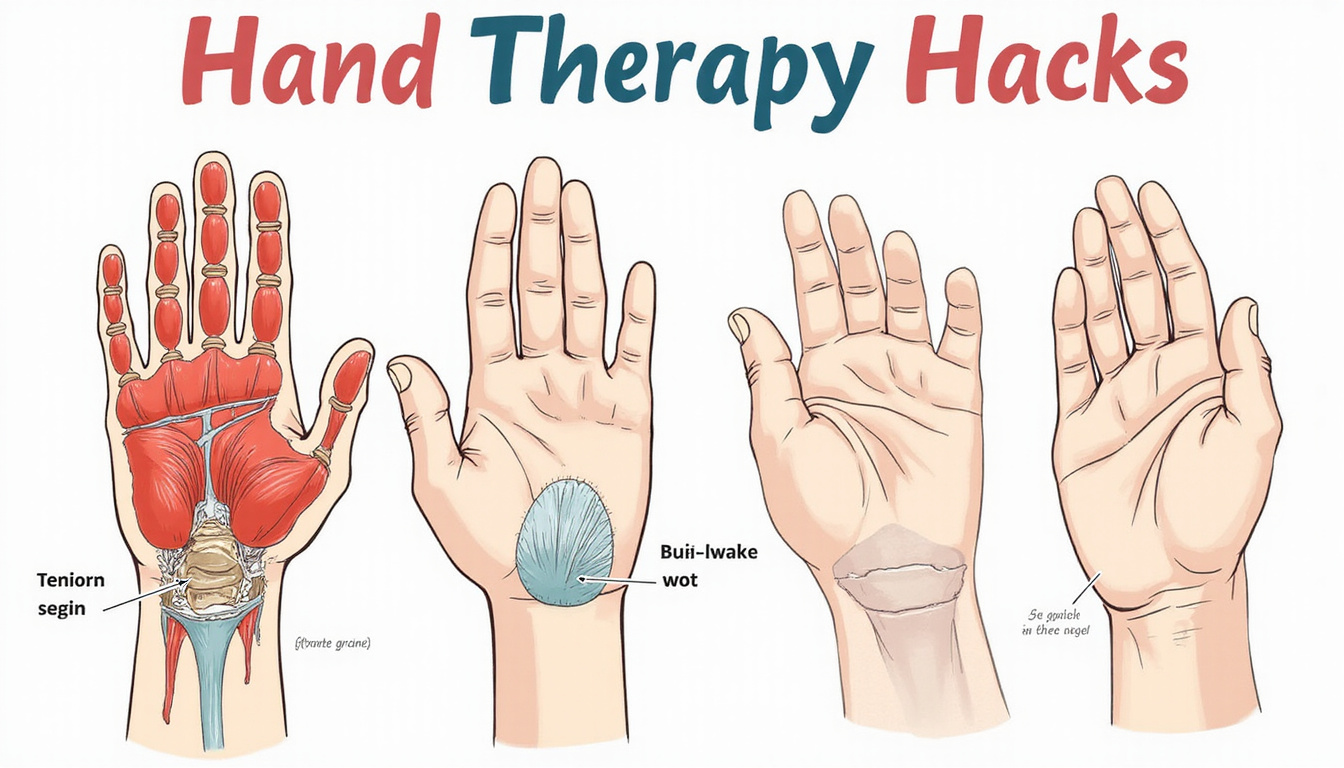
Often the problem is not just the joint. It may be tendon gliding issues, nerve entrapment in the arm or neck, past injuries, or the way your upper body moves.
Why many Singaporeans with hand pain choose The Pain Relief Practice
The Pain Relief Practice is a well-known physiotherapy and pain treatment clinic in Singapore. It has helped people since 2007. We treat office workers, parents, retirees, manual workers, as well as celebrities and national athletes who need strong hands and wrists.
People who come to us usually say:
• “Doctor says it is wear and tear. I must live with it.”
• “I rest, but when I go back to work, the pain returns.”
• “I did generic exercises from YouTube, but my joints felt more inflamed.”
We cut through the guesswork.
What makes our approach different
-
Targeted diagnosis, not just generic “hand exercises”
We check the health of your joints, how your tendons glide, if nerves are involved, how your muscles work, and your daily tasks – typing, lifting children, racket sports, playing musical instruments, and more. -
Joint-friendly, progressive programming
We first work on pain relief and inflammation control. Next, we restore mobility. Then we start gradual strengthening with the correct load. -
Integrating technology and hands-on therapy
Depending on your condition, we combine manual therapy, electrotherapy, shockwave treatment, neuromuscular retraining, and sports-style conditioning. This approach helps you regain trust in your hands. -
Performance mindset, even for daily life
Our work with high-level athletes and public figures lets us design plans for people who want more than just to “get by.” They want to return to sport, music, or intense work without being slowed down by hand pain.
Real Results
Celebrities & National Athletes
Simple checklist: Are you ready for professional hand therapy?
You should consider a clinic-based hand therapy if you:
• Have had pain or stiffness for more than 3–4 weeks
• Notice reduced grip strength or cannot trust your hand with heavy tasks
• Cannot fully open or close your hand without pain
• Experience repeated numbness or tingling
• Have a history of wrist or finger fracture, surgery, or arthritis
• Need your hands for work or sport and want to avoid permanent damage
If these points sound true, you should get a thorough assessment at a specialized pain treatment center like The Pain Relief Practice. This step can stop a “small problem” from turning into a permanent issue.
For more on common hand conditions such as carpal tunnel syndrome and osteoarthritis, see the American Society for Surgery of the Hand (source: https://www.assh.org/handcare).
FAQ: Hand therapy in Singapore
-
Is hand therapy really necessary, or will my hand pain go away on its own?
Minor strains may fade with rest. However, ongoing pain, stiffness, or numbness can show deeper issues. Quality hand therapy in Singapore addresses the root cause. This stops your joints from slowly deforming or weakening. -
How long does it take for hand therapy to work?
Many patients see easing of symptoms in 2–4 weeks with a tailored hand and wrist therapy plan. More complex issues like long-term arthritis or post-surgical stiffness may take a few months. You should still see steady improvements. -
Can I continue sports or gym if I’m undergoing hand therapy?
Often, yes. With smart changes, you can stay active. Your hand therapy program will show you how to change grip width, load, equipment, and training volume. Some conditions need a brief rest period before a gradual return to full activity.
If your hands, wrists, or fingers stop you from working, training, or enjoying life, do not simply live with the pain. With the right hand therapy strategy and expert guidance, you can relieve pain, rebuild strength, and regain grip confidence.
https://share.google/UwMU2I9zUCwXVh0Lg
We are a specialized physio treatment center for savvy people who want real results.
While we are not suitable for someone looking for ‘cheap physiotherapy’ or ‘free exercises available on youtube’, our treatments are affordable and are often claimable with company flexi-benefits, company health insurance, travel insurance, personal accident insurance, and other insurance plans.
Simply whatsapp or call: +65 97821601 and let us know how to help.
If you prefer a convenient nutritional preventive option, Regenerix Gold is our top recommended joint supplement.
We have been recommending this joint supplement for over a decade.
Simply start with 3 capsules, once a day.
If you do not feel better within a week, increase to 2 capsules, twice a day. (4 capsules a day in total)
Our blog readers qualify for a special discount.
Simply use the link below and a discount will automatically be applied during checkout.

 PROVIDING FAST, EASY & INSURANCE CLAIMABLE PAIN RECOVERY SINCE 2007