
If you live in Singapore and feel a steady ache “down there,”
or you notice a little urine escape when you cough or laugh,
or you feel a heavy, bulging weight in your pelvis,
you are not the only one suffering.
Women’s health physiotherapy can help.
It works to strengthen your pelvic floor both safely and effectively.
Whether you plan a pregnancy, have just delivered, face perimenopause,
or are long past menopause and still struggle with bladder control or pelvic pressure,
a focused pelvic floor program can change your everyday life.
At The Pain Relief Practice, we treat women who tire of simply “living with it.”
They want an expert plan based on sports science – not generic advice.
Understanding Your Pelvic Floor (And Why It Feels “Weak”)
If you have said:
- “I always need to know where the nearest toilet is.”
- “I leak when I run, jump, or even when I sneeze.”
- “My pelvic area feels as if everything is dropping.”
- “Sex feels uncomfortable or strange after my delivery.”
…then your pelvic floor muscles may not work as they should.
They may be too under‑active, too tight, or poorly coordinated.
Your pelvic floor is like a hammock made of muscles and connective tissue.
It supports your bladder, uterus, and bowel.
It controls your urine and bowel movements.
It acts in your sexual function.
It stabilises your lower back and hips.
Pregnancy, childbirth (vaginal or C‑section), chronic coughing, constipation, heavy lifting,
high‑impact sports, and hormonal changes at menopause can stress these muscles.
Women’s health physiotherapy looks closely at these deep muscles.
It does not only check for “weakness.”
It also checks for tightness, scarring, nerve sensitivity, and poor coordination.
Then it gives you a detailed recovery plan.
Why See a Women’s Health Physiotherapist in Singapore?
In Singapore, many women suffer in silence.
They feel paiseh, or are told, “This is normal after childbirth” or “It is part of ageing.”
A specialised women’s health physiotherapy team will:
- Assess discreetly and professionally – They ask about your birth history, menstrual and hormonal changes, exercise, and overall health.
- Perform targeted tests – They check your posture, breathing, abdominal pressure, lower back, and hip strength. They may even do a gentle pelvic assessment if you are comfortable.
- Customise treatment – They do much more than just advise “do more Kegels”.
Your plan may include manual therapy, biofeedback, breathing retraining, and performance‑oriented exercises.
This helps you return to running, lifting, or high‑intensity workouts in a safe way.
The Pain Relief Practice is a well‐established physiotherapy clinic in Singapore.
We have helped people since 2007.
Our team has treated celebrities and national athletes who demand measurable function and performance.
We use the same high care standard for pelvic floor and women’s health.
Real Results
9 Essential Tips for a Stronger, Healthier Pelvic Floor
1. Stop Guessing: Get an Accurate Pelvic Floor Assessment
Many women are told to simply “do Kegels.”
But some have over‑tight pelvic floors rather than weak ones.
Others perform Kegels wrong – using their butt or inner thighs instead.
Some use the wrong muscles at the wrong time.
This can increase pressure and cause leaks.
A women’s health physiotherapy assessment clears things up. It shows:
- Whether your pelvic floor muscles are weak, tight, or both.
- Whether you push (bear down) when you should lift.
- How well your pelvic floor, deep core, and breathing work as one.
From this, you get a clear and exact rehab plan.
No trial and error is needed.
2. Learn Proper Pelvic Floor Activation (Beyond Basic Kegels)
If you have tried Kegels and then felt:
- Cramping,
- No benefit, or
- More pelvic discomfort,
you might have done them in a way that is not right for your body.
Many Singapore patients find this cue very useful:
- Think of stopping the flow of urine and holding in gas at the same time.
- Gently draw your muscles upwards and inwards.
Do not squeeze your glutes or thighs. - Keep your butt, legs, and tummy relaxed.
Try this:
- Do 5 gentle squeezes.
- Hold each for 3–5 seconds.
- Relax fully for 5–10 seconds between each squeeze.
If you feel pain, heaviness, or see more leaks, stop and get an assessment.
You might need a different approach, or first work on relaxing your muscles.
3. Don’t Ignore Pelvic Floor Relaxation
A strong pelvic floor also needs to relax fully between contractions.
Over‑tight muscles cause problems.
They can make it hard to empty your bladder or bowel,
cause pelvic pain or burning, and
make sex painful.
To relax your pelvic floor:
- Lie on your back with your knees bent.
Use pillows if needed. - Put one hand on your lower belly.
- Inhale gently through your nose.
Let your belly and pelvic area soften and widen. - Exhale and imagine your pelvic floor melting gently into the bed.
Sometimes, women’s health physiotherapy first focuses on softening tension, scars, and trigger points before doing strengthening.
4. Coordinate Breathing With Everyday Moves
Leaks and pelvic pressure often occur when you:
- Cough or sneeze,
- Carry heavy groceries,
- Do squats, deadlifts, burpees, or jumps,
- Stand up from a low seat or the floor.
Often, people hold their breath and bear down during exertion.
This sends extra pressure to the pelvic floor.
Instead, try this:
- Inhale before you move.
- Exhale as you gently lift and engage your pelvic floor and lower abs.
- Then do the movement – like standing up, lifting, or coughing.
This “exhale with effort” tip helps protect your pelvic floor during daily tasks and workouts.
5. Adjust Your Exercise – Don’t Just Stop Moving
You do not need to stop running or doing HIIT forever.
During rehab, you might need to:
- Temporarily lessen high‑impact exercises like jumping and sprinting.
- Change long runs to brisk walks, incline walking, cycling, or swimming.
- Modify weight training.
Use lighter weights and focus on proper form and breathing.
Watch for these signs that your pelvic floor is struggling:
- Leaks during or after exercise.
- A heavy, bulging feeling or the sense that “something is falling out.”
- A strong need to rush to the toilet after working out.
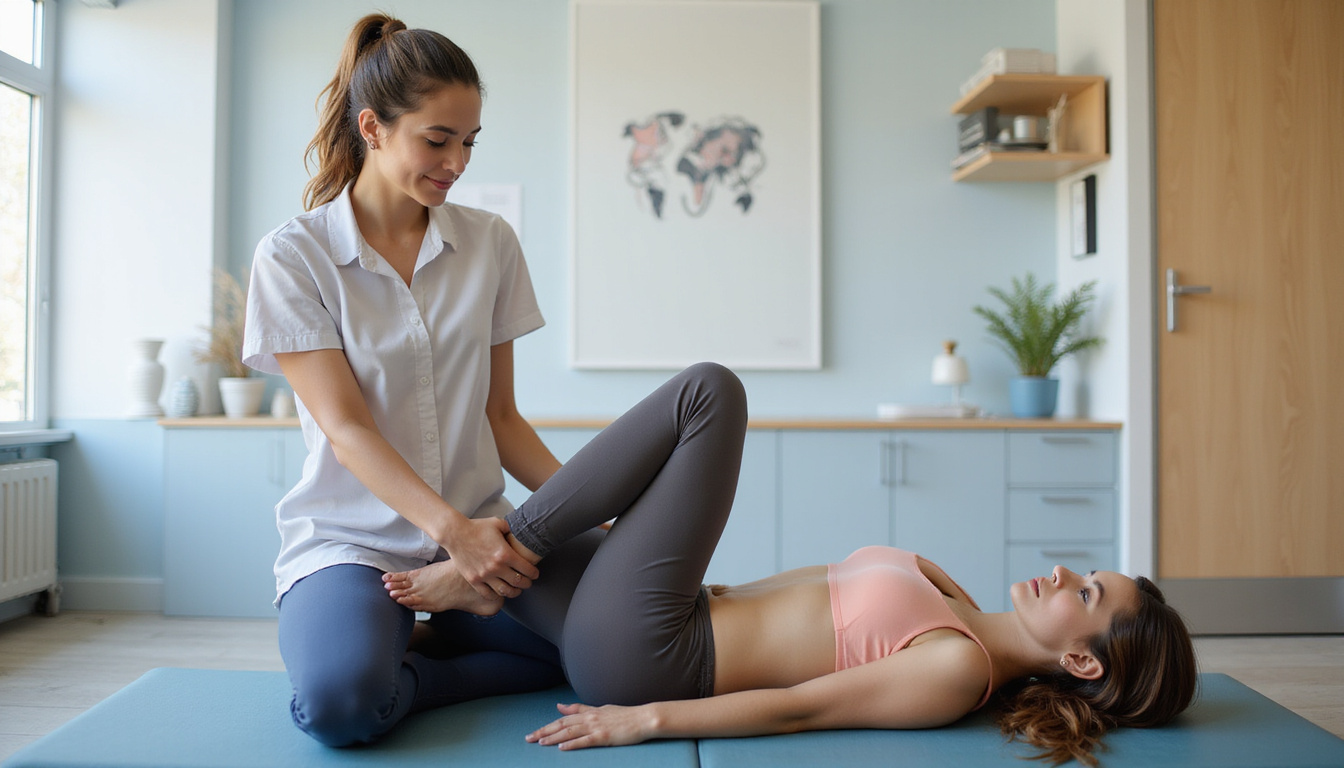
A women’s health physio will help you rebuild strength gradually.
You can return to your sport safely instead of quitting or ignoring symptoms.
6. Support Your Pelvic Floor With Daily Habits
Small daily changes can ease strain on your pelvic floor:
- Toilet habits
- Avoid pushing or straining when having a bowel movement.
- Use a small stool under your feet.
This raises your knees above your hips. - Do not hover over public toilets.
It makes your pelvic floor tense and hinders emptying.
- Coughing & sneezing
- Slightly turn to the side, lean forward a little, and gently engage your pelvic floor as you cough or sneeze.
- Lifting
- Keep the load close to your body,
bend at your hips and knees, - Exhale as you lift, using gentle pelvic floor and core engagement.
- Keep the load close to your body,
These small changes help reduce the daily “wear and tear” on your pelvic floor.
7. Manage Constipation and Bladder Irritation
Chronic constipation stresses your pelvic floor.
An irritated bladder makes you feel as if you need a toilet all the time.
Try these tips:
- Drink enough water throughout the day,
but not all at once near bedtime. - Eat more fibre.
Fruits, vegetables, and whole grains help keep your stool soft. - Limit bladder irritants if they worsen symptoms.
This includes caffeine, artificial sweeteners, and very spicy or acidic foods. - Practice scheduled voiding.
Do not always “just in case” pee.
This can make your bladder oversensitive.
Your physiotherapist may team up with your doctor.
They work together to treat gut or urinary issues as part of your plan.
8. Recognise That Postpartum and Menopause Both Need Targeted Care
Many Singapore women think pelvic floor issues only affect those who are old or had a “traumatic delivery.”
In truth, both postpartum and menopausal changes matter.
- Post‑pregnancy: Even after a C‑section, pregnancy changes your core and pelvic floor.
Tissues stretch. Hormones shift. Posture and breathing change for months. - Perimenopause/menopause: Lower oestrogen reduces tissue elasticity and support.
Issues that were hidden may start to appear.
Women’s health physiotherapy in these stages helps you:
- Rebuild strength and control after childbirth.
- Improve scar healing after a C‑section or episiotomy.
- Manage prolapse symptoms with conservative measures.
- Keep continence and sexual comfort later in life.
9. Choose a Clinic That Treats You Like an Athlete, Not “Just a Mum”
If you live an active life by running, doing CrossFit, dancing, or playing sports,
your pelvic floor must match the strength of the rest of your body.
At The Pain Relief Practice, we use sports physiotherapy and biomechanics.
We treat pelvic floor and women’s health issues with care and precision.
We have served Singapore since 2007.
We have cared for celebrities and national athletes.
They expect detailed assessments, performance‑based rehab, and privacy.
We help you solve pain, restore healthy joints and muscles,
and boost both performance and enjoyment of life.
We work hard to ensure your moves and intimacy stay pain‑free and confident.
If you already see an orthopaedic specialist, gynaecologist, or urologist,
we can work with them.
We provide non‑surgical, integrated care for both musculoskeletal and pelvic floor concerns.
Celebrities & National Athletes
When Should You Seek Women’s Health Physiotherapy?
You do not have to wait until problems become “very bad.”
Consider an assessment if you notice:
- Urine leaks when you cough, laugh, jump, or run.
- A strong urge to pee, with or without leaks.
- A dragging, heavy, or “tampon falling out” feeling in your vagina.
- Sexual pain or pelvic discomfort during or after intercourse.
- Trouble emptying your bladder or bowel completely.
- Pain in your lower back, hips, or groin that might relate to your cycle, pregnancy, or pelvic strain.
Early action often means faster recovery, less stress, and fewer lifestyle limits.
What a Typical Session at The Pain Relief Practice Looks Like
A pelvic‑focused women’s health physiotherapy session usually follows these steps:
- History & discussion
You share symptoms, birth and surgery history, training habits, and your goals
(for example: run 10km without leaks, pain‑free intimacy, carry kids without back or pelvic pain). - Movement & posture assessment
We check your spine, hips, breathing, and core control. - Pelvic floor assessment
With your consent, we may do an external or internal check of strength, tension, endurance, and coordination. - Hands‑on treatment
We use manual therapy, soft tissue work, and scar management when needed. - Exercise & strategy plan
We design tailored pelvic floor and full‑body strength work, suggest lifestyle changes, and include sport‑specific drills. - Progress tracking
We adjust your plan as you grow stronger and more confident.
Our aim is not just to stop leaks.
We work to build a pelvic floor that meets daily demands –
whether you carry kids, run for the MRT, carry heavy shopping bags, work long hours, maintain intimate relationships, or enjoy your favourite workouts.
Helpful External Resource
For more about pelvic floor issues and incontinence in women,
visit The International Continence Society at International Continence Society.
FAQ on Women’s Health Physiotherapy & Pelvic Floor Strength
1. What is women’s health physiotherapy for pelvic floor issues?
It is a specialised area of physiotherapy.
It focuses on conditions like urine leakage, prolapse symptoms, pelvic pain, and postnatal recovery.
It uses focused assessments and treatments to restore pelvic floor function, core strength, and ease movement.
2. How can women’s physiotherapy in Singapore help my bladder leakage?
It studies how your pelvic floor, core muscles, breathing, and daily habits work together.
By retraining muscle strength, timing, and control, and by adjusting activities that stress your pelvic floor,
many women see much less leakage or even a full stop.
3. Is pelvic floor physiotherapy only for women after childbirth?
No.
It benefits women who have never been pregnant, those recovering from gynaecological surgery,
athletes facing high‑impact loads, and women going through perimenopause or menopause.
If you feel pelvic heaviness, pain, or changes in bladder/bowel function,
a women’s health physiotherapist can help.
Ready to Take Your Pelvic Health Seriously?
If you reside in Singapore and are tired of planning every move around toilets, pads, or worries about “accidents” during exercise,
it is time to have a proper expert assessment.
The Pain Relief Practice is a specialised centre for pain and performance.
We have been established since 2007.
We help women regain control over their joints, muscles, and pelvic floor.
Our care empowers you to move, work, and enjoy life with confidence once more.
Explore our Google profile here:
https://share.google/UwMU2I9zUCwXVh0Lg
If your pelvic floor holds you back, you do not have to live with it.
With expert women’s health physiotherapy,
you can rebuild from the inside out.
We are a specialized physio treatment center for savvy people who want real results.
While we are not suitable for someone looking for ‘cheap physiotherapy’ or ‘free exercises available on youtube’, our treatments are affordable and are often claimable with company flexi-benefits, company health insurance, travel insurance, personal accident insurance, and other insurance plans.
Simply whatsapp or call: +65 97821601 and let us know how to help.
If you prefer a convenient nutritional preventive option, Regenerix Gold is our top recommended joint supplement.
We have been recommending this joint supplement for over a decade.
Simply start with 3 capsules, once a day.
If you do not feel better within a week, increase to 2 capsules, twice a day. (4 capsules a day in total)
Our blog readers qualify for a special discount.
Simply use the link below and a discount will automatically be applied during checkout.
 PROVIDING FAST, EASY & INSURANCE CLAIMABLE PAIN RECOVERY SINCE 2007