
If you live in Singapore and feel breathless, tired after small errands, or suffer joint and muscle pain months after infection, you are not alone. Many people now choose long COVID physiotherapy. They feel frustrated when blood tests and scans come back normal, yet their body still hurts. You might feel as if you aged 10 years overnight—climbing stairs hurts your knees, your back seizes after sitting, and old sports injuries act up.
This article shows how targeted physiotherapy can help long COVID sufferers in Singapore. It can rebuild strength safely, protect sore joints, and help you return to daily life without constant flare-ups. The Pain Relief Practice supports you on this journey.
What exactly is long COVID — and why does it hurt your joints and drain your energy?
Long COVID, or post‑COVID condition, means symptoms last for weeks or months after the infection. The World Health Organization lists symptoms like fatigue, breathlessness, chest tightness, brain fog, muscle weakness, joint pain, and low exercise tolerance.
Here are common words from long COVID patients with joint and muscle pain:
- “I could walk from Raffles Place to City Hall. Now, by the time I reach the MRT escalator, my knees feel weak and my heart races.”
- “I had a stable shoulder for years. After COVID, even hanging laundry or carrying groceries makes it throb.”
- “I used to go to the gym three times a week. Now, even lifting light weights causes body aches like I have been hit by a truck.”
Why does this happen?
- Deconditioning. Being unwell for weeks makes muscles, tendons, and ligaments lose strength. Joints feel loose or unstable.
- Inflammation. COVID can cause body-wide inflammation. This inflammation sensitizes nerves and irritates joints and soft tissue.
- Altered breathing and posture. Shallow breathing and prolonged sitting make you move in new ways. Your back, neck, hips, and knees then pay the price.
- Autonomic dysfunction. Some patients see changes in heart rate and blood pressure when standing. Small bursts of activity can make you feel faint.
Long COVID physiotherapy is different from just exercising more. It uses careful pacing and a plan that fits your limits.
Why long COVID physiotherapy must be customised (especially if you already have joint problems)
Many Singaporeans already have joint wear-and-tear. They may show early osteoarthritis, old ligament sprains, a history of a slipped disc, or rotator cuff problems. After COVID, these problems often flare up. If you start a generic workout, you may:
- Over-push and trigger extreme fatigue or post‑exertional malaise.
- Aggravate your knees, back, or shoulders. You might then rely on more painkillers, or worse, stop moving.
A tailored long COVID physio programme focuses on:
• Energy pacing – find your safe zone for exercise without crashing.
• Joint‑friendly strengthening – rebuild muscle support around painful joints without overloading them.
• Breathing and circulation – improve lung mechanics and blood flow so your heart does not race during simple tasks.
• Movement retraining – correct habits like limping, stiffness, or guarding that cause extra strain.
At The Pain Relief Practice, we use this structured, step‑by‑step approach since 2007. We help people in Singapore with chronic pain and complex cases. Now, we have adapted the same method for post‑COVID recovery.
Proven physiotherapy strategies for long COVID recovery in Singapore
1. Start with a proper assessment — not a one‑size‑fits‑all plan
A long COVID physiotherapy assessment at The Pain Relief Practice looks at:
• Your detailed symptom history. We ask about fatigue, breathlessness, dizziness, and pain.
• Your current activity tolerance. We note what triggers crashes and what makes a good day.
• Your joint mobility and stability in knees, hips, ankles, shoulders, and spine.
• Your muscle strength and endurance, especially around problem areas.
• Your balance, gait, and posture.
• Your breathing pattern. We check if you use chest or belly breathing and note rib stiffness.
• Your heart rate and blood pressure when you stand or sit.
We then map out zones:
• Green zone: activities your body handles well.
• Yellow zone: activities that are slightly challenging but safe if well paced.
• Red zone: activities that trigger flare-ups.
This gives you a clear, personalized plan instead of trying to exercise without guidance.
2. Pacing and energy management: learning your body’s new limits
For many with long COVID, the old idea of “no pain, no gain” can harm them. You may feel fine during activity, but then your body crashes 12–48 hours later.
At The Pain Relief Practice, physio-guided pacing includes:
• Writing an activity diary to spot triggers. For example, try not to place grocery shopping, housework, and meeting friends on one day.
• Task chunking. Break chores into small parts with breaks in between.
• Heart rate‑guided pacing. We set a safe heart rate range for you during exercise or walking.
• Banking good days. Avoid doing too much when you feel better to prevent boom‑and‑bust cycles.
Many patients say that learning this pace changes their life. They finally understand why they kept “relapsing” when trying to be active.
3. Gentle, joint‑friendly strengthening to rebuild support
Long COVID can make your knees feel wobbly, your lower back tight, or your shoulders and neck weak. Yet, too much rest makes you weaker. The key is to choose the right exercises at the right dosage.
Some common exercises we use, and which we adapt to each patient, are:
• Isometric holds. These are exercises where you tense the muscle without moving. They help support knees, hips, or shoulders without stressing the cartilage.
• Closed‑chain exercises. For example, mini squats using a table, wall push‑ups, or sit‑to‑stands from a high chair.
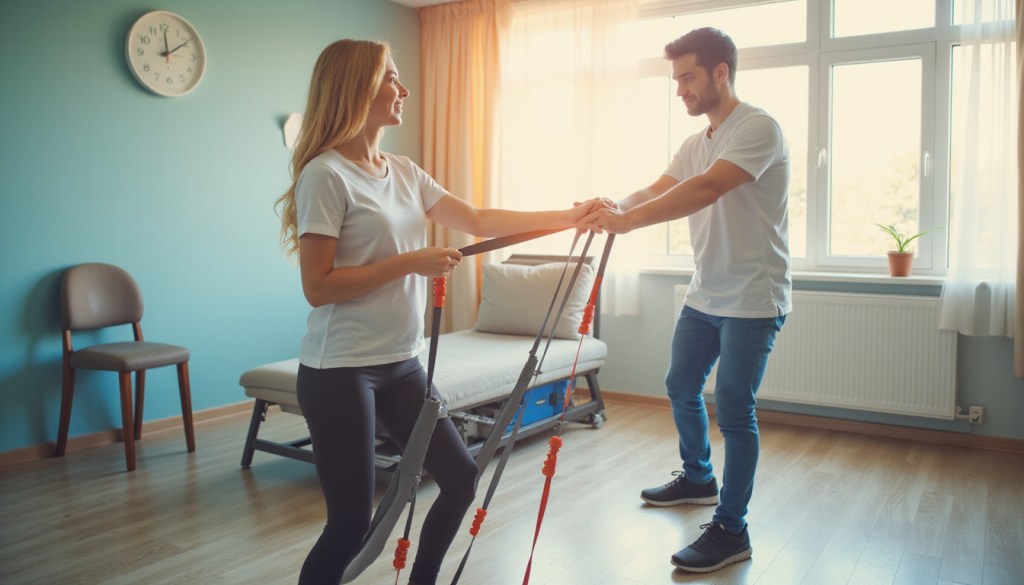
• Band‑based work. This work strengthens the glutes, rotator cuff, and core without heavy impact on the joints.
• Segmental spinal mobility exercises. These ease stiff or locked backs and necks.
We start with very mild movements and then progress slowly. We always watch for signs of flare-ups later on.
4. Breathing retraining and postural work to reduce strain
After COVID, many people take shallow and fast breaths. They overuse neck and upper chest muscles. This can cause:
• Neck and shoulder tightness.
• Headaches.
• Chest discomfort.
• Shortness of breath even during light work.
In long COVID physiotherapy, we work on:
• Diaphragmatic (belly) breathing. This helps your lungs expand fully.
• Rib cage mobility. These exercises free stiff parts of the chest.
• Postural corrections. They help your back and neck carry less load when you sit or use your phone.
• Graded breathing drills. These pair breath control with slow, gentle movements, like supported arm raises or marching in place.
Patients say they feel like “finally filling my lungs again.” They also notice their heart does not pound when they walk.
5. Managing flares: what to do when symptoms spike
Even with a good plan, long COVID recovery is rarely smooth. Some days, your joints may hurt more, or you may feel heavy.
We teach a clear flare‑management plan:
• Dial down, don’t shut down. Lower the intensity or volume of your exercises, but keep some gentle movement.
• Use pain‑relief strategies. These include manual therapy, targeted stretches, and joint unloading positions. Sometimes additional methods are used to calm the pain.
• Follow a recovery day structure. Plan a lighter day that still lets your joints move and your blood flow.
• Use a re‑ramping plan. This helps you slowly increase activity once symptoms ease. This way, you do not lose your gains.
This approach helps you to gradually move forward, even if there are occasional setbacks.
How The Pain Relief Practice supports long COVID recovery
The Pain Relief Practice is one of Singapore’s established physiotherapy clinics. We have helped people with joint and muscle pain since 2007. We are known for handling complex pain cases. Often, these are the very patients who struggle most with long COVID.
Key points about our approach:
• Specialised pain and performance focus. We do not simply “treat the injury.” We review how your body moves, your lifestyle, and your performance goals. This may range from walking pain‑free to returning to high‑level sport.
• Evidence‑guided long COVID physiotherapy. We mix the latest knowledge on post‑COVID rehab with over a decade of experience in treating chronic musculoskeletal pain.
• Experience with challenging cases. We have treated celebrities and national athletes in Singapore who demand precise, results‑driven care. This same standard applies to every patient who wants to move better and live better.
Real Results
Celebrities & National Athletes
Our goal is not only to lessen pain but to help you:
• Regain confident, healthy joints and muscles.
• Improve stamina without crashing.
• Return to work, sports, and family life with fewer limits.
• Enjoy life in Singapore once more—from hawker hopping to weekend hikes—without the fear of the next flare.
A simple example of a long COVID‑friendly daily routine
This is a simple sample. Your actual plan must be customised by a physiotherapist:
- Morning
- Do 5 minutes of diaphragmatic breathing and gentle neck/back movements.
- Take an easy walk around your home or in a corridor. Keep within your safe heart rate.
- Mid‑morning
- Spend 10–15 minutes on joint‑friendly strengthening. Try mini squats, band rows, or core isometrics.
- Afternoon
- Break tasks into smaller parts and take sits between activities. Avoid standing too long.
- Late afternoon
- Enjoy a short, low‑intensity walk or ride a stationary bike for 5–10 minutes.
- Evening
- Do light stretching and mobility work, especially for hips, knees, or lower back.
- End with wind‑down breathing to help you sleep and recover.
Adjust each session based on your daily symptoms. Your physiotherapist will help you decide when to push a bit and when to ease off.
Why early, guided rehab matters
Long COVID can become a lasting problem if you:
• Stop moving out of fear.
• Constantly push your limits and trigger crashes.
• Rely solely on painkillers without fixing movement and strength problems.
Early, structured long COVID physiotherapy can help you:
• Break the cycle of fear and avoidance.
• Prevent further loss of strength in your joints and muscles.
• Protect vulnerable areas such as knees, hips, spine, and shoulders.
• Gradually renew your trust in your body.
The Pain Relief Practice uses years of experience with stubborn musculoskeletal pain. We also serve athletes and high‑performance clients. This makes us a strong partner if you want clear plans, measurable progress, and a return to an active, enjoyable lifestyle.
FAQ about long COVID physiotherapy in Singapore
-
How does long COVID physiotherapy differ from regular physiotherapy?
Long COVID physiotherapy stresses pacing, heart rate monitoring, and careful checking of symptoms. Regular physiotherapy may push you harder. Long COVID rehab uses slow, careful increases in activity so that fatigue, breathlessness, and joint pain do not worsen. -
Is physiotherapy effective for long COVID fatigue and muscle weakness?
Yes, when it is done slowly and with care. Graded, low‑impact exercises help rebuild muscle, improve circulation, and slowly restore stamina. The key is a proper assessment and a plan made just for you. That is what The Pain Relief Practice offers for long COVID recovery. -
Can long COVID physio help if I already have knee, back, or shoulder problems?
Yes, it can. Many patients with long COVID in Singapore have pre‑existing problems such as osteoarthritis, disc issues, or old sports injuries. A good long COVID physio programme will address both your post‑COVID symptoms and underlying joint issues. It uses joint‑friendly exercises, manual therapy, and movement retraining to lower flare-ups and improve function.
If you are in Singapore and feel trapped by lingering post‑COVID symptoms, joint pain, and fatigue, you do not have to wait for things to change. A structured long COVID physiotherapy programme at The Pain Relief Practice can help you steadily rebuild strength, protect your joints, and return to a more active, enjoyable life.
You can explore our clinic location, reviews, and directions here:
https://share.google/UwMU2I9zUCwXVh0Lg
We are a specialized physio treatment center for savvy people who want real results.
While we are not suitable for someone looking for ‘cheap physiotherapy’ or ‘free exercises available on youtube’, our treatments are affordable and are often claimable with company flexi-benefits, company health insurance, travel insurance, personal accident insurance, and other insurance plans.
Simply whatsapp or call: +65 97821601 and let us know how to help.
If you prefer a convenient nutritional preventive option, Regenerix Gold is our top recommended joint supplement.
We have been recommending this joint supplement for over a decade.
Simply start with 3 capsules, once a day.
If you do not feel better within a week, increase to 2 capsules, twice a day. (4 capsules a day in total)
Our blog readers qualify for a special discount.
Simply use the link below and a discount will automatically be applied during checkout.
 PROVIDING FAST, EASY & INSURANCE CLAIMABLE PAIN RECOVERY SINCE 2007