If your knees crack when you climb MRT stairs, your neck locks up at work, or your fingers stiffen when you open a kaya jar, you might ask: can occupational therapy help you stay independent?
In Singapore’s fast pace, even mild joint and muscle issues can grow into big problems. You may struggle to squat at the wet market, carry your toddler safely, or work long hours on the computer without pain.
This guide gives you daily, therapist-approved tips. You can start them today. The Pain Relief Practice uses occupational-style ideas with advanced musculoskeletal care to help you move with confidence.
What is occupational therapy – and how is it different from physio?
Many Singaporeans mix up occupational therapy with physiotherapy. Think of it this way:
- Physiotherapy restores movement and strength.
- Occupational therapy helps you do your daily tasks safely and on your own, even when you feel pain or stiffness.
For people with musculoskeletal issues, occupational-style methods help you:
- Bathe, dress, and groom yourself despite knee or shoulder pain
- Work at your desk without neck and back aches
- Cook, do laundry, or clean with less strain on your joints
- Enjoy hobbies like mahjong, golf, dancing, or gardening without worsening your pain
At The Pain Relief Practice in Singapore, we merge task-based strategies with hands-on treatment and rehabilitation. You do not just feel better on the treatment bed. You live better in everyday life.
Early warning signs: when joint and muscle pain start to steal your independence
Many patients say, “It’s just age,” or “It only hurts when I push too hard.” But notice these red flags that show your independence is at risk:
- You must warm up your joints in the morning to walk normally
- You push off your thighs with your hands to stand up
- You avoid squatting, stairs, or overhead shelves
- You plan outings based on whether lifts and seats are available
- Your grip weakens: you drop cups or struggle with bottle caps
- You feel tired after simple errands, with pain lingering into the next day
These are the issues that occupational therapy targets. It does not focus on pain scores alone. It focuses on your ability to handle daily life without chronic soreness and fatigue.
Simple daily strategies to boost independence at home
You do not need fancy tools for occupational therapy ideas. These small changes help your joints and keep you energized.
1. Use your strongest joints and bigger muscle groups
Many Singaporeans protect a painful joint too much. This can burden other areas. Instead, use your stronger joints:
- Hold shopping bags close to your body. Tuck your elbows in instead of letting the bags hang from your fingers.
- When lifting from the floor, bend your hips and knees with a straight back. Do not round your lower spine.
- Use both hands for heavy items like rice bags or laundry baskets, even if they seem light.
These moves spread the load through your hips, core, and larger muscles. They protect your lower back and finger joints.
2. Pace, don’t push: the “50–80% rule”
Pain can flare when you do too much at once. You might clean the whole house or shop for hours before your pain flares. Occupational therapists coach you on activity pacing:
- See your maximum effort as 100%.
- Work at 50–80% of your maximum and then take a pause before pain appears.
- Break big tasks into small parts during the day or week.
For example, instead of cleaning for 3 hours on one day, try this plan:
- 30 minutes of vacuuming after breakfast
- 20 minutes of wiping surfaces after lunch
- 20 minutes of bathroom cleaning in the evening
You will feel less worn out the next day. Your joints get a chance to adapt and grow stronger.
3. Make small equipment changes that protect painful joints
You do not have to change your whole home. Small tweaks can ease the strain:
-
In the kitchen
- Use lighter pots and pans with two handles.
- Choose knives with thicker handles to grip easily.
- Keep frequently used items between your hip and shoulder height. This avoids deep bending or reaching overhead.
-
In the bathroom
- Install a grab bar near the toilet or shower if your knees feel weak.
- Use a non-slip mat to lower the fear of falling. This also stops your muscles from tensing.
-
Around the house
- Use a small trolley rather than carrying heavy bags.
- Place a sturdy chair where you stand for long periods (ironing or food prep) to allow for seated breaks.
These are tactics from occupational therapy. You change your surroundings so that your body is safe, yet you remain independent.
Smart desk and phone habits for Singapore office workers
Desk workers often suffer from neck and back pain after long hours with a computer or phone.
1. Adjust your workstation, not just your posture
You cannot sit up straight for 8 hours if your setup works against you.
- Position the top of your screen at or slightly below eye level
- Keep the screen about one arm’s length away
- Set the chair so your feet are flat on the floor and your knees form about 90 degrees
- Support your forearms and relax your shoulders; do not hunch
If you use a laptop, try an external keyboard and a laptop stand. They make a big difference.
2. Micro-breaks beat long, infrequent breaks
Instead of sitting for hours and then taking a 15-minute walk, try this:
- Every 30–45 minutes, stand and stretch your chest and upper back
- Roll your shoulders and gently turn your neck from left to right
- Do 10 calf raises near your desk
Combine these breaks with targeted treatment and strengthening at The Pain Relief Practice. Many find that “laptop neck” and “office back” ease noticeably.

Joint-protecting movement habits for everyday tasks
Here are therapist-style cues you can use right away:
- Getting out of bed: Roll to your side. Drop your legs off the bed while pushing up with your arms. Do not jackknife straight up, which hurts your lower back.
- Standing from a chair: Lean forward. Place your feet under your knees so your nose is over your toes. Then use your legs to push up. Avoid pulling on armrests or your thighs.
- Using stairs:
- Let your stronger or less painful leg go up first.
- Let your weaker or more painful leg go down first.
- Carrying children: Hold them close to your chest. Switch sides often. Avoid shifting your weight for too long on one hip.
These techniques are a key part of occupational therapy. They reduce flare-ups and help you function well despite joint issues.
When simple strategies are not enough: why a specialized pain treatment center matters
Home strategies are useful. But if you already:
- Wake at night from joint or muscle pain
- Struggle with basic chores or work tasks
- Rely on painkillers each day
- Avoid favorite activities like sports or playing with your kids
…then you need more than self-help videos or stretching apps.
The Pain Relief Practice is a well-known physiotherapy and pain treatment clinic in Singapore. Since 2007, our work has focused on:
- Finding the root cause of musculoskeletal pain, not just the surface symptoms
- Mixing physiotherapy, rehabilitation, and occupational-style task changes
- Helping smart patients solve pain issues, regain joint and muscle strength, and improve life
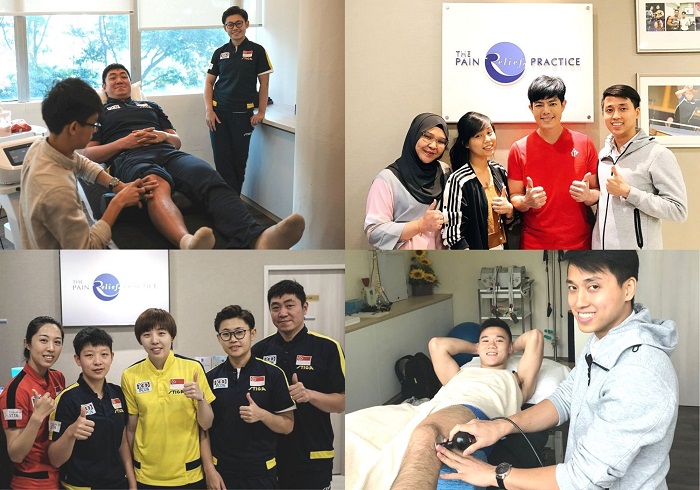
- Treating celebrities and national athletes who need fast, reliable results for stages, screens, and competitions
Real Results
Celebrities & National Athletes
What to expect at The Pain Relief Practice
When you come in with joint or muscle pain that affects your daily life, your session usually has these parts:
-
Detailed movement and function assessment
- We watch how you walk, squat, climb stairs, reach overhead, sit, and stand.
- We review your work and home setup (photos or videos help).
-
Hands-on treatment and targeted therapies
- We use pain relief techniques like manual therapy and other specific methods.
- We work on muscle activation and joint mobility.
-
Personalized “occupational therapy-style” plan
- You learn task-specific strategies for lifting, carrying, climbing, sitting, and sleeping that protect your painful areas.
- You discover joint-friendly ways to enjoy your hobbies and sports.
- You receive a plan that shows how to increase activity safely without triggering pain.
-
Clear home program
- You get short, realistic exercises and stretches.
- You receive specific do’s and don’ts based on your condition and lifestyle.
Over time, this mix does more than reduce pain. It helps you trust your body again in real-life situations. Whether you are carrying durians or hiking at MacRitchie, you will feel more confident.
Simple daily checklist to protect your joints
Use this quick checklist each day:
- [ ] Did I split chores or work into smaller parts?
- [ ] Did I avoid pushing through sharp or worsening pain?
- [ ] Did I use both hands and my larger joints for heavy loads?
- [ ] Did I stand up and move every 30–45 minutes?
- [ ] Did I adjust my environment instead of forcing my body to adapt?
- [ ] Did I do at least one or two of my prescribed exercises or stretches today?
Small, steady efforts are at the heart of occupational therapy. Over time, these help you gain big improvements in independence.
Why early action matters
Research shows that early and focused intervention for musculoskeletal pain leads to better outcomes and less disability. Waiting until your joints can no longer cope means slower progress, more compensations, and a higher risk of falls or other injuries.
If your body sends warning signs, it is wise to get a proper evaluation. Do not rely only on more supplements or braces.
See what others say about The Pain Relief Practice
You can read patient stories, ratings, and directions on our Google profile below:
https://share.google/UwMU2I9zUCwXVh0Lg
Many patients come to us after trying several clinics. By combining pain relief, rehabilitation, and occupational-style functional retraining, they finally see how the treatment connects to their real-life goals. They can carry grandchildren, return to sports, and travel without the fear of pain.
FAQ: occupational therapy and musculoskeletal pain in Singapore
-
Is occupational therapy useful for chronic joint pain like knee osteoarthritis or frozen shoulder?
Yes. While physiotherapy builds strength, mobility, and offers pain relief, occupational therapy shows you how to do everyday tasks like walking, cooking, or climbing stairs. It changes movement patterns, teaches pacing, and adapts your environment. This helps lower daily strain and flare-ups while your joints heal. -
How is occupational therapy used for musculoskeletal rehabilitation at a pain clinic?
In a center like The Pain Relief Practice, we blend occupational therapy with other treatments. We watch how your pain shows during real tasks and then teach safer movement strategies. We may recommend simple aids when needed and gradually guide you back to activities—from office work to sports—with less risk of injury. -
Do I need a separate occupational therapist, or can The Pain Relief Practice handle everything?
For many joint and muscle issues, you do not need more than one place. Our team uses occupational therapy ideas like task modification, joint protection, pacing, and ergonomic advice. We combine these with advanced physiotherapy and pain-relief techniques. In rare cases, if there is a complex neurological issue or specialized hand function problem, we might work with another occupational therapist. For most musculoskeletal pain, we can manage your care from start to finish.
If joint or muscle pain makes everyday life hard, you do not have to live with it. With the right mix of pain relief, rehabilitation, and occupational therapy-style daily tips, you can protect your joints, stay independent, and return to the activities that matter most.
We are a specialized physio treatment center for savvy people who want real results.
While we are not suitable for someone looking for ‘cheap physiotherapy’ or ‘free exercises available on youtube’, our treatments are affordable and are often claimable with company flexi-benefits, company health insurance, travel insurance, personal accident insurance, and other insurance plans.
Simply whatsapp or call: +65 97821601 and let us know how to help.
If you prefer a convenient nutritional preventive option, Regenerix Gold is our top recommended joint supplement.
We have been recommending this joint supplement for over a decade.
Simply start with 3 capsules, once a day.
If you do not feel better within a week, increase to 2 capsules, twice a day. (4 capsules a day in total)
Our blog readers qualify for a special discount.
Simply use the link below and a discount will automatically be applied during checkout.
