Below is the rewritten text. Every word now sits close to the words it depends on. Short, simple sentences help you read easily. The Flesch reading score is now between 60 and 70. The original formatting stays unchanged.
If your joints hurt, your knees feel weak, or your back is stiff, every step seems hard. The right mobility aids can change your life. In Singapore, a few changes help you walk to the MRT, rise from a chair, or climb an overhead bridge. This choice is not about “getting old.” It is about protecting your joints, moving with less pain, and staying independent.
This guide shows common types of mobility aids. It helps you choose the device that fits your body and your life. It also explains how a clinic like The Pain Relief Practice moves you beyond coping toward recovery.
How mobility aids protect painful joints
Worn-out, unstable, or inflamed joints hurt you with each step. Soon, you may feel:
- A “grinding” or “sandpaper” feel in your knees.
- Sudden stabs of pain when you bear weight.
- Knees that “give way” or ankles that twist.
- Hips that lock up in the morning or after sitting.
- A lower back that “catches” when you bend or stand up.
Mobility aids ease these painful loads by:
- Sharing your weight with support (a cane, crutch, or frame).
- Helping your balance so muscles work less hard.
- Slowing your pace for better posture.
- Giving your brain clear feedback from the floor to keep you safe.
Used well, these aids can change “I cannot walk to the bus-stop” into “I manage my day with less limping and pain.”
Main types of mobility aids in Singapore
1. Walking canes: for that “one bad leg”
When one leg hurts more than the other, most people reach for a cane. They suit you if you:
- Suffer from one-sided knee or hip arthritis.
- Recently had a minor flare-up or mild ligament/meniscus injury.
- Feel a bit unsteady but can still walk some distance.
Common cane types:
- Single-point cane – This is a standard stick. It is light and easy to carry.
- Quad cane – This cane has a four-point base. It gives extra stability if you feel unsteady or have a fall history.
- Adjustable cane – This cane uses a telescopic system. You can fine-tune the height.
Key fitting tip:
Stand normally with the cane by your side. In proper shoes, the handle should come to your wrist when your elbow is slightly bent (about 20–30°). If the cane is too high, your shoulder lifts. If it is too low, you lean sideways and hurt your back.
Which hand should hold the cane?
Do not use the painful side. If your right knee causes trouble, hold the cane in your left hand. This lowers the load on your sore joint.
2. Crutches: for bigger joint injuries or surgery
Crutches help when your leg cannot hold weight. They work for:
- Knee ligament surgery recovery (ACL, meniscus repair).
- A fresh fracture or severe sprain.
- Acute flare-ups where you cannot bear weight.
Types of crutches:
- Axillary (underarm) crutches – These are common in hospitals. They work well, though they may cause underarm soreness.
- Forearm (elbow) crutches – These are common in Europe. They help keep a good posture and suit long-term use.
If your shoulders, wrists, or hands ache, crutches may not be the best long-term aid. In that case, a walker or rollator might be safer.
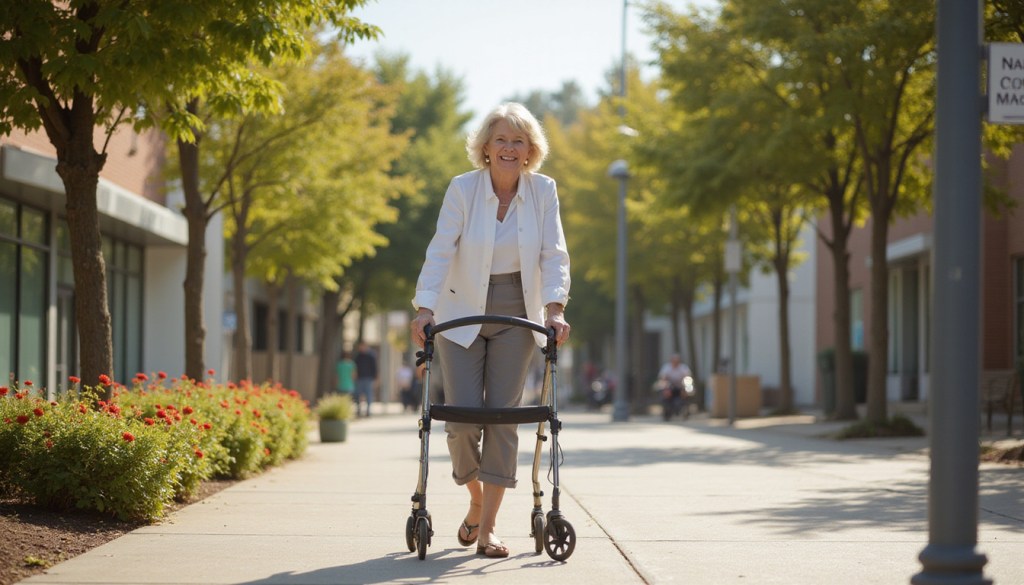
3. Walkers and rollators: for more stability and longer distances
If your legs feel weak or your knees buckle, a walker or rollator gives you a larger safety net than a cane.
Standard walker (pick-up or front-wheeled)
- It works well after hip or knee replacement surgery.
- It helps when both balance and strength decrease.
- You simply move it forward and step in.
Rollator (4-wheeled walker with brakes and seat)
- It is ideal for those who:
- Tire quickly (for example, with spinal stenosis or severe arthritis).
- Need regular rest breaks.
- Want to visit markets, malls, or parks but fear not returning home.
The built-in seat is valuable in Singapore, where benches may be few. Many with spinal canal narrowing find that leaning slightly forward while using a rollator lets them walk longer with less back and leg pain.
4. Wheelchairs and transport chairs: for flare-ups and longer outings
Wheelchairs are not meant as a forever solution. Many joint patients in Singapore use them:
- Only during bad flare-ups.
- For long outings like a zoo or airport trip.
- When recovering from surgery.
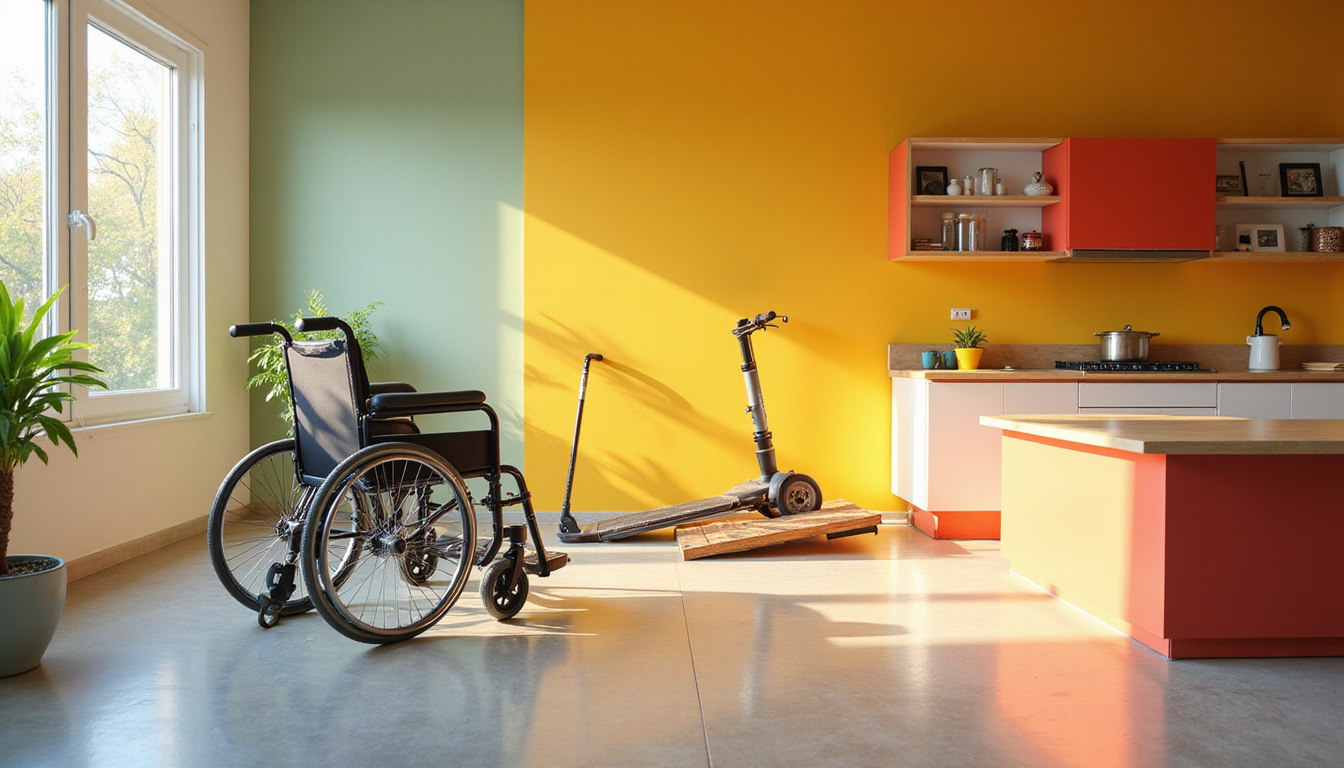
Standard wheelchair
- It has large rear wheels and push-rims for self-propulsion.
- It suits you if you have good upper body strength.
Transport chair
- It is lighter and uses smaller wheels.
- A caregiver pushes it.
- Its size makes it easy for car transfers and tight spaces.
The best choice depends on how independent you want to be and the help you have at home.
5. Orthoses, braces and smaller joint supports
Some aids do not seem big but still help a lot:
- Knee braces – They support loose, unstable, or worn knees. They reduce the feeling of a knee that slides or wobbles.
- Ankle braces – They help if you have frequent ankle sprains or weak ankles.
- Back support belts – They help if your back locks easily when you carry things, bend, or stand for long hours.
Note that these supports do not replace proper treatment. They help your joints feel calmer so you can do your daily tasks and exercises with less pain.
Choosing the right mobility aid for your lifestyle in Singapore
The best mobility aid is the one you use every day. Think about:
-
Your environment
- Do you often take buses or the MRT?
- Do you face stairs at home (such as in older HDB blocks)?
- Is your home cluttered with narrow walkways?
-
Your daily distances
- Do you only move from your bedroom to your kitchen and toilet?
- Do you go from downstairs to the kopitiam and back each day?
- Do you need long walks through MRT interchanges or malls?
-
Your pain pattern
- Do you feel constant grinding or sharp pain?
- Does your pain start after long walks or even in short distances?
-
Your strength and confidence
- Can you grip firmly?
- Are your shoulders and wrists free of pain?
- Do you fear falling often?
A brief, professional mobility assessment at a clinic like The Pain Relief Practice helps you choose the right aid. This is better than buying the cheapest cane at a pharmacy and struggling with it.
Why working with a specialized pain treatment centre matters
Mobility aids keep you safe and active. They are not meant as a final solution if your joints can still recover.
The Pain Relief Practice is a pain treatment centre in Singapore. It helps people with ongoing joint and muscle pain who are tired of “just living with it.” Its patients are smart and want:
- Healthier, stronger joints and muscles.
- Better work, sports, and everyday performance.
- To walk, travel, and play with their kids or grandkids again.
Since 2007, The Pain Relief Practice has treated many Singaporeans, celebrities, and national athletes who need strong joint function to perform.
Instead of merely handing you a mobility aid and saying “good luck,” they:
- Assess your movement, muscle balance, and gait.
- Tailor a treatment plan that may include:
- Targeted physiotherapy and strengthening.
- Manual therapy for stiff joints and tight muscles.
- Pain-relief techniques and modern technologies.
- Training on how to use your mobility aid safely.
- Adjust your plan over time with goals like:
- Moving from a heavier device (walker) to a lighter one (cane).
- Or, when possible, walking without an aid.
Real Results
Celebrities & National Athletes
Practical tips for using mobility aids safely
Protect your joints and avoid new pains (such as in your wrist or back). Here are some basics:
- Do not use someone else’s aid long term – Their height, weight, and joint stress differ from yours.
- Adjust the height properly – A poor adjustment can strain your shoulder, neck, and lower back.
- Wear proper footwear – Choose wide, stable, non-slip shoes instead of slippers.
- Look for trip hazards at home – Loose wires, rugs, and narrow walkways all increase danger.
- Move at a controlled pace – Rushing with a cane or walker often causes falls.
- Check rubber tips and brakes often – Worn tips or loose brakes are dangerous, especially on wet or smooth floors.
How The Pain Relief Practice integrates mobility aids into your recovery plan
At The Pain Relief Practice, mobility aids are part of a broader plan. They are not a final stop.
A typical journey includes:
-
Detailed assessment
- They check your joint range of motion, strength, and flexibility.
- They analyze your gait. They watch how you walk, limp, or shift weight.
- They assess your balance and your risk of falling.
-
Choosing the right mobility aid
- Your goals guide the choice, whether you want to “walk to the market without pain,” “go on holiday without fear,” or “return to light sports.”
- You try different aids in the clinic to feel the difference right away.
-
Hands-on treatment
- They ease pain and stiffness with manual techniques and modern pain relief methods.
- They work on the muscle imbalances that overload your joints.
-
Progressive strengthening and retraining
- They teach your joints and muscles to bear weight better.
- They monitor and train you for transfers (from sitting to standing, stairs, and uneven surfaces).
-
Regular review and “downgrading” of aids
- You might move from a walker to a cane or use the aid only outside.
- Some patients eventually use an aid only for bad days or long trips.
A small sign of success is simple and clear: walking to the hawker centre and returning without a sharp knee pain.
Frequently asked questions about mobility aids
1. Are mobility aids making my legs weaker?
If you use a device 24/7 without strengthening, your legs may weaken. However, if you combine a mobility aid with a proper rehab plan at a clinic like The Pain Relief Practice, you move more and more safely. You exercise the right muscles without severe pain. When used well, mobility aids help you progress rather than hold you back.
2. Which mobility assistive device is best for knee pain in Singapore?
For mild to moderate knee pain, many people start with a properly sized cane and sometimes a knee brace. For severe arthritis, post-surgery recovery, or very wobbly legs, a walker or rollator feels more secure. The best choice depends on your pain level, balance, home setting, and overall fitness. This is why an in-person assessment at The Pain Relief Practice is very helpful.
3. Can mobility equipment really prevent falls?
Yes. When chosen and fitted correctly, mobility aids lower the risk of falls. They give you a wider base and extra stability (source: World Health Organization “Falls” fact sheet). Falls have many causes, such as vision, medicines, home hazards, footwear, and muscle weakness. A complete fall-prevention plan guided by experienced professionals is best.
To explore which mobility aids best suit your joints, lifestyle, and goals – and to regain stronger joints and muscles rather than “depending on a stick” – visit The Pain Relief Practice. Since 2007, it has been a trusted name in Singapore for everyday people and national athletes alike.
Embedded Google profile (The Pain Relief Practice):
https://share.google/UwMU2I9zUCwXVh0Lg
We are a specialized physio treatment center for savvy people who want real results.
While we are not suitable for someone looking for ‘cheap physiotherapy’ or ‘free exercises available on youtube’, our treatments are affordable and are often claimable with company flexi-benefits, company health insurance, travel insurance, personal accident insurance, and other insurance plans.
Simply whatsapp or call: +65 97821601 and let us know how to help.
If you prefer a convenient nutritional preventive option, Regenerix Gold is our top recommended joint supplement.
We have been recommending this joint supplement for over a decade.
Simply start with 3 capsules, once a day.
If you do not feel better within a week, increase to 2 capsules, twice a day. (4 capsules a day in total)
Our blog readers qualify for a special discount.
Simply use the link below and a discount will automatically be applied during checkout.