
If you live in Singapore and suffer from joint aches, stiff knees on MRT stairs, or a stubborn shoulder, you may have heard, “Just get an X-ray.” X-rays show bones but not soft tissues. Musculoskeletal ultrasound fills that gap by scanning muscles, tendons, ligaments, and joints. When simple tests fail, ultrasound can explain your pain.
At The Pain Relief Practice, many patients show “normal” X-rays, yet they cannot squat, sleep on their side, or lift their arm above the shoulder. A careful ultrasound scan may reveal the true source of the discomfort.
Why Musculoskeletal Ultrasound Is So Valuable for Joint Pain in Singapore
Musculoskeletal ultrasound (MSK US) differs from the standard kind used in pregnancy or abdominal issues. It focuses on:
• Tendons (for example, rotator cuff, patellar tendon, or Achilles tendon)
• Ligaments (like those in the ankle, knee, or shoulder)
• Muscles and fascia
• Bursae (small, inflamed fluid sacs that pinch the joint)
• Joint capsules and the synovial lining
• Nerves around the joint
This matters for people with chronic joint pain because:
• X-rays show bones but miss soft tissue changes.
• MRI is detailed but high in cost and not as accessible.
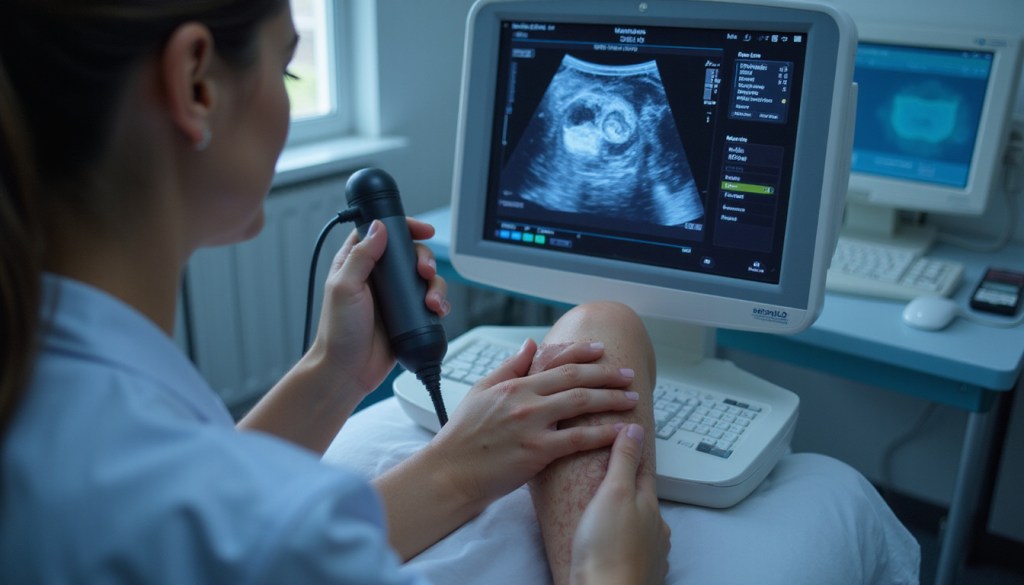
• Musculoskeletal ultrasound can scan the joint while you move, so hidden issues under stress are revealed.
For active adults, office workers with neck and shoulder tension, gym-goers, and national athletes, MSK ultrasound can change your treatment plan from guesswork to pinpointing the cause.
1. Dynamic Scanning: Seeing the Joint in Motion
Some patients share, “My knee clicks when I bend halfway,” or “My shoulder jams only when I reach behind.” Static images miss these clues.
Dynamic ultrasound lets the clinician:
• Scan a tendon or ligament as you flex and extend
• Watch muscles and tendons glide or stick
• Reproduce the movement that causes pain and see what gets pinched or overloaded
This dynamic view is useful when you have:
• Shoulder impingement when lifting
• Snapping hip or scapula issues
• Tendon subluxation, where a tendon slips out of its groove
2. High-Resolution Tendon Assessment
When you say “tendonitis,” “jumper’s knee,” or “tennis elbow,” you mean tendon problems. A modern, high-frequency MSK ultrasound clearly shows:
• Tendon thickening or degeneration (tendinopathy)
• Partial or complete tears
• Tiny calcifications that cause sharp, catching pain
For example:
• In the shoulder rotator cuff, it distinguishes between simple inflammation and a tear.
• In the knee’s patellar tendon, it shows if the irritation means structural damage.
• In the Achilles tendon, it detects early degeneration before a rupture.
This detailed view helps plan rehab that goes beyond simple advice like “rest more.”
3. Detecting Bursitis and Impingement
Many Singaporeans say, “My shoulder feels jammed” or “I get a sharp pinch in my hip.” Ultrasound can reveal bursitis—when a small fluid sac is inflamed.
Musculoskeletal ultrasound shows:
• Enlarged fluid-filled bursae (such as the subacromial bursa in the shoulder or the trochanteric bursa in the hip)
• Extra friction or pinching when the joint moves
• Links between bursa inflammation and nearby tendon damage
Accurate detection means your doctor or therapist may use shockwave therapy, guided injections, or load modification. This avoids unnecessary medications or procedures that do not target the bursa.
4. Ligament Injury Grading
When you twist your ankle or feel a loose knee, ligaments may be involved. Ultrasound helps to:
• Identify minor sprains versus severe tears
• Check ligament thickness and integrity
• Decide on the best course: conservative rehab or specialist referral
This is key for athletes who suffer ankle sprains in futsal or basketball, or knee injuries in sports.
5. Early Detection of Muscle Tears and Strains
If you feel a sudden “pull,” “snap,” or a lingering cramp in your calf, thigh, or hamstring, you may have a muscle tear. Ultrasound helps to:
• Tell apart a minor strain and a fiber tear from a full rupture
• Show the size and depth of the tear
• Track the healing progress so you know when it is safe to resume training
This insight is essential before increasing activity after an injury.
6. Guiding Injections and Targeted Treatments
MSK ultrasound shines in image-guided procedures. Instead of “blind” injections based on guesswork, the clinician can see the exact location of the needle.
Common uses include:
• Bursal injections for severe bursitis
• Injections into tendon sheaths
• Joint injections in the shoulder, knee, or ankle
Image guidance improves accuracy and ensures that medicine or regenerative treatment targets the troubled spot.
7. Assessing Nerve Entrapment Around Joints
Sometimes you feel a “zing,” “electric shock,” or burning pain near the elbow, wrist, or ankle. Ultrasound may reveal:
• Swollen, compressed peripheral nerves
• Nerve displacement or entrapment during movement
• External structures that squeeze the nerve
This is especially helpful for carpal tunnel-like symptoms, ulnar nerve issues at the elbow, or foot nerve problems in runners.
8. Real-Time Comparison of Both Sides
Many patients say, “My painful side feels different.” Ultrasound lets the clinician scan both the bad and good sides in one session.
This helps with:
• Direct comparison of tendon thickness, structure, and movement
• Proof that your painful joint is structurally different
• Tailoring rehab loads, exercises, and timelines
Seeing the contrast on screen can be a great relief.
9. Monitoring Healing and Rehab Progress
When you have a tear or chronic tendon problem, guessing if you are healed enough to return to sport is risky. Follow-up ultrasound shows:
• Reduced inflammation and swelling
• Better muscle or tendon fiber organization
• Signs that a tear is filling in and stabilizing

This helps runners decide when to increase mileage, gym-goers to resume heavy lifts, and seniors to confidently climb stairs or carry groceries.
10. Identifying Hidden Causes of Chronic Joint Pain
Some Singaporeans visit many GPs, TCM practitioners, or massage therapists and still do not get lasting relief. They try painkillers, rubs, and “rest,” yet the pain returns.
Ultrasound sometimes reveals subtle but vital issues:
• Tiny partial tendon tears that never heal
• Chronic tendinopathy that needs careful load management
• Micro-calcifications that irritate tissues
• Early joint capsule degeneration
A clear diagnosis allows for targeted treatment instead of endless trial and error.
Why Choose The Pain Relief Practice for Musculoskeletal Ultrasound in Singapore?
The Pain Relief Practice is a trusted physiotherapy and pain clinic in Singapore. Since 2007, we combine advanced musculoskeletal ultrasound with hands-on clinical care. We do more than treat pain—we address its root causes.
We serve celebrities, national athletes, office workers, active seniors, and weekend warriors. Our patients come when they are tired of vague diagnoses like “wear and tear” or “just aging.” They want a clear explanation and a plan to regain full function and enjoy their lives.
Real Results
Celebrities & National Athletes
We design individualized plans to:
• Safely reduce pain
• Restore joint mobility and strength
• Optimize your performance—whether you chase kids at the playground or national records
What to Expect During a Musculoskeletal Ultrasound Session
A typical session at The Pain Relief Practice includes:
-
Detailed history-taking
• We ask where you feel pain.
• We check which movements cause pain: squatting, climbing stairs, reaching overhead, or turning in bed. -
Physical assessment
• We test your range of motion.
• We check your strength and function.
• We analyze your posture and movement patterns. -
Targeted MSK ultrasound scanning
• We take dynamic views while you move the painful joint.
• We compare the painful side with the non-painful side.
• We explain what we see in simple, everyday language. -
Treatment planning
• We offer immediate relief options when needed.
• We build a phased rehab plan tailored to your lifestyle and goals.
• We advise you on what to avoid, what to start, and how quickly to progress.
How Musculoskeletal Ultrasound Compares to MRI and X-Ray
Each imaging method has its uses:
• X-ray: Best for fractures and major alignment issues.
• MRI: Excellent for complex or deep structures, often used when surgery is considered.
• Musculoskeletal ultrasound:
– Dynamic and captures movement
– Ideal for superficial to mid-depth joints and soft tissues
– More cost-effective and accessible
– Uses no radiation
Often, ultrasound along with a strong clinical exam gives enough data to plan effective conservative care. For major concerns, we will refer you for MRI or a specialist evaluation.
(source: Radiological Society of North America: https://www.radiologyinfo.org/en/info/msmusculo)
Who Can Benefit Most from Musculoskeletal Ultrasound?
You may benefit from MSK ultrasound at our clinic if you:
• Suffer persistent knee, shoulder, hip, elbow, ankle, or wrist pain
• Recently experienced a sprain, tear, or “pop” in a joint or muscle
• Feel that certain movements cause sharp, catching, or stuck sensations
• Have tried basic physiotherapy, stretching, or medication, yet your joint still feels off
• Are an athlete, a dedicated exerciser, or work in a physically demanding job
Our Google Profile
Learn more about our location, reviews, and services here:
https://share.google/UwMU2I9zUCwXVh0Lg
FAQ: Musculoskeletal Ultrasound in Singapore
• 1. Is musculoskeletal ultrasound accurate for diagnosing joint injuries?
Yes. When experienced clinicians perform it, MSK ultrasound is very accurate for tendon tears, bursitis, ligament sprains, and muscle injuries. It works best when combined with a thorough clinical exam.
• 2. How is an MSK ultrasound for knee and shoulder pain different from an X-ray?
MSK ultrasound focuses on soft tissues—tendons, ligaments, bursae, and muscles—while X-rays show mainly bones and joint spaces. When your X-ray is normal but the pain remains, ultrasound often finds the missing cause.
• 3. Is musculoskeletal ultrasound painful or harmful?
No. The ultrasound is non-invasive, uses sound waves rather than radiation, and is generally painless. You might feel mild discomfort when the probe presses on sore spots or when you move into a position that causes pain. This helps us pinpoint the issue.
If your joints hold you back from an active life in Singapore, consider a detailed assessment that includes musculoskeletal ultrasound. The Pain Relief Practice can help you understand your body better, treat the real cause of your symptoms, and let you move with confidence.
We are a specialized physio treatment center for savvy people who want real results.
While we are not suitable for someone looking for ‘cheap physiotherapy’ or ‘free exercises available on youtube’, our treatments are affordable and are often claimable with company flexi-benefits, company health insurance, travel insurance, personal accident insurance, and other insurance plans.
Simply whatsapp or call: +65 97821601 and let us know how to help.
If you prefer a convenient nutritional preventive option, Regenerix Gold is our top recommended joint supplement.
We have been recommending this joint supplement for over a decade.
Simply start with 3 capsules, once a day.
If you do not feel better within a week, increase to 2 capsules, twice a day. (4 capsules a day in total)
Our blog readers qualify for a special discount.
Simply use the link below and a discount will automatically be applied during checkout.
 PROVIDING FAST, EASY & INSURANCE CLAIMABLE PAIN RECOVERY SINCE 2007