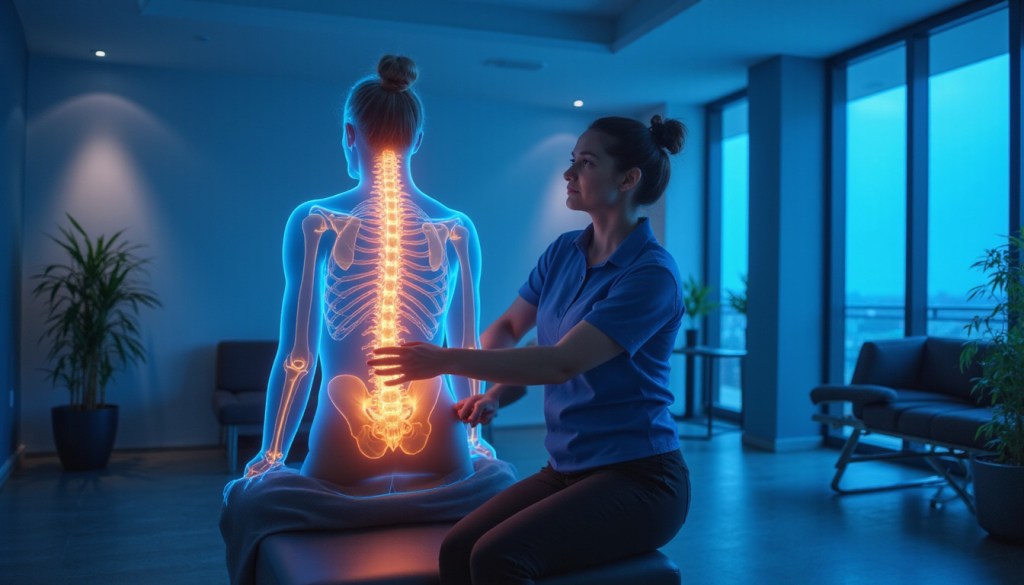
If you’re looking for a posture clinic in Singapore, you deal with stiff necks, locked upper backs, tired shoulders, or a lower back that feels jammed every time you rise. You try YouTube stretches, massage, even TCM. Yet the pain returns when you sit at your desk or stand all day.
This guide serves people in Singapore who face real musculoskeletal pain. It gives practical, proven fixes for lasting pain relief. It is not a quick rub-and-go solution.
Why posture matters more than you think (especially in Singapore)
Long office hours, laptop work, MRT phone scrolling, and weekend driving or cycling stress your body constantly. Over time, your posture suffers:
- A “forward head” strains your neck.
- Rounded shoulders pinch your joints.
- A stiff, board-like upper back locks your ribs.
- Tight hip flexors and hamstrings pull your lower back.
- Knees and ankles bear poor alignment stress.
If you feel any of these signs:
- Neck or shoulder tightness that does not fade.
- A pinching pain between shoulder blades after long sitting.
- A lower back that seizes when you stand up.
- Numbness or tingling in an arm or leg after sitting.
- A constant need to crack your neck or back for relief.
Your posture most likely drives your pain.
A good posture clinic does more than say “sit up straight.” It finds the posture parts that overload you and gives you clear, realistic fixes.
Quick self-check: Is your posture really the problem?
Try this simple check at home:
- Stand with your heels, buttocks, and upper back against a wall.
- Try to press the back of your head to the wall without tilting your chin up.
- Notice:
- Does your neck feel strained?
- Do your shoulders round forward and not relax?
- Do you feel a pull in your lower back when you flatten it to the wall?
If this is hard or very uncomfortable, your posture may have changed after years of slouching, screen work, or repetitive strain. Your muscles and joints may have molded into a poor position. Generic stretches might not hold the change.
A focused posture clinic can break this cycle.
What a specialized posture clinic should actually do for you
In Singapore, many places add “posture correction” as an extra service. For stubborn pain, you need a clinic that treats posture as a root-cause issue, not a side topic.
At a minimum, a solid posture clinic:
- Takes a detailed history. It listens to your pain patterns, desk setup, commute, sports, and previous injuries.
- Does specific postural tests. It does not just say “you’re slouching.” It checks:
- Pelvic tilt (anterior or posterior)
- Thoracic spine stiffness
- Shoulder blade position
- Head/neck alignment
- Foot arches and knee tracking
- Checks movement quality. It watches how you squat, bend, reach, turn, and walk.
- Links your posture to your pain. It explains in plain language how your slouch or swayback overloads joints.
- Offers hands-on relief plus active retraining. It uses manual therapy to calm tissues and gives you targeted exercises so the pain does not return.
Since 2007, The Pain Relief Practice has combined medical know-how, hands-on skills, and performance-focused rehab. They help office workers, active adults, celebrities, and national athletes fix posture-related pain so they can move confidently.
Real Results
The posture–pain loop: Why things keep flaring up
Many patients at The Pain Relief Practice share the same cycle:
- Back or neck pain flares after long sitting or standing.
- They rest, stretch, or get a massage. The pain eases for a few days.
- They return to the same desk, commute, and posture.
- The pain slowly builds again, sometimes worse.
This loop happens because:
- Deep stabilizing muscles switch off and become lazy.
- Overworked muscles work double duty and grow tight and tender.
- Some joints stiffen, while others become hypermobile.
- Nerves get irritated from constant compression or poor mechanics.
To break this loop, your posture clinic must work on the body’s hardware (joints, muscles, soft tissues) and its software (movement patterns, habits, muscle activation).
Proven hacks for lasting pain relief (backed by posture science)
These are practical, clinic-tested strategies used with patients in Singapore:
1. Micro-breaks: The 30–30 rule
Your spine resents static positions more than “bad posture.” No one sits like a statue all day.
• Every 30 minutes, move for 30 seconds.
• Stand, roll your shoulders, gently arch and round your back.
• Turn your head left and right; look up and down.
• Do 5–10 mini sit-to-stands from your chair.
These tiny resets unload your discs, mobilize stiff joints, and improve blood flow. This is especially important in our air-conditioned, low-movement offices.
2. The “chin tuck” for tech neck
If your neck feels jammed or heavy, try this simple drill:
• Sit or stand tall.
• Gently glide your head straight back, as if forming a double chin. Avoid tilting up or down.
• Hold for 3–5 seconds, then relax. Repeat 10 times, 2–3 times a day.
This drill re-centers your head over your shoulders. It eases the strain on neck joints and muscles. It is a core exercise in our posture programmes.
3. Thoracic opener for upper back stiffness
For a rock-hard mid-back and tight chest, follow these steps:
• Sit on a chair with a backrest that ends at mid-back.
• Place your hands behind your head with elbows in.
• Gently lean back over the chair edge as you breathe out and open your chest.
• Do 8–10 repetitions, 1–2 times daily.
This opens your thoracic spine and reduces compensation at your neck and lower back.
4. Hip flexor reset for desk-bound hips
Tight hip fronts often pull on your lower back. Try this:
• Get into a half-kneeling position (one knee on the floor, the other foot in front).
• Tuck your tailbone slightly to flatten your lower back.
• Gently lean forward until you feel a stretch in the kneeling hip.
• Hold for 20–30 seconds, repeat 2–3 times per side.
This reset frees your hips and spreads the load evenly along your spine when you stand or walk.
5. The 3-point standing check
Many in Singapore stand with a swayback. Try this check:
• Stand with your feet hip-width apart.
• Soften your knees slightly.
• Imagine a straight line linking these points: earlobe, shoulder, hip bone, and in front of your ankle bone.
• Feel your weight evenly across your entire foot, not just the heels.
Using this check when queuing, cooking, or talking can reduce lower back and knee strain considerably.
When you should stop DIY-ing and see a posture clinic
Home fixes help, but some signs mean you need professional help:
• Pain that lasts more than 2–3 weeks despite rest and stretches.
• Recurring neck or back spasms.
• Numbness, tingling, or an electric pain in an arm or leg.
• Weakness that causes you to drop things or a leg that feels like it may give out.
• Pain that stops you from sleeping or makes turning in bed hard.
• Headaches that seem to start from your neck or upper back.
An experienced posture clinic like The Pain Relief Practice can tell the difference between simple postural overload and more serious issues like disc problems, nerve entrapments, or joint degeneration. They also coordinate care with medical doctors when needed.
For clear guidelines, the American Academy of Orthopaedic Surgeons stresses timely checks for persistent back and neck pain (source: https://orthoinfo.aaos.org).
Why choose The Pain Relief Practice as your posture clinic in Singapore?
Since 2007, The Pain Relief Practice has been one of Singapore’s leading physiotherapy and pain treatment centres. It focuses on helping people who are serious about:
• Solving stubborn pain issues.
• Regaining healthy joints and muscles.
• Boosting performance at work, in sports, and in daily life.
• Enjoying an active life with long-term pain relief.
What makes them different:
• Posture-focused assessment. They go beyond scans to see how you stand, move, breathe, and load your body.
• Integrated approach. They mix physiotherapy, targeted exercise, movement retraining, and evidence-based modalities to calm pain and retrain posture.
• Experience with demanding cases. They help high-stress executives, manual workers, busy parents, and competitive athletes—people facing real-world body demands.
• Trust from celebrities and national athletes. Their team works with public figures and national sportspeople who need performance, not just comfort.
Celebrities & National Athletes
What your posture journey with us typically looks like
When you visit The Pain Relief Practice for posture issues, expect these steps:
-
Thorough assessment
• They take posture photos, run movement tests, and check your strength and flexibility.
• They clearly explain what is overloaded, what is weak, and what is stiff. -
Pain-relief phase
• You receive hands-on physiotherapy, targeted manual therapy, and the right modalities.
• You learn gentle corrective exercises that are safe even when you feel sore. -
Correction and retraining phase
• You strengthen deep stabilizers (neck, core, hips, shoulder blades) step by step.
• You practice posture drills that fit your job, commute, and favorite activities. -
Performance and prevention phase
• You fine-tune your posture for sports, lifting, running, cycling, or daily tasks.
• You learn how to set up your desk, how to sleep right, and self-maintenance routines.
The goal is not to “crack and send you home” but to help you understand your body. You learn what to do when things flare up and work steadily to reduce both the intensity and frequency of flare-ups.
Simple daily checklist for better posture (Singapore edition)
Use this guide on busy days:
- [ ] Screen at or just below eye level
- [ ] Feet flat, not tucked under the chair
- [ ] Hips slightly higher than knees when sitting
- [ ] Elbows close to your body, wrists neutral when typing
- [ ] 30–30 micro-breaks (every 30 minutes, move for 30 seconds)
- [ ] 1–2 short posture “reset” sessions (chin tucks, thoracic openers, hip stretches)
- [ ] Adjust your standing posture at queues and on the MRT (avoid locked knees and swayback)
Even small, consistent changes can improve how your joints feel at the end of the day.
FAQ: posture clinic & posture physiotherapy in Singapore
Q1: How do I know if I need a posture clinic or just a massage?
• If your neck, back, or shoulder pain returns every few weeks, or if your pain links to how you sit, stand, or use your phone, you likely need a proper posture clinic assessment. Massage may ease tightness, but without correcting the underlying cause, relief is short-lived.
Q2: Can physiotherapy at a posture clinic really fix my long-term slouch?
• Yes. Targeted posture physiotherapy helps by mobilizing stiff joints, strengthening weak muscles, and retraining how you move. It is not about forcing you to sit rigidly upright. It is about teaching your body a natural and efficient position that reduces pain.
Q3: Is there a best age to start posture correction in Singapore?
• It is never too late. Teenagers with tech neck, working adults with desk-bound backs, and seniors with wear-and-tear all benefit. A dedicated posture clinic in Singapore tailors exercises to your age, fitness level, and medical history. The goal is realistic improvements that reduce pain and improve function.
If your body has complained for a while—stiff neck, jammed back, cranky shoulders, or tight hips—it is a sign that your posture and movement need attention. Temporary painkillers or occasional stretching will not solve the root problem.
The Pain Relief Practice can help you understand your body’s signals, calm the pain, and build a stronger, more resilient posture. This way, you can work, move, and live with far less pain.
To find our location, reviews, and contact details, view our Google profile here:
https://share.google/UwMU2I9zUCwXVh0Lg
We are a specialized physio treatment center for savvy people who want real results.
While we are not suitable for someone looking for ‘cheap physiotherapy’ or ‘free exercises available on youtube’, our treatments are affordable and are often claimable with company flexi-benefits, company health insurance, travel insurance, personal accident insurance, and other insurance plans.
Simply whatsapp or call: +65 97821601 and let us know how to help.
If you prefer a convenient nutritional preventive option, Regenerix Gold is our top recommended joint supplement.
We have been recommending this joint supplement for over a decade.
Simply start with 3 capsules, once a day.
If you do not feel better within a week, increase to 2 capsules, twice a day. (4 capsules a day in total)
Our blog readers qualify for a special discount.
Simply use the link below and a discount will automatically be applied during checkout.