
If you live in Singapore and your neck feels stiff, your shoulders feel frozen, your knees ache, or your lower back stays tight, you may have heard about cupping therapy.
You may see its circular marks on someone’s shoulders at the gym or on the MRT.
You wonder if it can help your joints or muscles.
For those who have tried painkillers, massages, TCM, or odd TikTok stretches, cupping may seem promising, though it feels a bit mysterious.
It raises questions: Is it painful? Is it safe? Does it ease deep joint pain or just surface muscle tightness?
This guide breaks it down for Singaporeans with musculoskeletal pain who want to move better, train harder, and live without constant discomfort.
What exactly is cupping therapy?
Cupping therapy is a technique where special cups go on your skin.
The cups create suction that pulls the skin and upper tissues upward.
This pull aims to:
- Improve blood flow here
- Reduce tight muscles and knots
- Ease pain and stiffness
- Help tissues to recover and heal
At The Pain Relief Practice, cupping therapy joins other treatments.
If you suffer from chronic knee pain or a stiff neck, cupping works with physiotherapy, movement retraining, and other pain-relief methods.
This mix gives better and lasting results.
How does cupping therapy work for joint and muscle pain?
If your body feels:
- Stiff when you wake up
- Locked after long sitting
- Heavy and tight after training
- Sore around an old injury
then you deal with muscle guarding, tight fascia, poor circulation, and even nerve irritation.
Cupping may help by:
-
Improving blood flow
The suction draws blood to the area.
This blood brings oxygen and nutrients for repair.
It helps clear inflammation that makes joints feel hot, swollen, or stuck. -
Reducing muscle and fascia tightness
If your trapezius, hamstrings, or calves feel like hard cables,
then cupping loosens their upper layers.
This makes stretching and moving easier without constant pull. -
Modulating pain signals
The cups give a mechanical touch that distracts the nervous system.
Your brain may then feel less pain.
You get a window of relief to move better and retrain the joint. -
Supporting recovery after training
For runners, lifters, or weekend warriors in Singapore’s humid climate,
cupping helps recovery when legs feel dead, the lower back is cranky, or shoulders stay tight.
Types of cupping therapy you might experience
Different clinics use different cupping styles.
At The Pain Relief Practice, you will likely see:
1. Dry cupping (most common)
- The cups stick on your skin with suction.
- They rest for several minutes in patterns along key muscles or joints.
- You feel a strong pull or tightness, yet it stays tolerable.
2. Moving cupping (gliding cupping)
- A gel or oil goes on your skin first.
- The cups slide along the muscles—say, down the muscles along your spine or on the IT band.
- This style works well for widespread muscle tightness and band-like tension.
3. Integrated cupping with physiotherapy
- Cupping comes with joint mobilisation, stretching, or corrective exercises.
- This integrated approach suits issues like shoulder impingement, knee pain, tennis elbow, or chronic lower back pain.
Real Results
Key benefits of cupping therapy for people with joint and muscle problems
For someone who speaks of lazy glutes, a tight IT band, clicky knees, or a naggy neck, the benefits are simple: less pain, more movement, and better performance.
When cupping is used correctly as part of a full plan, it may offer:
-
Relief from chronic muscle tightness
It helps if you roll your shoulders, crack your neck, or dig into the same painful spots. -
Reduced joint stress
By loosening tight muscles and fascia around a joint (hip flexors, hamstrings, quads), the joint moves better with less pinching or grinding. -
Improved range of motion
You may squat deeper, raise your arms overhead, or turn your neck with less of that stuck feeling. -
Faster recovery between workouts
If muscle soreness and tightness stop you from training regularly, cupping helps your tissues recover for fresher muscles next time. -
Support for old injuries
It is gentle on scars or areas that flare after long days of walking, standing, or carrying.
What to expect during a cupping therapy session in Singapore
When you visit The Pain Relief Practice, here is a typical session:
1. Assessment first, cups later
A proper musculoskeletal check comes before treatment.
Your clinician will:
- Take a detailed history: where you hurt, what makes it worse, any locking, catching, or instability
- Check your posture, range of motion, and muscle imbalances
- Test for specific issues (like rotator cuff problems, meniscus irritation, nerve involvement)
Only after this assessment will they choose how to use cupping therapy in your plan.
2. Setting expectations
You will learn:
- Which areas will be cupped
- How it feels (a tight pull and pressure, but not sharp pain)
- How long the cups will stay on
- That temporary marks will appear afterward
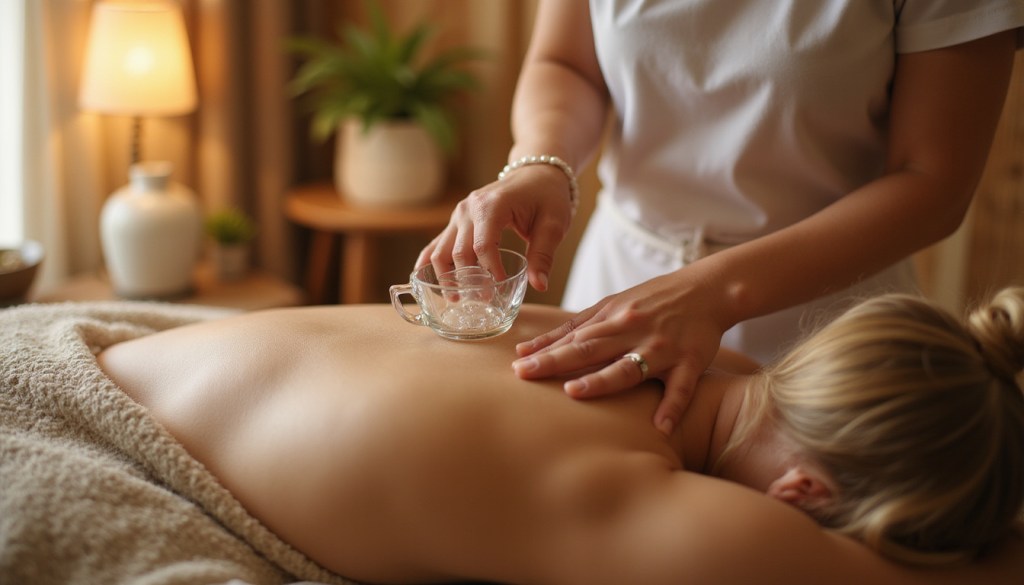
3. The actual cupping process
- You lie comfortably to expose the target area (for example, lying on your stomach for your back, or on your side for hips).
- The cups go on your skin with suction.
- You feel a pull that soon feels like strong but tolerable pressure.
- The clinician might adjust the cups based on your feedback.
- Cups stay on for 5–15 minutes, depending on your needs.
4. After the cups come off
- You may see red, purple, or brownish round marks.
- These marks are not deep bruises; they show changes in blood flow.
- Mild soreness or tightness might linger for 24–48 hours, much like after a massage.
- You might do light movement or stretching to keep the new range of motion and reduce stiffness.
Risks and side effects: Is cupping therapy safe?
For most healthy people, cupping is safe when trained professionals use proper methods and hygiene.
It is not risk-free, however.
Common, mild side effects
- Circular skin marks that fade in a few days to over a week
- Mild soreness or sensitivity in the cupped areas
- Temporary fatigue or heaviness after treatment
These side effects usually go away on their own.
Less common but important risks
Cupping may not work well or may need changes if you have:
- Serious skin conditions or open wounds on the treatment area
- A history of blood clotting disorders or if you take blood thinners
- Uncontrolled diabetes causing poor skin integrity
- Very fragile or thin skin (for example, in some elderly patients)
- Recent trauma, fractures, or serious soft tissue tears
A strong assessment is important. Major clinical bodies advise that manual therapies like cupping always join a full management plan, especially for chronic pain.
Source: NIH – National Center for Complementary and Integrative Health.
Who is a good candidate for cupping therapy?
You may be a good candidate if you:
- Suffer ongoing muscle tightness that returns even with stretching
- Struggle with stiffness and deep aches in joints (neck, shoulder, back, hip, knee, ankle)
- Feel that your body will not loosen despite rest
- Have plateaued with massage or random treatments
- Prefer a holistic and performance-focused approach instead of painkillers
You may not be suitable if you:
- Have the specific medical conditions noted earlier
- Are pregnant (as some areas are avoided)
- Do not want visible skin marks for social or work reasons
A good clinic tailors the plan to your comfort and needs.
Why choose The Pain Relief Practice for cupping therapy in Singapore?
Many places in Singapore offer cupping, from TCM shops to massage outlets.
For those with persistent musculoskeletal problems that affect work, sport, and life quality, where and how cupping is done matters.
The Pain Relief Practice is:
- One of Singapore’s well-established physiotherapy and pain clinics, since 2007
- Focused on people who want to solve persistent pain, regain joint and muscle health, and boost performance and enjoyment of life
- Trusted by celebrities and national athletes who demand safe, effective, and precise treatment—not just short relief
At our clinic, cupping is:
- Integrated into a personalized plan that may include manual therapy, medical pain management, physiotherapy, and performance retraining
- Used with strategy, not as a one-size-fits-all method
- Monitored and adjusted based on your feedback and goals, whether you want to walk without pain, lift heavier, or get through the day without stiffness
Celebrities & National Athletes
What happens after your cupping session?
What you do after the session helps as much as what happens during it.
You may be advised to:
- Stay hydrated to help your body use the extra blood flow for recovery
- Avoid very hot showers or rough scrubbing over the treated areas for 24 hours
- Do your prescribed exercises to keep the better movement patterns and avoid stiffness
- Watch your body in the next few days: note what improves, what still hurts, and what activities feel easier
Your clinician will use this feedback to adjust your treatment plan.
Simple checklist before you book cupping therapy in Singapore
Before booking, check that the clinic:
- Does a proper musculoskeletal assessment rather than just placing cups everywhere
- Clearly explains the process and possible side effects
- Can combine cupping with physiotherapy, joint mobilisation, or other pain-relief methods
- Has experience with complex joint and muscle conditions, not only general wellness
- Is comfortable treating active people, office workers, and athletes alike
The Pain Relief Practice meets all these requirements.
They have been trusted since 2007 and are known among savvy patients who want more than a quick fix.
Our Google profile
Explore patient reviews, location details, and more about The Pain Relief Practice here:
https://share.google/UwMU2I9zUCwXVh0Lg
FAQs about cupping therapy for pain in Singapore
1. Is cupping therapy good for back pain and neck stiffness?
Cupping therapy can help back pain and neck stiffness when the cause is muscle tightness, trigger points, or poor posture.
At The Pain Relief Practice, cupping joins targeted physiotherapy and corrective exercises.
This way, you address not just temporary relief but also the root causes like weak core muscles or joint restrictions.
2. How often should I do cupping therapy for muscle and joint pain?
The frequency depends on your condition and goals.
Some patients start with cupping once a week and then reduce sessions as pain decreases and function improves.
Others use cupping occasionally during training recovery.
Your clinician crafts a schedule based on your progress, not a fixed package.
3. Is cupping therapy painful and are the marks normal?
You will feel a strong pull and pressure but not unbearable pain.
Talk with your therapist, as they can adjust the suction if needed.
Circular marks are common and fade in a few days to a week.
They are signs of changes in blood flow, not damage.
If you have an important event where marks are a concern, your clinician can change how or where the cups are applied.
If you live in Singapore, suffer from constant joint or muscle discomfort, and seek a strategic and performance-oriented approach to cupping therapy—not random circles on your back—The Pain Relief Practice is ready to help you move better, hurt less, and enjoy life with more confidence.
We are a specialized physio treatment center for savvy people who want real results.
While we are not suitable for someone looking for ‘cheap physiotherapy’ or ‘free exercises available on youtube’, our treatments are affordable and are often claimable with company flexi-benefits, company health insurance, travel insurance, personal accident insurance, and other insurance plans.
Simply whatsapp or call: +65 97821601 and let us know how to help.
If you prefer a convenient nutritional preventive option, Regenerix Gold is our top recommended joint supplement.
We have been recommending this joint supplement for over a decade.
Simply start with 3 capsules, once a day.
If you do not feel better within a week, increase to 2 capsules, twice a day. (4 capsules a day in total)
Our blog readers qualify for a special discount.
Simply use the link below and a discount will automatically be applied during checkout.
 PROVIDING FAST, EASY & INSURANCE CLAIMABLE PAIN RECOVERY SINCE 2007