If you have back aches that persist, a stiff neck, creaky knees, or nerve pain that will not go away, pain neuroscience education (PNE) can help you.
At The Pain Relief Practice, we explain pain using clear, direct words. We show you step-by-step how to calm your nervous system. This way, you learn how to get your life back.
At The Pain Relief Practice, one of Singapore’s long-standing pain and physiotherapy clinics since 2007, we use PNE every day. We help you change the belief “I’m broken” into “I control my pain.”
Why Your Pain Lingers Even After Scans Are “Normal”
If someone tells you, “Your MRI looks fine,” but you still limp or wake with pain, you are not alone. This is where pain neuroscience education works best.
Pain Is Not a Simple Damage = Pain Equation
Many of us grew up with the idea that:
- More damage means more pain
- No damage means no pain
Yet science now shows that pain is the brain’s alarm. The alarm does not report on tissue damage directly. Your brain and nerves consider many signals before they “ring the alarm.” These include:
- Past injuries and flare-ups
- Stress, mood, and sleep
- Fear of movement (for example, “If I bend, I might hurt my back again”)
- Long-held beliefs (for example, “My back is weak, I must protect it”)
With chronic pain lasting more than three months, the alarm system grows sensitive. Small movements or light loads can trigger a loud pain signal. This is why your back may seize if you lift a light bag, or why your knee hurts when you go down stairs even if the imaging shows little damage.
What Is Pain Neuroscience Education (PNE)?
Pain neuroscience education teaches you how pain works in your body and brain. It uses simple language, clear metaphors, and your own experiences.
PNE shows:
• Why pain can stay even after the tissues seem healed
• Why an imaging scan may not match how bad the pain feels
• How stress, sleep, fear, and past events raise the pain “volume”
• How you can start moving safely and load your joints without more damage
Instead of the phrase “It is just in your head,” you learn:
• Your pain is real
• Your nervous system has become overprotective
• You can work with it to be less jumpy and more precise
This change—from seeing yourself as damaged to viewing your nervous system as sensitive but trainable—forms the base of real recovery.
(For more science on pain, check the International Association for the Study of Pain:
https://www.iasp-pain.org)
Common Pain Experiences PNE Can Help With
In Singapore, many people tell us:
- “My back feels stuck.”
- “My neck and shoulders are as tight as stone.”
- “My knee catches sharply when I stand.”
- “I feel nerve pain—pins, needles, burning, or shocks in my legs or arms.”
- “The doctor said it is normal wear-and-tear; I must live with it.”
PNE helps especially with:
• Chronic low back pain
• Persistent neck and shoulder pain from desk work
• Long-term knee pain or old injuries
• Repeated ankle sprains with ongoing soreness
• Tennis elbow, golfer’s elbow, and other tendon issues
• Post-surgery pain that lasts after a “successful” operation
How Pain Neuroscience Education Transforms Care in Singapore
1. It Breaks the Fear–Pain–Avoidance Cycle
Chronic pain often grows from fear. The cycle is:
- Movement or a flare-up triggers pain.
- You protect the area and avoid activities.
- Muscles weaken and joints stiffen.
- Your nervous system becomes even more sensitive.
PNE shows you which signals are “safe but sore” versus true alarms. When you understand that a little controlled discomfort does not mean more damage, you start to:
• Bend, squat, and twist with more ease.
• Increase your walking time from 5 minutes to 20 minutes without fear.
• Return to the gym, badminton, golf, or running in a gentle, smart way.
2. It Changes How You Interpret Flare-Ups
Before learning PNE:
“I bent over once, and my back flared up; I must lie in bed for three days.”
After PNE at The Pain Relief Practice:
“My body’s alarm system overreacted today. I will ease off a bit, do my exercises, calm down, and build back up.”
This change helps to:
• Lower anxiety.
• Prevent over-resting, which may worsen pain.
• Speed up recovery after a flare.
3. It Blends With Hands-On Treatment and Targeted Exercise
Pain neuroscience education is not just talk. At our clinic, it goes together with treatments such as:
• Manual therapy that helps loosen stiff joints and muscles.
• Strengthening and mobility exercises to build load tolerance.
• Neuromuscular control work for proper muscle timing and intensity.
• Ergonomic advice for your work, home, or sport.
You learn about your body while you feel real changes with each treatment. This mix makes your progress clear and simple.
Practical Recovery Steps Using Pain Neuroscience Education
Below is a clear outline of how recovery usually works when PNE is part of your treatment at our clinic.
Step 1: Understand Your Pain Story
Your physiotherapist or pain specialist asks questions like:
• When did your pain start?
• What were you doing at that time?
• Which actions help, and which make it worse (for example, sitting, climbing stairs, or sleeping on one side)?
• What fears do you have (for example, “I might slip a disc,” “I need surgery,” or “I cannot work”)?
We then connect your injury history, lifestyle, stress levels, activities, and any scan results. This builds a clear, personal story of your pain rather than just a list of symptoms.
Step 2: Learn the New “Pain Map”
With simple analogies—like a fire alarm that is too sensitive or a car alarm that sounds when a cat walks by—we explain:
• How nerves, the spinal cord, and the brain work together to create pain
• Why chronic pain is more about sensitivity than new injury
• How muscles feeling “tight” or “locked” can be protective and not mean structural damage
This explanation usually takes 1 to 2 sessions. We reinforce the lessons in every visit with small, simple pieces of information.
Step 3: Calm the System
Next, we help calm your nervous system with:
• Gentle and graded movements along directions you fear.
• Breathing exercises that help change from a fight-or-flight state to a calm one.
• Posture and ergonomic changes that reduce strain.
Our goal is to show your body that the movement is safe and that you do not need to overreact. With time, the pain alarm’s volume goes down.

Step 4: Reload the Joints and Muscles Strategically
Then, we increase the load on your joints in a very planned way. For example:
• For back pain: you work on hip hinges, core control, and gradually add heavier movements.
• For knee pain: you perform quad, glute, and calf exercises; practice controlled step-downs; and build walking endurance.
• For neck or shoulder pain: you do exercises for scapular stability, thoracic mobility, and graded arm loading.
We push you just above your comfort zone but stay below the threshold that triggers panic. We adjust your routine each week based on your feedback.
Step 5: Integrate Into Real Life and Sport
Once your nervous system is calmer and you gain strength, we help you meet your personal goals. This may mean:
• Playing with your kids or grandkids without fear of hurting your back.
• Walking in malls, parks, or on travel without limping.
• Returning to sports such as badminton, futsal, tennis, golf, or running.
You learn to pace yourself and to warm up and recover in a smart way. This keeps you from swinging between overdoing it and crashing.
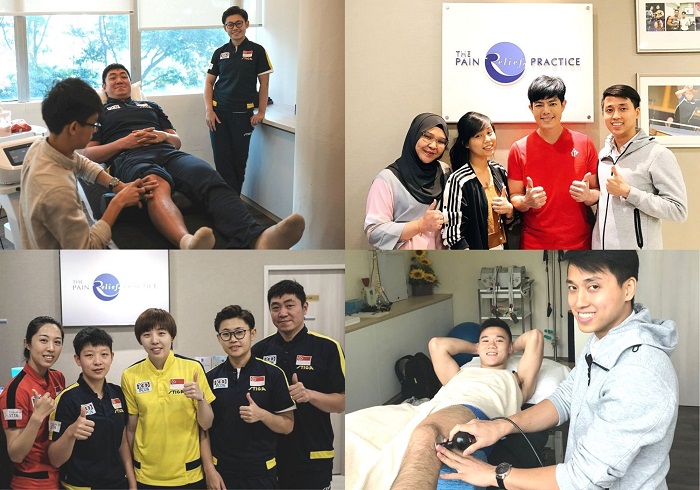
“Real Results” – See How Others Have Turned Pain Science Into Progress
Real Results
Why Choose The Pain Relief Practice for Pain Neuroscience Education in Singapore?
The Pain Relief Practice is not just another physiotherapy clinic. Since 2007, we have been one of Singapore’s leading centres for:
• Advanced musculoskeletal assessments
• Evidence-based pain neuroscience education
• Highly targeted manual therapy and rehabilitation planning
Track Record With High-Performers
We have helped celebrities and national athletes who need to perform despite painful joints and stiff backs. They choose us because we:
• Speak clearly and simply without confusing jargon.
• Offer step-by-step plans that work with your training and work routines.
• Focus not only on short-term relief but also on long-lasting performance and strength.
Celebrities & National Athletes
If pain science can help top performers get back on stage or into competition, it can help you move better, work well, lift safely, and live fully.
What Makes Our Approach Different?
At The Pain Relief Practice, expect:
• Thorough, people-first assessments – we listen closely to your story and learn how your pain affects work, family life, and hobbies.
• Clear explanations – you always know what is happening and why.
• Integrated pain neuroscience education – we coach you to understand your pain, not just treat it.
• Customized rehab – whether you are a desk-bound executive, retiree, home-maker, or athlete, your plan is built for you.
• A performance mindset – we aim for not only less pain but also stronger, more confident movement and an improved quality of life.
Simple Daily Habits That Support Pain Neuroscience Education
To build on what you learn at our clinic, you can follow these daily steps:
• Move little and often – change your posture every 30–45 minutes. Even standing up and sitting down a few times helps.
• Label sensations correctly – if you feel a stretch or mild ache, see it as “safe discomfort” not damage.
• Breathe – try slow nasal breathing (4 seconds in, 6 seconds out) for a few minutes. This calms an over-alert nervous system.
• Practice good sleep hygiene – keep regular sleep times, avoid late-night scrolling, and use a cool, dark room to improve sleep quality.
• Increase activity gradually – build up your walking, steps, or exercise volume by about 10–15% per week instead of taking big leaps.
Visit Us and Start Rewriting Your Pain Story
If your joints feel worn out, your muscles are always tight, or if you are tired of living with pain, The Pain Relief Practice can help. We show you what is happening in your body and guide you with simple, practical steps using pain neuroscience education.
Experience the care that has helped celebrities, national athletes, and many Singaporeans move from chronic pain to confident movement.
You can find our clinic details and patient reviews here:
https://share.google/UwMU2I9zUCwXVh0Lg
FAQ: Pain Neuroscience Education in Singapore
-
Is pain neuroscience education effective for chronic pain?
Yes. Research shows that when pain neuroscience education comes with active rehabilitation and lifestyle changes, it can reduce pain intensity, fear of movement, and disability. At The Pain Relief Practice, we mix PNE with hands-on treatment and exercise. This blend works very well for chronic joint and muscle pain. -
How does pain education therapy differ from traditional physiotherapy?
Traditional physiotherapy often focuses on the injured tissue, like your knee or back. In pain education therapy, we also target your nervous system, your beliefs about pain, and your movement habits. You still receive manual therapy and exercises. You also learn why it hurts so that you can move without fear and handle setbacks better. -
Where can I get pain neuroscience training in Singapore for my own condition?
You can receive personalized pain neuroscience training at The Pain Relief Practice. Our clinicians explain pain science in everyday terms and relate it directly to your condition. Whether you have chronic back pain, neck stiffness, or long-term knee problems, we design a plan to help you restore strength, mobility, and confidence.
We are a specialized physio treatment center for savvy people who want real results.
While we are not suitable for someone looking for ‘cheap physiotherapy’ or ‘free exercises available on youtube’, our treatments are affordable and are often claimable with company flexi-benefits, company health insurance, travel insurance, personal accident insurance, and other insurance plans.
Simply whatsapp or call: +65 97821601 and let us know how to help.
If you prefer a convenient nutritional preventive option, Regenerix Gold is our top recommended joint supplement.
We have been recommending this joint supplement for over a decade.
Simply start with 3 capsules, once a day.
If you do not feel better within a week, increase to 2 capsules, twice a day. (4 capsules a day in total)
Our blog readers qualify for a special discount.
Simply use the link below and a discount will automatically be applied during checkout.