
If you live in Singapore and face achy knees, stiff shoulders, or a lower back that “locks” after long sitting, muscle strengthening may be the missing piece. Many people try one painkiller or massage after another. They miss the root problem: weak, uncoordinated muscles that cannot support their joints.
Below is a practical, science-backed guide for people who feel joint wear and tear—creaky joints, jelly legs on stairs, recurring sprains, or tight neck and shoulder knots. It offers smarter, safer ways to build strength without hurting your body.
Why muscle strengthening is critical for painful, worn-out joints
If you have joint pain, you may say:
- “My knees feel loose and wobbly going down stairs.”
- “My back seizes up after standing too long.”
- “My shoulder grinds when I raise my arm.”
These phrases show that your muscles are not stabilizing your joints properly.
In simple terms:
- Joints act as hinges.
- Muscles support these hinges.
When muscles grow weak, slow, or imbalanced, joint cartilage, ligaments, and tendons must take the load. In time, this causes:
- Knee osteoarthritis (wear-and-tear), runner’s knee, or patella tracking issues.
- Recurrent ankle sprains.
- Frozen shoulder, impingement, or rotator cuff irritation.
- Chronic neck and back stiffness or locking.
Targeted muscle strengthening shifts the load into the muscles. In short, your joints do not have to bear the full brunt when you walk, carry groceries, or climb stairs.
The simple science behind strength for painful joints
Strength training for painful joints is not like bodybuilding or powerlifting. It rests on three key ideas:
1. Load tolerance, not macho lifting
Studies show painful joints do not favor sudden, high loads. They respond better to progressive loads that increase week by week in a controlled way (source: American College of Sports Medicine).
That means you should:
- Start with light loads that keep your pain in a safe, mild zone.
- Gradually add weight, repetitions, or difficulty as your tissues adapt.
2. Strengthen the “local stabilisers” first
When you suffer from pain, your small stabilizer muscles often do not work properly because of years of guarding or awkward movement:
- Deep neck flexors help neck pain.
- Deep core muscles support the back.
- Vastus medialis (VMO) helps with knee pain.
- The rotator cuff steadies the shoulder.
- Hip abductors and external rotators control the knee and hip.
A good strength routine wakes up these muscles first. It then adds heavier, functional moves.
3. Use joint-friendly movement patterns
Many Singaporeans have habits like these:
- Collapsing knees inward when squatting.
- Overarching the lower back when lifting.
- Hiking shoulders when reaching overhead.
A science-backed program retrains your movement patterns as it builds strength. As a result, you stop grinding your joints in old, painful ways.
How to know your muscles are too weak (even if you’re “not that old”)
You do not need an MRI to see when muscles fall short. These daily signs are red flags:
- You push off your thighs to stand from a chair.
- Your legs tremble or burn quickly on stairs.
- Your back tightens after 10–15 minutes of standing.
- Your shoulder feels heavy when you hang clothes, wash hair, or lift a kettle.
- You experience frequent ankle, knee, or shoulder sprains during everyday activities.
If these signals sound familiar, muscle strengthening is not extra. It is essential for joint protection.
Easy, science-backed strength tips for painful or stiff joints
These guidelines suit people who already feel pain, stiffness, or low confidence in their joints.
1. Use the “2 out of 10” pain rule
During strengthening, some pain can happen. It must stay controlled:
- While exercising: keep pain at 2–3 out of 10 (mild and tolerable).
- After exercising: any extra pain should settle within 24 hours.
If pain spikes to 5–6 out of 10 or lasts more than 2–3 days, you work too hard.
2. Train 2–3 times a week, not every day
Both muscles and joints need rest to adapt. A good plan is:
- 2–3 targeted sessions per week.
- At least 1–2 days of rest for the same muscle group.
More sessions do not equal better results; consistency matters most.
3. Focus on slow, controlled reps
Quick moves let the wrong muscles work and can strain your joints.
- Spend 2–3 seconds on the upward move and 3–4 seconds on the downward move.
- Do not jerk, bounce, or use momentum.
- Breathe evenly throughout your reps.
These rules make lighter weights effective and safe for sensitive joints.
Simple joint-friendly muscle strengthening exercises
These exercises are starting points. If your pain is severe or you have long-standing injuries or surgery, seek personalized advice.
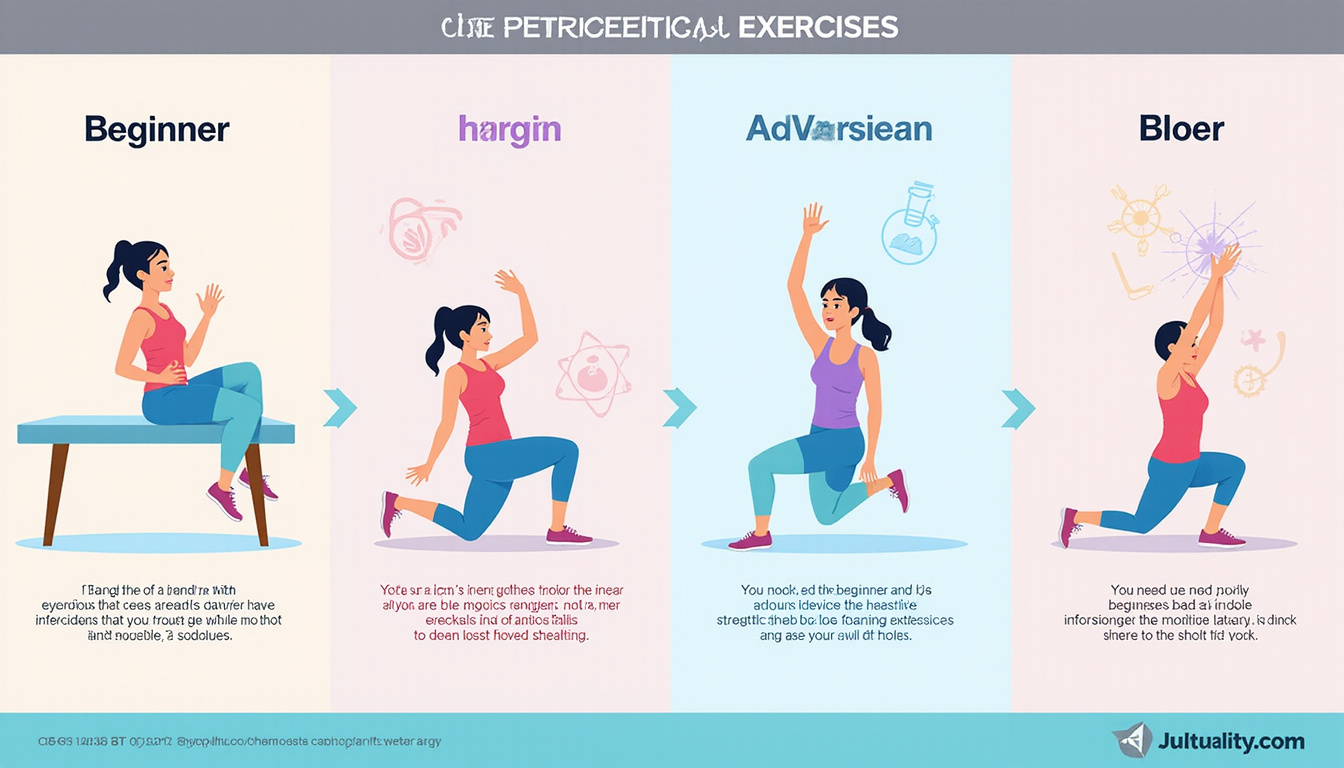
For painful knees (creaky, grinding, “jelly” on stairs)
-
Sit-to-stand from a chair
- Sit in a chair with support if needed.
- Keep feet shoulder-width apart and ensure knees track over your second toe.
- Lean forward slightly and stand using your legs.
- Lower yourself slowly.
- Do 2–3 sets of 8–12 reps.
-
Wall squat (mini range)
- Stand with your back against a wall.
- Slide down only 20–45 degrees (a deep squat is not needed).
- Keep knees aligned with toes, with no inward collapse.
- Hold for 10–20 seconds, then rest.
- Repeat 5–8 times.
For stubborn lower back and hip stiffness
-
Bridge (hip lift)
- Lie on your back, bend your knees, and place feet hip-width apart.
- Brace your core gently, squeeze your buttocks, and lift your hips until your body is in a straight line from shoulders to knees.
- Hold for 3–5 seconds and lower slowly.
- Accomplish 2–3 sets of 8–12 reps.
-
Hip abduction (side-lying leg lift)
- Lie on your side.
- Bend the bottom leg and keep the top leg straight behind you.
- Lift the top leg up and slightly back, without twisting.
- Feel the effort at the side of your hip, not the front of your thigh.
- Do 2–3 sets of 8–12 reps on each side.
For shoulder and neck issues (clicking, catching, stiffness)
-
Scapular setting (shoulder blade control)
- Sit or stand with an upright posture.
- Draw your shoulder blades back and down gently, as if tucking them into your pockets.
- Do not shrug.
- Hold for 5–10 seconds and repeat 8–10 times.
-
External rotation with a band (rotator cuff)
- Keep your elbow tucked at your side at 90 degrees.
- Anchor a resistance band on the opposite side.
- Rotate your forearm outward while keeping your elbow pressed to your body.
- Move slowly and in control.
- Perform 2–3 sets of 10–15 reps on each side.
A sample weekly muscle strengthening plan (joint-friendly)
For many Singaporeans who work long hours and sit often, this plan is realistic and safe:
-
Day 1 – Lower Body & Core
• Sit-to-stand, wall squat, bridge, side-lying hip abduction -
Day 3 – Upper Body & Posture
• Scapular setting, band external rotation, light rows, gentle chest stretch -
Day 5 – Mixed Functional Day
• A mix of Day 1 and Day 3 at a lower intensity or volume
Keep walking or light cycling on days off to maintain joint mobility and blood flow.
When you need more than generic YouTube exercises
If your issues are complex – such as:
- Previous knee or shoulder surgery
- Long-lasting slipped disc with leg pain or numbness
- Severe osteoarthritis with visible joint changes
- Repeated sports injuries in the same area
Then off-the-shelf routines may be risky or ineffective. You might need:
- A movement analysis to check joint alignment and real-time motion.
- Identification of strength imbalances side-to-side.
- Tailored loading progressions for your condition.
- Hands-on treatment mixed with targeted muscle strengthening.
A specialized pain treatment centre becomes crucial in such cases.
Why many savvy patients in Singapore choose The Pain Relief Practice
The Pain Relief Practice is a trusted physiotherapy clinic in Singapore. Since 2007, we focus on solving the root of pain—not just providing short-term relief.
People often tell us:
- “I have had many massages, but my knee still gives way.”
- “Chiropractic worked for a while, yet the pain returns.”
- “YouTube exercises helped some parts but made others worse—I feel confused.”
Our approach includes:
- A detailed assessment of joint mechanics and muscle function.
- Science-backed muscle strengthening programs that suit your condition and lifestyle.
- A mix of hands-on therapy, pain relief techniques, and progressive exercise.
- A focus on regaining healthy joints and muscles, not just coping day-to-day.
We have treated celebrities and national athletes. We bring the same performance focus to office workers, parents, and active seniors who want to walk, climb stairs, play with their kids, or enjoy sports without joint worries.
Real Results
Celebrities & National Athletes
Practical checklist before you start any muscle strengthening plan
Use this checklist to keep your joints safe while you build strength:
• Start with low load, high-control moves.
• Follow the 2–3 out of 10 pain rule.
• Avoid exercises that cause:
- Sharp, catching, or locking pain
- Significant swelling or redness afterward
- Pins-and-needles or numbness
• Increase only one variable at a time—either more reps, more sets, or more weight.
• Warm up for 5–10 minutes (with gentle walking, cycling, or mobility work).
• If discomfort lasts more than a week, get it checked out.
FAQ – common questions about muscle strengthening and joint pain
-
Is muscle strengthening safe for knee osteoarthritis or wear-and-tear joints?
Yes. When done correctly, strengthening around an arthritic joint can reduce pain and improve function. Strong muscles absorb more impact so the irritated joint surfaces are spared. The key is to use joint-friendly angles, controlled tempo, and gradual progress. A physiotherapist can help design knee-friendly exercises that respect your limits. -
Can I do muscle strengthening at home, or do I need gym equipment?
Many effective exercises use bodyweight, resistance bands, chairs, or steps. However, if your pain has a complex history—such as old injuries, surgery, or nerve symptoms—it is best to get a customized plan first. At The Pain Relief Practice, we often start in-clinic before moving the program to your home. -
How long before I feel a difference from joint-focused muscle strengthening?
Most people notice improved stability and less “giving way” in 3–4 weeks. Clear strength gains and better confidence generally come in 8–12 weeks with 2–3 sessions per week. Tissues need time to adapt. If you do not see improvement after a month, your program might need adjustments or may be missing key stabilizer muscles. A detailed assessment can help at that time.
If you are in Singapore and feel that your joints are cracking, stiff, or unreliable, you do not have to give up the activities you love. With the right muscle strengthening strategy and guidance from an experienced pain treatment centre like The Pain Relief Practice, you can protect your joints, build strength, and return to moving with confidence.
Our Google profile:
https://share.google/UwMU2I9zUCwXVh0Lg
We are a specialized physio treatment center for savvy people who want real results.
While we are not suitable for someone looking for ‘cheap physiotherapy’ or ‘free exercises available on youtube’, our treatments are affordable and are often claimable with company flexi-benefits, company health insurance, travel insurance, personal accident insurance, and other insurance plans.
Simply whatsapp or call: +65 97821601 and let us know how to help.
If you prefer a convenient nutritional preventive option, Regenerix Gold is our top recommended joint supplement.
We have been recommending this joint supplement for over a decade.
Simply start with 3 capsules, once a day.
If you do not feel better within a week, increase to 2 capsules, twice a day. (4 capsules a day in total)
Our blog readers qualify for a special discount.
Simply use the link below and a discount will automatically be applied during checkout.
 PROVIDING FAST, EASY & INSURANCE CLAIMABLE PAIN RECOVERY SINCE 2007