
If you are a man in Singapore and you feel joint aches, a stiff lower back, or a shoulder that feels off, mens health physiotherapy can change your life.
You suffer and try Salonpas, painkillers, or just “tahan” the pain. Instead, you can fix the joints, muscles, and nerves and move like you used to.
This guide shows how targeted physiotherapy for men works. It tells the reasons your body keeps breaking down and lists 7 expert moves that crush pain and protect your joints long term.
Why Men in Singapore Need a Different Approach to Physiotherapy
Men move, train, and work in their own way. This way shows in the pain they feel:
- Gym strains from bench presses, deadlifts, or squats
- “Office athlete” neck and back pain from long desk hours
- Old NS or IPPT injuries that never healed
- Weekend warrior knee and ankle flare-ups from football, basketball, or running
- Wear-and-tear aches in the 30s, 40s, and 50s – very common in the lower back, hips, and knees
Mens health physiotherapy targets overload patterns, stiffness, and compensation that affect men. The goal is not just to move a bit better. It helps you:
- End the constant dull ache
- Stop joint flare-ups after workouts
- Regain strength, power, and safe mobility
- Protect your body to keep training and playing, not force early retirement
Common Pain Patterns Men Complain About
If you say these, you are not alone:
- “My back feels tight and jammed, especially in the morning.”
- “My knee clicks and grinds when I go down stairs.”
- “My shoulder feels unstable when I press overhead.”
- “My hamstrings and calves feel pulled and tight.”
- “My neck and traps feel like stone after Zoom calls.”
Scans may show nothing serious. Yet, you feel pain, weakness, and stiffness. A smarter mens health physiotherapy looks at how you move, load your joints, and how parts of your body compensate.
Why Joints Keep Flaring Up (Even If You Rest)
Rest alone rarely fixes chronic pain. You feel better for a short time. But the pain comes back when you:
- Return to the gym
- Sit long hours at work
- Restart playing football, badminton, or running
There are three big reasons:
- You use poor movement mechanics. You are strong, but stiff joints (hips, thoracic spine, ankles) force other joints (knees and lower back) to bear extra load.
- Your stabiliser muscles are weak. Small support muscles around your joints do little work, so big muscles take all the stress.
- Old scar tissue and restrictions from past injuries tighten the tissue and trigger new pain.
Mens health physiotherapy fixes these issues with hands-on treatment and targeted exercises.
7 Expert Physiotherapy Moves to Crush Pain
Below are 7 expert strategies that work for men with stubborn, long-term pain.
1. Reset the Stiff Joints First (Not Just Stretch the Tight Muscles)
Most guys stretch muscles to fight tightness. But if a joint or its fascia is locked, stretching gives only short relief.
A physiotherapist trained in mens health physiotherapy will:
- Mobilise stiff spinal segments, especially in the mid-back and lower back
- Open up the hips and ankles so they take load properly
- Release the joint capsules and deep fascial restrictions
When joints move well, the muscles relax. Your movement feels smoother and less jammed.
2. Switch On Your Deep Core – Beyond Sit-Ups
Your deep core is not the six-pack. It is the inner system (diaphragm, transverse abdominis, pelvic floor, multifidus) that stabilises your spine with each step, lift, and twist.
For many men with chronic low back pain:
- The deep core does not fire as it should
- The back muscles overwork and lock up in compensation
Mens health physiotherapy retrains this system with drills such as:
- Abdominal bracing with controlled breathing
- Dead bug variations
- Anti-rotation press (Pallof press)
- Hip hinge patterns that keep the spine neutral under load
A stronger deep core means less back strain and better performance in lifts like squats and deadlifts.
3. Bulletproof Your Shoulders for Pressing and Pulling
Front shoulder pain from bench presses, dips, or push-ups is common. The issue is rarely the “rotator cuff” alone. Usually, several factors mix:
- Tight chest and lats pull the shoulder forward
- Weak scapular stabilisers (mid and lower traps, serratus anterior) create imbalance
- A stiff thoracic spine forces the shoulder joint to compensate
A physio-led shoulder program usually uses:
- Hands-on release to the chest, lats, and posterior capsule
- Thoracic spine mobilisation
- Scapular control drills (Y, T, W, wall slides, serratus punches)
- Gradual reloading with proper form in bench presses, push-ups, and overhead moves
The result is pain-free pressing, without a pinching or unstable shoulder.
4. Fix Knee Pain by Looking Above and Below
Many men with “bad knees” have other issues:
- Tight hips that do not turn well
- Ankles with limited bending (dorsiflexion)
- Weak glutes that do not control the thigh during walking, running, or squatting
The knee becomes the joint that suffers. Mens health physiotherapy for knee pain will:
- Mobilise the ankles and hips fully
- Release tight quads, IT band, and calves
- Strengthen glutes (especially the glute medius) and hamstrings
- Correct squat, lunge, and landing patterns
When load is shared properly, the knee gets relief.
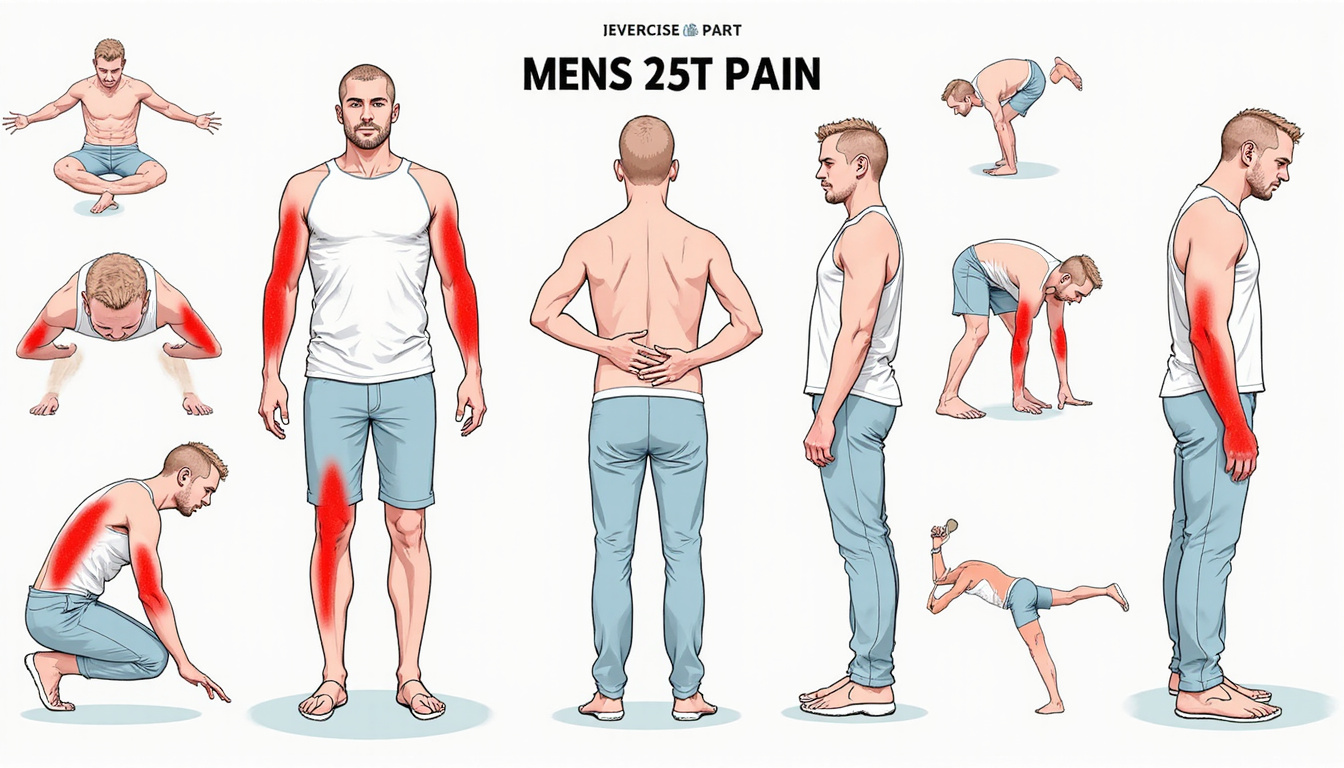
5. Undo Desk Damage: Neck, Traps, and Upper Back
If you spend many hours on a laptop or phone, you may see these signs:
- A tight neck and upper traps that feel heavy
- A dull headache or heaviness by the afternoon
- Pain between the shoulder blades
Instead of doing just chin tucks or stretches, physiotherapy for men who sit long hours uses:
- Joint mobilisation for the cervical and thoracic spine
- Manual release of overworked traps, levator scapulae, and pecs
- Activation of deep neck flexors and mid-back stabilisers
- Changes in your workstation and daily habits to reduce strain
You then feel less crunched forward and more naturally upright.
6. Progressive Strength Loading – Not “Don’t Exercise”
Many men hear: “Don’t go to the gym,” or “Avoid running.” This advice is often unrealistic.
A smarter physiotherapy plan will:
- Identify which movements and loads trigger your pain
- Adjust your training: volume, tempo, and range of motion
- Rebuild strength in the painful area with graded loading
- Add sports-specific drills for football, running, cycling, or combat sports
This plan lets you train safely and come back stronger, not deconditioned.
7. Long-Term Joint Protection Strategy
After your pain improves, the next goal is to keep it away.
Mens health physiotherapy gives you a clear plan:
- What mobility, stability, and strength drills to do weekly
- Which movements to avoid or modify
- How to warm up well for your sport or gym routine
- How to listen to early signs before a flare-up
Think of it as a manual for your body. It stops you from rehabbing the same issue every 6–12 months.
What Makes The Pain Relief Practice Different for Men in Singapore
The Pain Relief Practice is a well-known physiotherapy clinic in Singapore. We have helped people since 2007. Over the years, we became a specialised pain treatment center for patients who want to:
- Solve stubborn pain issues without only numbing them
- Regain healthy joints and muscles
- Boost performance at the gym, work, and sport
- Enjoy life without constant worries about their back, knee, or shoulder
Key points for our male patients:
- We have treated celebrities and national athletes in Singapore. We know high-performance demands and the pressure to stay in the game.
- We combine hands-on treatment, targeted exercise therapy, and modern techniques when needed.
- Every plan is personal. We consider your sport, job, training schedule, and recovery goals.
Real Results
Celebrities & National Athletes
What to Expect from a Mens Health Physiotherapy Session
A typical first visit at The Pain Relief Practice goes like this:
-
Detailed History & Lifestyle Review
- When and how your pain began
- Your training, work demands, past injuries, and medical history
-
Movement and Joint Assessment
- How you stand, walk, squat, bend, and lift
- The range of motion in your spine, hips, knees, shoulders, and ankles
- Your muscle strength, control, and balance
-
Clear Diagnosis & Explanation
- What causes your pain
- Which joints, muscles, or movement patterns are involved
- What can improve and in what time frame
-
Hands-On Treatment + Targeted Exercises
- Joint mobilisation, soft tissue release, and special techniques if needed
- Specific drills to practise in the clinic and at home
-
Personalised Plan and Progression
- How often you should attend initially
- What to modify in your gym or sports routine
- Milestones for pain relief, mobility, and strength
Simple Self-Check: Should You See a Physiotherapist?
You do not need to be “crippled” to benefit from mens health physiotherapy. Consider an assessment if:
- Your pain lasts more than 2–3 weeks and returns often
- You stop or reduce activities you enjoy because of pain
- Your joint feels unstable, weak, or like it will give way
- You rely on painkillers, patches, or massages to cope
- You worry that your pain will affect your ability to work, train, or play sports in the long run
Frequently Asked Questions About Mens Health Physiotherapy
-
How is mens health physiotherapy different from regular physiotherapy?
Mens health physiotherapy targets common male pain patterns and how men load their bodies. It considers heavy lifting, impact sports, desk work, and gym training. Treatment matches male anatomy, hormonal profiles, muscle distribution, and active sports. It fits many men’s performance and strength goals. -
Can physiotherapy for men really fix chronic back and knee pain?
In many cases, yes. Research supports exercise-based physiotherapy with manual therapy to reduce pain and improve function. A proper assessment, corrected movement patterns, and gradual strength rebuilding work better than rest or painkillers alone. -
How many sessions will I need?
It depends on the duration and severity of your pain, as well as your training and work demands. Some men improve in a few sessions, while long-standing issues may need a structured program over several weeks. At The Pain Relief Practice, we set clear goals and a realistic timeline with you.
To see how mens health physiotherapy helps you crush pain, gain reliable joints, and return to your favourite activities, learn more about The Pain Relief Practice and our patient stories here:
https://share.google/UwMU2I9zUCwXVh0Lg
We are a specialized physio treatment center for savvy people who want real results.
While we are not suitable for someone looking for ‘cheap physiotherapy’ or ‘free exercises available on youtube’, our treatments are affordable and are often claimable with company flexi-benefits, company health insurance, travel insurance, personal accident insurance, and other insurance plans.
Simply whatsapp or call: +65 97821601 and let us know how to help.
If you prefer a convenient nutritional preventive option, Regenerix Gold is our top recommended joint supplement.
We have been recommending this joint supplement for over a decade.
Simply start with 3 capsules, once a day.
If you do not feel better within a week, increase to 2 capsules, twice a day. (4 capsules a day in total)
Our blog readers qualify for a special discount.
Simply use the link below and a discount will automatically be applied during checkout.

 PROVIDING FAST, EASY & INSURANCE CLAIMABLE PAIN RECOVERY SINCE 2007