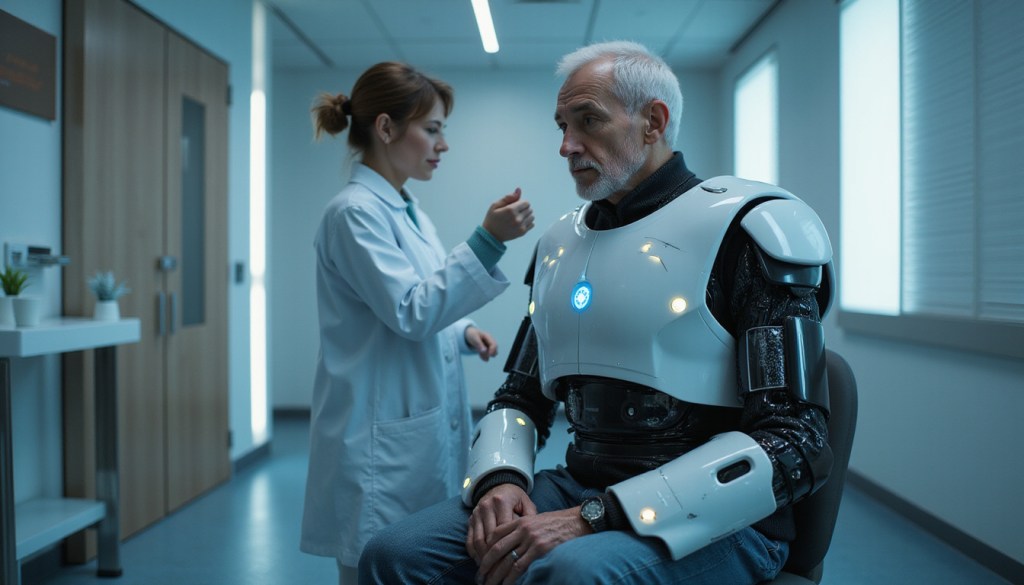
If you have neck pain that will not ease, a stiff shoulder, or knees that hurt with every step at your HDB block, you may know of robotic rehabilitation. In Singapore, many with long joint and muscle issues now choose smart rehab devices. These devices help break plateaus, build strength faster, and bring back a daily life without pain.
This article shows how robotic rehab works. It tells who it helps and how The Pain Relief Practice in Singapore uses it. The aim is to fix pain, shield joints, and let you return to your sports and favorite activities.
What is robotic rehabilitation, in simple terms?
Robotic rehabilitation uses smart, computer-driven devices that assist and guide your moves in physio or rehab sessions. You do not rely only on “manual therapy + exercises.” You also work with:
- Robotic arms or exoskeletons that support your joints
- Smart treadmills or balance platforms that react as you walk
- Sensor-based tools that record your strength, control, and range in real time
Think of it as a very precise “assistant therapist.” This helper:
- Moves your stiff joints in a controlled, repeatable way
- Helps you do quality repetitions without shortcuts
- Tracks your progress session by session, down to degrees and kilos
For those stuck at the same pain level with normal physio, this extra precision and instant feedback can be the key to progress.
Why robotic rehab is a game-changer for stubborn joint pain
If you live with joint issues, you may say:
- “My knee feels unstable even after many exercises.”
- “My shoulder still locks; I cannot reach overhead without a sharp catch.”
- “My back flares every time I increase my walk or gym time.”
Robotic rehabilitation tackles these issues in ways that manual therapy alone does not.
1. More accurate movement, less “compensation”
When you hurt, your body cheats. For instance, you may:
- Use your lower back more than your hip
- Shrug your shoulder instead of turning it
- Turn your foot out because your knee aches
Robotic devices spot and fix these shortcuts in real time. The machine helps you align correctly and move through the proper range. This ensures the right muscles work and the right joints move. Over time, this rewires your motor patterns and lessens repetitive strain.
2. Consistent, controlled joint mobilisation
Many with a frozen shoulder, stiff neck, arthritic knees, or post-surgery tightness need:
- Gentle, repeated joint glides
- Safe, controlled stretches
- Many consistent repetitions
A robot can make the exact movement hundreds of times. There is no fatigue or sudden over-push. This care matters if you once felt a therapist pushed too hard and caused pain for days.
3. Objective tracking: see your progress, not just “feel” it
Patients in Singapore often juggle work, family, and busy schedules. When you invest time and money, you want proof that your treatment works.
Robotic rehab systems provide data such as:
- Exact joint angles (for example, how many degrees your shoulder lifts today versus last week)
- Torque and strength at each angle
- Balance and gait symmetry (how evenly you load both legs)
Seeing these numbers improve on the screen makes it easier to trust the process and stay motivated.
How robotic rehabilitation speeds up recovery
Research shows that robot-assisted rehab can improve outcomes in stroke and neurological conditions (source: National Library of Medicine). The same idea works for many musculoskeletal issues.
Robotic rehab speeds recovery for joints and muscles by:
-
Higher quality reps in less time
You do more good repetitions. There is less fatigue and less cheating. This builds strength and control sooner. -
A personalised difficulty level
The machine helps more on days when you feel weak. It challenges you when you are stronger. This step-by-step increase stops pain from flaring. -
Safer limit pushing
Your therapist sets strict safety bounds. The device respects these limits, so you work safely close to your edge. -
A better brain-body connection
With chronic pain, your nervous system protects the joint too much. Safe, repeated movements teach your brain that the joint can move without harm.
Who in Singapore can benefit most from robotic rehab?
At The Pain Relief Practice, robotic rehab works best for people with:
- Knee pain (meniscus injury, early osteoarthritis, post-scope, or unstable knees)
- Frozen shoulder and rotator cuff issues
- Chronic neck and back pain from desk work, spondylosis, or old injuries
- Post-surgical stiffness (ACL, shoulder stabilisation, spine surgery, joint scopes)
- Sports injuries in runners, cyclists, gym enthusiasts, or weekend warriors
- Balance issues or fear of falling, especially on stairs or uneven ground
If you have tried medication, regular physio, or massage without full benefit, robotic rehab can help you move past that plateau.
What a robotic rehabilitation session typically looks like
At The Pain Relief Practice, robotic rehab is part of a complete treatment plan.
A typical session includes:
-
Assessment and warm-up
- A quick check on pain levels and functional issues (for example, “still limping after 10 minutes of walking”).
- Manual work if needed (joint mobilisation, soft tissue release) to prepare the area.
-
Targeted robotic work
Depending on your need, you may work with:- A robotic arm for shoulder or elbow range
- A lower-limb robot or smart treadmill for knee/hip control and gait
- A sensor-based system for trunk control and core strength
The machine guides you through specific patterns (such as controlled squats, steps, or arm raises) with real-time visual feedback.
-
Functional strengthening
After training precise movement, you usually move to more functional exercises like step-downs, lunges, carries, or sport drills. -
Cool-down, advice, and a home plan
Your therapist reviews improvements, points out areas needing work, and gives a simple home program to keep gains between sessions.
Why savvy patients choose The Pain Relief Practice for robotic rehabilitation
For patients in Singapore tired of hit-and-miss treatments, The Pain Relief Practice is a specialist pain centre with:
-
Experience since 2007
We are one of Singapore’s longstanding physiotherapy clinics, with nearly two decades of helping people fix long-term joint and muscle issues. -
Robotic rehab paired with expert clinical judgment
Our therapists guide you, not just set you on a machine. Robotic devices work as precise tools in a broader plan that includes manual therapy, movement retraining, strength work, and lifestyle advice. -
A proven record with high-demand clients
We have treated celebrities and national athletes. Every patient, be it a sports star or a parent wanting to carry a child without back pain, receives detailed care. -
Goal-oriented treatment
Our focus is not just on reducing pain but on:- Regaining full joint range
- Returning to sport or gym with confidence
- Walking, climbing stairs, or carrying loads without flare-ups
- Improving daily performance and enjoyment of life
Real Results
Celebrities & National Athletes
What people with joint problems usually feel before starting robotic rehab
If you consider robotic rehabilitation, you might think:
- “I am worried the machine will push too hard and worsen my pain.”
- “I do not understand technology; will I know what to do?”
- “Is this only for severe injuries or post-stroke patients?”
- “My joints are very degenerated; is it too late for me?”
A good clinic will:
- Start gently, below your pain level
- Explain what you see on the screen and the purpose of each exercise
- Adjust the intensity to match your feedback each session
- Mix robotic work with hands-on techniques and clear education, not use it alone
Once you try these controlled and safe moves, your fear drops and your confidence grows.
Benefits of robotic rehabilitation at a glance
Here is a summary of why robotic rehab might help if you have recurring joint or muscle pain:
- Precise, repeatable movements that help stiff joints move better
- Less compensation, so the right muscles work correctly
- Clear, objective tracking of your range, strength, and control over time
- Customisable support and resistance, to match your pain and strength levels
- Improved brain-body retraining for chronic pain and long-term stiffness
- A faster, more confident return to sports, gym, and daily life
How to know if robotic rehab is suitable for you
You may be a good candidate if:
- Your pain or stiffness has lasted several weeks
- You have tried basic physio or general exercises with little progress
- Your joints feel unstable, or you often “guard” and cannot relax into movement
- You want clear data and a structured, step-by-step plan
- You are ready to participate actively in your recovery, rather than just lie down for passive treatments
At The Pain Relief Practice, robotic rehabilitation always follows a proper assessment. This way, you and your therapist decide if it is the right step and at what level.
Our Google profile
You can see more reviews, photos, and clinic information on our Google profile:
https://share.google/UwMU2I9zUCwXVh0Lg
FAQ on robotic rehabilitation in Singapore
-
Is robotic rehabilitation effective for chronic knee or shoulder pain?
Yes. Robotic rehabilitation works well for chronic joint pain. It targets poor movement patterns, weakness, and stiffness. With guided, controlled moves and progress tracking, it rebuilds strength and mobility instead of just “exercising around the pain.” -
How many robotic rehab sessions will I need before I feel better?
This depends on how long you have had the problem, your overall fitness, and your commitment to home exercises. Many patients in Singapore see improvements in joint mobility or control within 4–6 sessions. More severe or long-term issues may take a longer program. -
Is robotic physiotherapy safe for older adults with degenerative joints?
Yes. Robotic physiotherapy is very safe for older adults. Therapists set exact limits on speed, range, and force. This challenges your joints enough to improve without causing major flare-ups. For seniors with osteoarthritis, it is a comfortable and confidence-building way to regain function.
If you are in Singapore and feel that your joints have “hit a ceiling” with standard treatments, consider robotic rehabilitation at a specialist centre like The Pain Relief Practice. It may be your next step to achieve stronger, healthier movement.
We are a specialized physio treatment center for savvy people who want real results.
While we are not suitable for someone looking for ‘cheap physiotherapy’ or ‘free exercises available on youtube’, our treatments are affordable and are often claimable with company flexi-benefits, company health insurance, travel insurance, personal accident insurance, and other insurance plans.
Simply whatsapp or call: +65 97821601 and let us know how to help.
If you prefer a convenient nutritional preventive option, Regenerix Gold is our top recommended joint supplement.
We have been recommending this joint supplement for over a decade.
Simply start with 3 capsules, once a day.
If you do not feel better within a week, increase to 2 capsules, twice a day. (4 capsules a day in total)
Our blog readers qualify for a special discount.
Simply use the link below and a discount will automatically be applied during checkout.