Below is the rewritten text. In this version, each word’s link stays close to its partner. The sentences are simple and clear, while keeping the original formatting. The vocabulary and sentence choices aim for a Flesch reading score between 60 and 70. ─────────────────────────────
If you have been admitted – or if someone you love has – know this: hospital physiotherapy helps you get back on your feet faster. In Singapore, long work hours, old sports injuries, and joints worn from life are familiar challenges. Many only feel the need for early physiotherapy when even turning in bed, getting to the toilet, or walking a corridor causes knees, hips, or backs to protest.
This guide explains how hospital physiotherapy works. It shows how these techniques speed up mobility and recovery. It also explains how a centre like The Pain Relief Practice can bridge the gap from “ward-level walking” to a full return to daily life and performance.
─────────────────────────────
What exactly is hospital physiotherapy?
Hospital physiotherapy means the tests and treatments a physiotherapist gives while you are in a hospital or attending hospital rehab. It matters most if you have:
- Just had orthopaedic surgery (knee replacement, ACL reconstruction, spine surgery, shoulder repair, etc.)
- Suffered a fracture, ligament tear, slipped disc, pinched nerve, or severe muscle strain
- Had a medical event like stroke, heart surgery, or a long ICU stay
- Long-standing joint degeneration (for example, “bone-on-bone” knees, a stiff frozen shoulder, or chronic low back pain)
This work is not like a relaxing massage or random gym exercise. It is structured and time-sensitive. Its goal is to stop complications such as muscle wasting, joint stiffness, blood clots, and lung infections.
─────────────────────────────
Why early physiotherapy in hospital speeds up recovery
When you lie in bed day after day, you lose muscle strength and joint range quickly. People in Singapore often say, “My legs feel like jelly” or “My back jams up until I cannot straighten it.”
Early hospital physiotherapy helps by:
- Supporting joint movement so that knees, hips, shoulders, and the spine keep their range
- Re-activating key muscles (quads, glutes, core, rotator cuff) before they switch off
- Training safe movement – turning, sitting, standing, moving to a chair, walking with support
- Reducing pain and swelling to keep movement from becoming torture
- Protecting your surgical repair or fracture while still allowing early use
Each hospital has its own approach. The core ideas remain the same at SGH, NUH, TTSH, KKH, or a private hospital.
─────────────────────────────
Key hospital physiotherapy techniques used on the ward
1. Early mobilisation and bed exercises
If someone says, “We try to sit you up today,” you know they mean early mobilisation. Here is what your physiotherapist does:
- Teaches you bed mobility: rolling, bridging, and sliding up the bed
- Helps move from lying to sitting at the bed edge
- Uses assistance to move from sit-to-stand with a frame, stick, or therapist support
- Encourages short corridor walks when it is safe
To stop joints from stiffening, you will often perform simple bed exercises. For example:
- Do ankle pumps to keep circulation flowing
- Perform heel slides to keep the knee bending
- Make gentle hip moves (abduction/adduction)
- Do deep breathing exercises to expand the lungs
These exercises seem “too simple.” Yet done often, they protect your joints while you are still weak.
─────────────────────────────
2. Post-surgical joint protocols (knee, hip, shoulder, spine)
For those with long-term joint issues, the real work starts after surgery. You may feel:
- A blocked feeling in your knee when you bend it
- A jammed hip when you bear weight
- Sharp pain when you try to straighten your back
- Catching or pinching near your shoulder when you lift your arm
Hospital physiotherapists use strict protocols that mix protection with early loading:
-
Knee surgery (for example, total knee replacement, ACL reconstruction)
- Activate the quadriceps with quad sets and straight leg raises
- Mobilise the patella to stop a “sticky” kneecap
- Use targeted knee-bending and straightening by set post-op days
- Retrain your gait so you do not develop a long-term limp
-
Hip replacement or fracture repair
- Follow hip precautions (know which moves to avoid)
- Activate glute muscles to keep your butt strong
- Gradually allow weight-bearing and safe walking
-
Shoulder surgery (rotator cuff repair, stabilisation)
- Use passive and assisted range-of-motion techniques to avoid a frozen shoulder
- Control the shoulder blade (scapular control) for long-term health
- Progress slowly to overhead and functional uses
-
Spine surgery (discectomy, fusion, decompression)
- Use log-rolling to protect the operated area
- Activate the core (deep abs and back muscles) early
- Mobilise the spine in a neutral position for safe movement
Every step follows your surgeon’s orders and your body’s signals. It does not use a “no pain, no gain” approach.
─────────────────────────────
3. Hands-on techniques for stiff, painful joints
Patients sometimes say, “My knee feels like a rusted hinge,” or “My neck and back are so tight I get headaches.” In such cases, hospital physiotherapists work on:
- Joint mobilisation – using gentle gliding or traction to reduce stiffness
- Soft tissue release – applying pressure or massage to loosen tight, knotted muscles
- Scar and swelling management – reducing thick scars or lingering oedema
These techniques ease the deep, locked feeling so you can perform your exercises.
─────────────────────────────
4. Gait training and balance retraining
After surgery or a long pain episode, your walk may change. It might be:
- Short-stepped
- Uneven, favouring one leg
- Bent over because of back or hip pain
- Unsteady, with a fear of falling
A hospital physiotherapist helps by:
- Adjusting walking aids (frame, quad stick, single-point cane) so they fit you
- Correcting step length, foot placement, and weight shift
- Using parallel bars or rails for safe testing
- Adding balance exercises to teach your body to handle uneven surfaces
This training is important so you do not end up with a permanent limp or overuse your “good” side.
─────────────────────────────
5. Respiratory and cardiovascular rehabilitation
Patients who have been in ICU, had heart surgery, or spent long periods in bed also take part in physiotherapy that includes:
- Breathing exercises and chest clearance techniques
- Changing positions to improve lung expansion
- Gradual cardiovascular conditioning – moving from sitting to standing to walking
These actions reduce risks like pneumonia and prepare you for more active rehabilitation.
─────────────────────────────
From ward to real life: why many patients still struggle
Even with good hospital physiotherapy, many Singaporeans leave the hospital while still:
- Struggling with stairs at home or on MRT overhead bridges
- Being afraid to squat, kneel, or lift grandchildren
- Feeling stiff after 30–60 minutes sitting at a desk
- Waking with morning stiffness or start-up joint pain
- Sensing a sharp drop in performance at work or sport
That is because hospital physiotherapy focuses on basic function and safety – getting you ready to go home. It does not always aim at:
- High-level sports performance
- Heavy work demands (like long periods of standing or manual labour)
- Complex cases with long-standing multiple joint issues
This is when a specialised pain and performance clinic helps to bridge the gap.
─────────────────────────────
How The Pain Relief Practice builds on hospital physiotherapy
The Pain Relief Practice is an established physiotherapy clinic in Singapore. It has helped many people since 2007. Many patients come to us when they:
- Are discharged from hospital
- Have “plateaued” in basic rehab
- Still suffer from joint pain, stiffness, or weakness, even years after surgery
We focus on three main goals:
- Fixing pain issues, not just covering them up
- Restoring healthy joints and muscles with proper movement and strength
- Boosting performance and quality of life – from daily actions to serious sports
Our team has treated celebrities and national athletes, as well as everyday office workers, caregivers, and active seniors with challenging knee, hip, back, or shoulder problems.
─────────────────────────────
Real Results
─────────────────────────────
Celebrities & National Athletes
─────────────────────────────
Key techniques we use to accelerate your recovery after hospital discharge
We build on the work you did in hospital physiotherapy. Then we go deeper with customised plans.
1. Detailed joint and movement analysis
Instead of checking just “Can you walk?”, we see:
- The exact joint range (for example, knee flexion or shoulder elevation)
- The quality of movement (how you bend, twist, reach, step, land, or change direction)
- Muscle imbalances – which muscles work too much and which work too little
- Load tolerance – how your joints and tissues react to daily stress
This analysis finds the cause of your persistent “nagging” or “catching” pain.
─────────────────────────────
2. Progressive strength and loading programmes
For long-term joint health, strong muscles are needed. A typical hospital stay only provides basic training. We design step-by-step progressions to:
- Rebuild the quadriceps, hamstrings, and glutes for knees and hips
- Strengthen the rotator cuff and stabilisers around the shoulder
- Retrain the deep core and back muscles for spine and neck support
We match the intensity to your healing stage. This way, you do not flare up pain or stress a surgical repair.
─────────────────────────────
3. Advanced manual and technology-assisted therapies
Depending on your condition, we may use:
- Targeted manual therapy to break up stiff tissues
- Soft tissue and myofascial release to ease chronic tightness and trigger points
- Evidence-based methods (for example, careful electrotherapy or even shockwave treatment) to speed tissue healing
We follow clinical guidelines and research so that treatment is safe and effective. (Source: Singapore Physical Therapy Association Clinical Guidelines).
─────────────────────────────
4. Return-to-sport and return-to-work planning
Many of our patients want more than basic walking. They wish to:
- Play badminton, tennis, golf, football, or run again
- Lift weights without constant caution to protect their joints
- Walk or stand for long hours at work without knee or back pain
We create individualised return-to-sport or work plans. These plans slowly expose your joints and muscles to the specific loads and moves of your sport or job.
─────────────────────────────
What a typical post-hospital recovery journey can look like
Every case is different. Still, a common flow for someone in Singapore can be:
- In hospital
- Do bed mobility, early walking, basic joint range, and breathing exercises
- Early post-discharge (Weeks 1–4)
- Attend clinic-based pain control, swelling management, and gentle joint mobilisation
- Work on basic strengthening and gait correction
- Intermediate phase (Weeks 4–12)
- Progress into strength training, balance work, and stair or slope exercises
- Build endurance for daily life
- Advanced phase (3–6+ months)
- Practice sports-specific or work-specific drills
- Increase strength and agility
- Correct any remaining compensations and stiffness
The goal is not just to walk. It is to live confidently on your joints again.
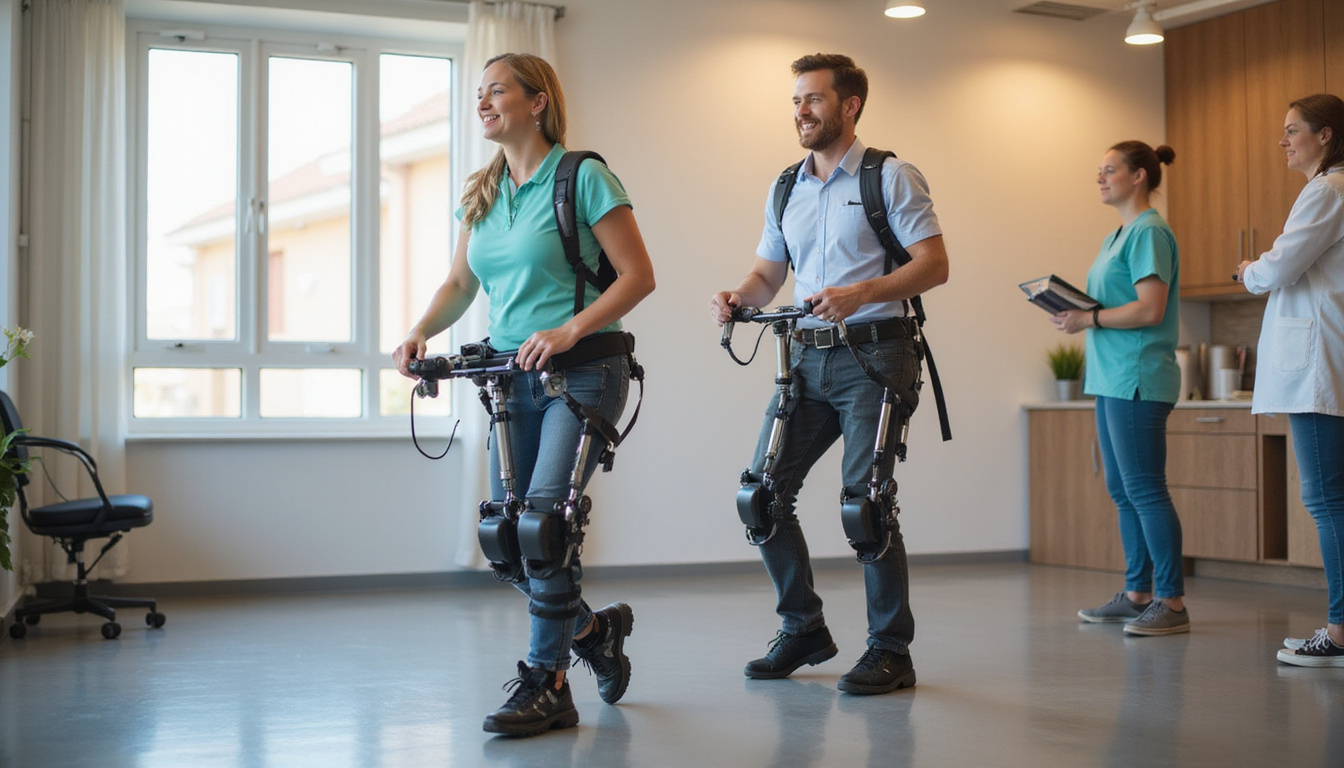
─────────────────────────────
Simple things you can do now if you’re still in or just out of hospital
Always check with your medical team before changing your routine. Many patients benefit from:
- Doing your prescribed hospital exercises several times a day in short sets
- Not sitting or lying for long periods if your doctor or physiotherapist says you may move more
- Keeping a pain and activity diary so your therapist can adjust your plan
- Using proper, non-slippery footwear at home during early walking stages
- Getting early outpatient physiotherapy help if you feel stuck, scared, or overly reliant on painkillers
─────────────────────────────
FAQ about hospital physiotherapy and recovery in Singapore
-
How does hospital physiotherapy differ from private physiotherapy?
Hospital physiotherapy focuses on acute care. It keeps you safe, prevents complications, and gets you basic mobility before discharge. Private centres like The Pain Relief Practice take over once you are medically stable. They solve stubborn pain, restore full joint function, and help you return to sport, work, and an active life. -
When should I continue physiotherapy after hospital discharge?
If you still have pain, stiffness, or trouble with daily tasks like climbing stairs, getting up from chairs, or walking outdoors, you should continue physiotherapy soon after discharge. Most people benefit from transitioning from hospital therapy to specialised outpatient care within 1–3 weeks of going home. -
Can physiotherapy after a hospital stay help my old joint problems too?
Yes. Many Singaporeans have past injuries – worn knees, recurring back pain, old sprains – that flare up after hospital treatment. A tailored programme at The Pain Relief Practice can work on both your recent hospital issue and your long-standing joint problems so you do not trade one issue for another.
─────────────────────────────
Continue your recovery with The Pain Relief Practice
If you have recently finished hospital physiotherapy but still feel far from full activity, you do not have to settle for “half-recovery.”
At The Pain Relief Practice, we:
- Work with smart patients who need clear plans and measurable progress
- Help you protect your surgical results while unblocking stiff joints and building strength
- Use our experience since 2007 – treating celebrities and national athletes alike – to guide your return to confident movement
You can check our Google profile for our location, reviews, and contact details:
https://share.google/UwMU2I9zUCwXVh0Lg
If you are in Singapore and still hear your joints grumble after a hospital stay, specialised help can save you years of extra pain and limits.
We are a specialized physio treatment center for savvy people who want real results.
While we are not suitable for someone looking for ‘cheap physiotherapy’ or ‘free exercises available on youtube’, our treatments are affordable and are often claimable with company flexi-benefits, company health insurance, travel insurance, personal accident insurance, and other insurance plans.
Simply whatsapp or call: +65 97821601 and let us know how to help.
If you prefer a convenient nutritional preventive option, Regenerix Gold is our top recommended joint supplement.
We have been recommending this joint supplement for over a decade.
Simply start with 3 capsules, once a day.
If you do not feel better within a week, increase to 2 capsules, twice a day. (4 capsules a day in total)
Our blog readers qualify for a special discount.
Simply use the link below and a discount will automatically be applied during checkout.