If you train hard in Singapore’s heat and humidity, you already know one thing. Real gains come from smart muscle recovery. The workout helps, but recovery makes the difference. When your recovery fails, your body feels off. Your joints hurt, your muscles remain tight, and every session feels heavy. Over time, small aches can turn into stubborn problems in your knees, shoulders, neck, or back.
This guide speaks directly to active people in Singapore. Whether you are a weekend warrior, gym junkie, runner, cyclist, cross-fitter, combat sport athlete, or serious lifter, you want faster gains, better performance, and joints and muscles free of pain.
Why muscle recovery is the real secret to faster gains
Most athletes in Singapore already push hard during training. They track their splits or PRs and take some protein after workouts. Still, many athletes complain about:
- Constantly tight hamstrings or hip flexors
- Nagging knee or shoulder pain
- A lower back that seems to lock up
- DOMS (delayed onset muscle soreness) that lasts days
- Legs that feel heavy or sluggish
This is not simply a sign of getting old. It is poor muscle recovery.
When you do not recover well, micro-tears in muscles and tendons do not heal properly. Muscles stay short and tight, pulling on your joints. Your movement becomes compensatory and inefficient. Your chance of strains, tendinopathy, and joint wear and tear increases.
By focusing on recovery, you build muscle and strength faster. You can train more consistently. You protect your knees, shoulders, hips, and spine. Instead of stiffness, you feel springy and light.
Hack #1: Treat DOMS as a signal, not a badge of honour
After leg day in Singapore’s humidity, you might wake up with legs that feel like jelly. This feeling can seem like “shiok pain,” yet long-lasting DOMS is not good for you.
Follow this guideline:
- 24–48 hours of mild soreness is normal.
- If soreness lasts beyond 72 hours or changes the way you move, your recovery is behind.
Here are some ways to help:
- Choose active recovery instead of bed rest. Try light cycling, easy swimming, brisk walking, or mobility work.
- Do gentle range-of-motion drills for sore muscles.
- Use a hot-cold contrast on stubborn areas (for example, an ice pack followed by a warm shower).
If the same joint area always hurts (for example, the front of your knee, the front of your shoulder, or your lower back at the belt line), you may be compensating for a tight or weak area. This is when you should get a targeted assessment at a specialised pain and physiotherapy clinic.
Hack #2: Respect your joints, not just your muscles
In Singapore, many athletes focus on big muscles—quads, glutes, pecs, lats. But your joints silently bear the load.
Active adults often say:
- “My knees feel crunchy when I climb stairs.”
- “My shoulder clicks when I press overhead.”
- “My lower back tightens after every run.”
These are early signs of joint overload. They point to poor muscle balance, inadequate control, or weak recovery.
Try these joint-saving habits:
- End your session with 5–10 minutes of cooldown focused on problem joints—for example, hip or ankle mobility or thoracic spine rotations.
- Avoid ego lifting. If your form breaks or you feel pinching in a joint, lower the load.
- Vary movements that stress the same joint angle. For instance, switch deep barbell squats with goblet or split squats when needed.
If your joints continue to feel jammed or sticky even after several light weeks, this is a red flag that you must address.
Hack #3: Sleep – your most underrated anabolic tool
All the supplements in Singapore cannot replace high-quality sleep. Sleep is a powerful tool for muscle recovery and joint health.
During deep sleep, your body releases growth hormone, repairs tiny muscle tears, regulates inflammation, and resets your nervous system.
Aim for:
- 7–9 hours each night
- A consistent sleep-wake schedule, even on weekends
- A cool, dark room (use a fan or aircon in our tropical climate)
If you wake feeling stiff or with a locked neck or lower back, check your mattress and pillow. It might also be caused by side sleeping with a twisted spine. These morning aches tell you that your body is not healing well overnight.
Hack #4: Fuel your muscles before and after you train
You know protein is important, but timing and basics matter too.
Pre-workout, have some carbs with a bit of protein 1–3 hours before training. For example, try wholemeal toast with eggs or rice with lean meat.
Within 1–2 hours after training, get 20–40g of protein and some carbs. Ideas include chicken rice with less skin, poke bowls, or whey plus fruit.
In Singapore’s heat, proper hydration is key. Aim for light yellow urine to avoid muscle tightness and cramps.
For your joints and connective tissues, ensure you include Omega-3 fats (like salmon, sardines, nuts, and seeds) and collagen or gelatin with vitamin C if needed. Always check with a professional on nutritional advice. Consistent, wholesome meals and enough protein form the base of good recovery.
Hack #5: Smart mobility: not just random stretching
Some athletes only stretch when they feel tight. They hold painful static stretches and hope the stiffness will vanish. Effective muscle recovery depends on smart, specific mobility work.

Think of three stages:
-
Calm the area down
- Use light self-massage, foam rolling, or gentle heat to ease stiff areas.
- Perform pain-free range-of-motion drills.
-
Restore normal movement
- Do controlled mobility work for tight joints such as hips, ankles, or the thoracic spine.
- Try dynamic stretches that mimic your sport’s movements.
-
Rebuild control and strength
- Work on stability and strength around the trouble spots.
- Use technique work to avoid returning to old, painful patterns.
When you always feel a knot between your shoulder blades or a tight band along your IT band or calf, this may not be a simple muscle tightness. It might be a movement or loading issue that requires professional attention.
Hack #6: Use active recovery days, not just “off days”
A rest day does not mean spending all day on the sofa. Active recovery speeds muscle healing and keeps joints happier.
In Singapore, you might try:
- An easy walk along a park connector or the beach
- Light cycling or low-intensity spin workouts
- Relaxed swimming without sprints
- Gentle yoga or Pilates that focuses on mobility and breathing
Keep your intensity low enough to hold a conversation. If you struggle to speak comfortably, you are pushing too hard for a recovery day.
Hack #7: Know when you need professional help (and not just another massage)
There is a big difference between normal post-workout soreness and a deeper joint or muscle problem.
Watch for these signs:
- Sharp pain with movements such as squatting, overhead pressing, or downhill running
- Pain that lingers for more than 2 weeks despite resting
- Repeated injuries in the same spot, like the hamstring, knee cap, or shoulder
- A sudden drop in strength or a feeling of instability
If you spot these signals, pushing through pain can worsen your condition. This is when professional advice from a pain and physiotherapy centre becomes vital.
The Pain Relief Practice: advanced muscle recovery and joint care for Singapore athletes
For those serious about performance, The Pain Relief Practice stands apart from generic physio or massage clinics.
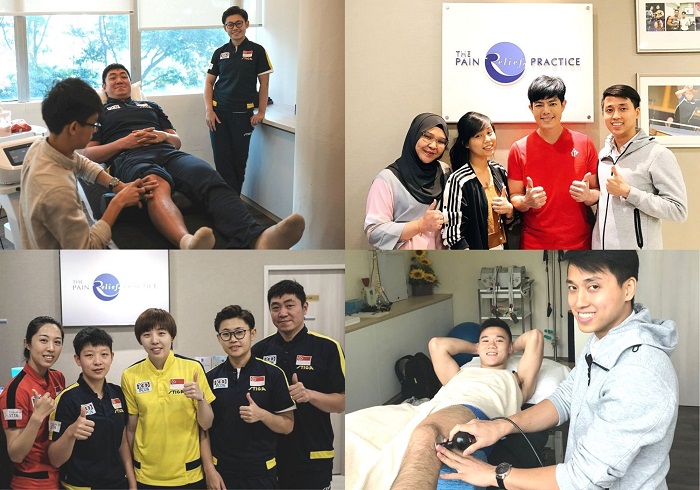
We are one of Singapore’s older physiotherapy clinics. Since 2007 we have helped many people. We treat pain, support muscle recovery, and optimise joint health. We also work with celebrities, national athletes, and serious weekend warriors.
Our approach goes beyond a quick rub:
-
Detailed assessment
- We pinpoint which joints and tissues are under stress.
- We study your movement patterns and sport demands.
-
Targeted treatment
- We offer evidence-based physiotherapy.
- We use advanced pain-relief techniques.
- We create recovery protocols unique to your needs.
-
Performance-focused rehab
- We apply strength and conditioning principles to help you return to your sport.
- We design joint protection strategies so you keep progressing without flare-ups.
Our goal is to help patients overcome stubborn pain, regain healthy and mobile joints, strengthen muscles, and boost overall performance and life enjoyment.
Real Results
Celebrities & National Athletes
Simple daily muscle recovery checklist for Singapore athletes
Use this checklist every day:
-
Before training
- Warm up for 5–10 minutes with sport-specific moves.
- Hydrate so you do not start thirsty.
-
Right after training
- Cool down for 5–10 minutes with light movement and key stretches.
- Have protein and carbs within 1–2 hours.
- Check your body for any unusual joint pain.
-
Evening routine
- Do light mobility work or stretching for trouble spots.
- Use foam rolling or self-massage on tight areas.
- Aim for 7–9 hours of sleep in a cool, comfortable room.
-
Weekly
- Include at least one active recovery day.
- If joint pain lasts more than 1–2 weeks, schedule a professional assessment.
The goal is not perfection. It is about adding small, smart steps that help your muscles and joints recover.
External resource for deeper reading
If you want to learn more about muscle recovery science, the American College of Sports Medicine provides useful guidelines on training, fatigue, and recovery. (Source: ACSM: https://www.acsm.org)
FAQ: muscle recovery, soreness and performance
-
How can I speed up muscle recovery after a hard workout?
Keep the basics in focus. Eat proper post-workout nutrition (protein plus carbs), stay hydrated, sleep 7–9 hours, and do low-intensity active recovery. Add targeted mobility and self-massage for trouble spots. If pain in specific joints continues, seek a professional assessment. -
Is it okay to train with sore muscles?
Mild soreness is normal, but sharp or joint-specific pain is not. If soreness affects your movement, forcing hard training can worsen the issue. Adjust your intensity, work different muscle groups, or consult a physio if the same area keeps hurting. -
What is the best treatment for poor muscle recovery and chronic tightness?
There is no one best fix. Effective management blends a clear diagnosis, hands-on therapy, corrective exercises, load management, and education on sleep, stress, and training. If you have persistent tightness with joint discomfort, a service like The Pain Relief Practice can pinpoint the root cause and build a custom recovery plan.
To explore how an evidence-based muscle recovery and joint care plan can boost your sport performance, find The Pain Relief Practice on Google:
https://share.google/UwMU2I9zUCwXVh0Lg
We are a specialized physio treatment center for savvy people who want real results.
While we are not suitable for someone looking for ‘cheap physiotherapy’ or ‘free exercises available on youtube’, our treatments are affordable and are often claimable with company flexi-benefits, company health insurance, travel insurance, personal accident insurance, and other insurance plans.
Simply whatsapp or call: +65 97821601 and let us know how to help.
If you prefer a convenient nutritional preventive option, Regenerix Gold is our top recommended joint supplement.
We have been recommending this joint supplement for over a decade.
Simply start with 3 capsules, once a day.
If you do not feel better within a week, increase to 2 capsules, twice a day. (4 capsules a day in total)
Our blog readers qualify for a special discount.
Simply use the link below and a discount will automatically be applied during checkout.