If you have a stiff neck, a jammed lower back, crunchy knees, or a frozen shoulder that will not loosen up, you may feel hurt.
You walk around Singapore and feel the pain.
You might ask, “What do rehab specialists do that is different from a massage or a quick visit to the doctor?”
Many patients at The Pain Relief Practice have tried many things—TCM, painkillers, or even random YouTube stretches—yet they still feel deep aches.
These aches flare when you walk more, train harder, or sit too long at work.
This article explains seven lesser-known strategies.
These are strategies that experienced rehab specialists use for stubborn musculoskeletal pain.
──────────────────────────────
- Starting with “pain mapping” instead of chasing the sore spot
Most people in pain hear, “Where does it hurt?” and then receive treatment at that spot.
Skilled rehab specialists ask, “Where is the pain really coming from?”
They use a method called pain mapping.
They start by tracing how the pain moves from one area to another (for example, from the buttock to the hamstring to the calf).
They test which movements turn the ache on or off.
They check surrounding joints that may add stress to the painful spot.
A weekend footballer with a “bad knee” might have the knee pain caused by a stiff hip and weak glutes.
Treating only the knee with ice or rest may help for a short time.
It does not fix the true problem.
Pain mapping helps specialists find the real cause.
This way, treatment does not just chase symptoms.
At The Pain Relief Practice in Singapore, this careful work is standard.
It is especially useful when patients have bounced from one clinic to another for many months without a clear answer.
──────────────────────────────
- Using “micro-progressions” instead of “no pain, no gain”
Many people with chronic pain in the neck, back, or joints overdo it at the gym.
Some underdo it out of fear and become weaker and stiffer.
Skilled rehab specialists know that true recovery sits in the middle.
They call this method micro-progressions.
Micro-progressions mean small steps.
You increase load, reps, or range of motion a little each week.
You and your specialist watch your body’s response for 24–48 hours.
You see if you have delayed soreness or a flare-up.
Then you adjust the plan based on your body’s feedback.
For example, someone with a long-standing slipped disc may start with gentle hip hinges and a supported core.
They avoid heavy lifts like deadlifts at first.
Each week, the plan nudges your limits safely.
This way, you avoid symptoms like tingling or sharp pain.
Specialists ask detailed questions about how you felt after your last session.
That answer helps them decide your next step.
──────────────────────────────
- Training the “forgotten” stabilisers your joints depend on
Many people in Singapore try strength training yet still feel unstable.
They say their joints feel loose or do not hold together well.
This happens because standard workouts target the big muscles.
In contrast, your joint stability depends on deeper, underworked muscles.
Rehab specialists train stabilisers such as:
• Your deep neck flexors (to help with forward head or tech-neck pain)
• Your rotator cuff and mid-back muscles (to ease shoulder impingement or clicking)
• Your glutes and deep hip rotators (for better knee tracking and less sacroiliac pain)
• Your deep core and multifidus (to ease low back pain)
Instead of only doing planks or sit-ups, you will do precise exercises.
You might use low-load bands.
You may hold short-range positions that target a tiny muscle area.
You will do balance drills that improve joint control.
Such exercises might not look flashy online.
Yet they restore joint control and keep pain away when you increase your activity.
──────────────────────────────
- Re-training movement patterns you repeat all day (not just in the gym)
Your body remembers all you do in a day.
It does not only record your 1-hour workout.
Every movement, even when you sit at your desk, matters.
Many painful conditions start with our everyday habits.
Skilled rehab specialists watch your movements closely.
They see how you sit at your desk or pick up items off the floor.
They observe how you carry your bag or climb stairs.
They ask you to show how you squat, lunge, or get in and out of a car.
They look for signs like twisting or over-arching your back, collapsing knees, or shrugging shoulders.
Then they coach you with clear instructions:
• Hinge from your hips instead of bending from your back.
• Use your whole foot instead of letting your foot collapse.
• Relax your upper traps and use your mid-back when reaching overhead.
• Change your sitting positions and take small breaks in a long day.
These small changes help remove daily irritation.
They lower inflammation in your joints and muscles.
And they support the exercises you do.
──────────────────────────────
- Tapping into your nervous system, not just your muscles
Pain is not only caused by tight muscles or worn-out joints.
Your nervous system helps decide if your body feels safe when you move.
This fact changes the way specialists treat pain.
Good rehab specialists do more than stretch and strengthen.
They calm and retrain your nervous system.
They use methods such as:
• Simple breathing drills to reduce tension.
• Slow tempo exercises that help your brain trust movement.
• Gradual exposure to positions that hurt (for example, bending forward or twisting).
• Manual therapy and joint mobilisations that desensitise painful areas.
People with chronic pain often say their body is always on alert.
When your nervous system relaxes and feels safe, your joint no longer seems jammed.
Your muscle stops spasming at each small movement.
Research shows that treating the body, mind and environment together works better for long-term pain.
──────────────────────────────
- Designing realistic rehab for busy Singapore lifestyles
Many rehab plans seem to assume that you have plenty of free time.
But in Singapore, you may have long office hours or travel often.
You may have family duties or young kids.
You may face heavy traffic or a long commute, with little time for the gym.
Skilled rehab specialists know the real world well.
They keep your plan simple and effective.
They focus on two or three high-impact exercises.
They slot these exercises into your routine—maybe during lunch or before a shower.
They even offer mini options for your desk or when you are travelling.
They create progressions that do not require fancy equipment.
At The Pain Relief Practice, many patients are busy professionals or athletes.
They cannot afford to be out of action for long.
So you get rehab that works with your life, not just textbook ideas.
──────────────────────────────
- Combining cutting-edge therapies with smart physiotherapy
Many patients are surprised by the fast gains they make when therapists combine hands-on work with modern tools and targeted exercises.
At centers like The Pain Relief Practice, rehab specialists blend methods such as:
• Advanced pain relief techniques to calm inflammation and nerve irritation
• Manual methods for stiff joints, tight fascia, and trigger points
• Precision strengthening for muscles that are weak or inhibited
• Detailed movement coaching to fix patterns that lead to joint overload
This combined approach works well for people who have tried basic physio or generic gym exercises without long-lasting relief.
It works for those with old sports injuries and for those facing flare-ups at the worst times—like before a marathon or performance.

Since 2007, The Pain Relief Practice has honed these strategies on thousands of patients.
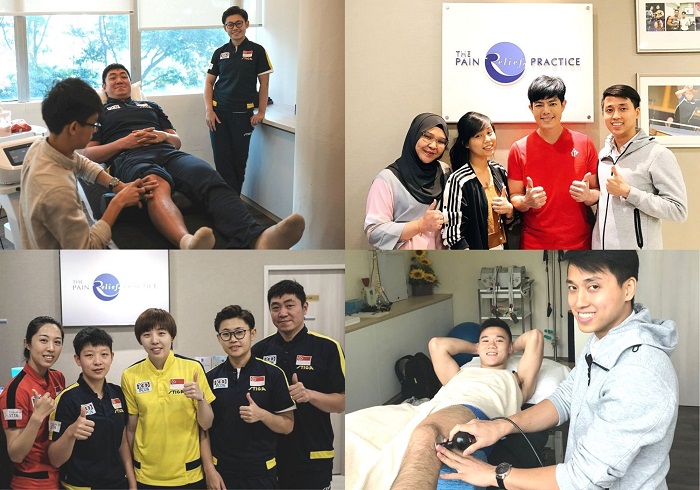
They have helped celebrities and national athletes regain pain-free performance.
──────────────────────────────
Real Results
──────────────────────────────
Celebrities & National Athletes
──────────────────────────────
Why choose The Pain Relief Practice for rehab in Singapore?
If you are serious about fixing stubborn joint and muscle issues, The Pain Relief Practice offers clear benefits:
• Specialised focus on pain and performance
We are not just a general clinic.
We focus on targeted treatments for musculoskeletal pain, sports injuries, and chronic aches that have not improved elsewhere.
• Experience since 2007
We have nearly two decades of experience helping Singaporeans with a wide range of issues—from office neck pain and slipped discs to ligament tears and post-surgical rehab.
• Trusted by celebrities and national athletes
High-performance individuals depend on our specialist care to get back on stage, back on the field, and back to training faster and safer.
• People-first, data-informed care
We listen to your story.
We track your progress and adjust your plan based on how your body responds, not just on textbook guidelines.
If your joints feel old and heavy, if your back locks after long drives, or if your shoulder or knee has not recovered from an old injury, our rehab specialists can help.
They will guide you to move better, rebuild your strength, and enjoy using your body again.
──────────────────────────────
What a typical recovery journey can look like
Everyone’s path is unique.
Still, many patients see these steps:
- Assessment & diagnosis
We take your detailed history, screen your movements, and use pain mapping to find the true source of your pain. - Calming the flare
We use pain-relief methods to ease inflammation, spasms, or nerve irritation. - Restoring mobility
We use specific techniques and exercises to free stiff joints and loosen tight tissues. - Rebuilding strength & control
We focus on stabilisers and functional strength in natural movement ranges. - Re-training your patterns
We correct everyday habits like sitting, lifting, walking, and training so that pain does not return. - Performance & resilience
For active individuals, we progress beyond “no pain” and build stronger, more resilient movement than before the injury.
──────────────────────────────
FAQ about rehab in Singapore
Q1: How do I know if I should see a rehab specialist or just rest and wait?
A: If your pain lasts more than a couple of weeks or keeps coming back, or if it affects activities like walking, sleeping, standing, or carrying groceries, it is wise to consult a rehab specialist.
If your joint locks or catches repeatedly, you deserve a proper assessment.
Q2: What conditions can a musculoskeletal rehab specialist help with?
A: A specialist can help with neck and back pain, slipped disc, sciatica, frozen shoulder, rotator cuff issues, knee pain (such as meniscus or ligament issues), hip and groin pain, plantar fasciitis, ankle sprains, tennis elbow, and many other joint, tendon, muscle, or nerve problems.
They are especially useful when rest and medication have not solved the problem.
Q3: Are rehab specialists only for athletes?
A: No, they are not.
Even though many athletes benefit, most patients are regular office workers, parents, or older adults who want to move without pain.
Rehab specialists adapt the program to your level—whether you run marathons, chase your children, or simply want to walk comfortably to the MRT.
──────────────────────────────
See our clinic profile
Learn more about The Pain Relief Practice and read patient reviews on our Google profile:
https://share.google/UwMU2I9zUCwXVh0Lg
If you are tired of living with pain and are ready for a guided, specialist-led journey toward recovery, our rehabilitation team is here to help.
They will help you rebuild strength, improve movement, and return to the activities that matter to you.
We are a specialized physio treatment center for savvy people who want real results.
While we are not suitable for someone looking for ‘cheap physiotherapy’ or ‘free exercises available on youtube’, our treatments are affordable and are often claimable with company flexi-benefits, company health insurance, travel insurance, personal accident insurance, and other insurance plans.
Simply whatsapp or call: +65 97821601 and let us know how to help.
If you prefer a convenient nutritional preventive option, Regenerix Gold is our top recommended joint supplement.
We have been recommending this joint supplement for over a decade.
Simply start with 3 capsules, once a day.
If you do not feel better within a week, increase to 2 capsules, twice a day. (4 capsules a day in total)
Our blog readers qualify for a special discount.
Simply use the link below and a discount will automatically be applied during checkout.