
If you live in Singapore and feel pain in your neck, back, knees, or shoulders, telerehabilitation helps.
You feel a stiff neck.
Your lower back locks up.
Your knees creak.
Your shoulder pain bothers you.
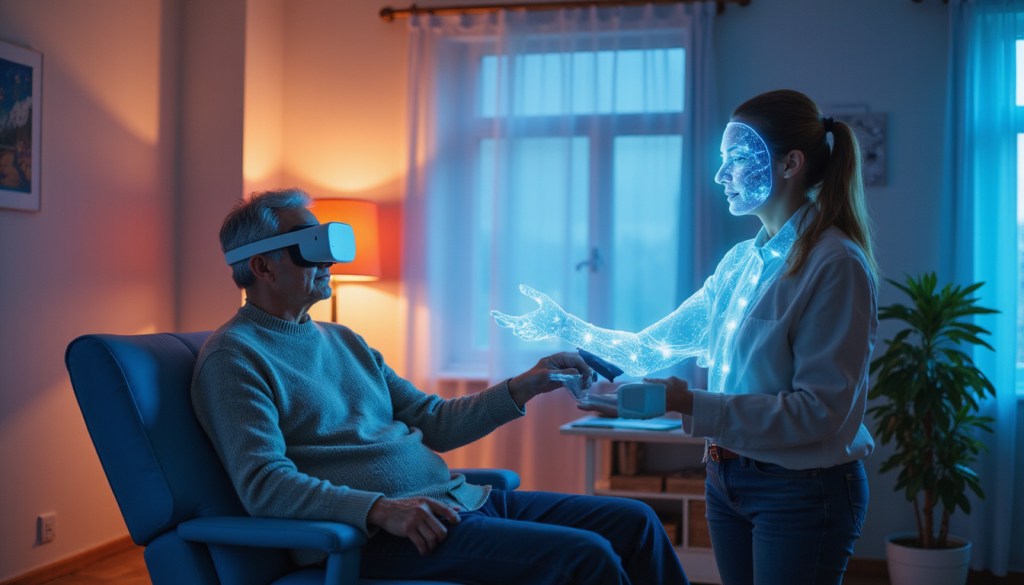
Telerehabilitation gives you expert help over video.
You work one-to-one with a qualified therapist without travelling to a clinic.
For many people, telerehab fills the gap.
It makes your rehab consistent, convenient, and effective.
Below, you see how telerehab works.
You learn which conditions it treats.
You see how The Pain Relief Practice uses telerehab.
You learn how to gain pain-free movement, stronger joints, and better performance in daily life and sports.
What Is Telerehabilitation – And Why Does It Work So Well?
Telerehabilitation (or “tele-physio” / “virtual physio”) is physiotherapy done via secure video.
You work directly with a qualified therapist on your phone, tablet, or laptop.
For people in Singapore with joint and muscle pain, telerehab helps when:
- Your joints flare up after too much travel or walking
- You feel worn out after work and avoid the clinic
- You have a pain spike and need quick advice today
- You have been seen in person and now need regular guided follow-ups
Research shows that for many musculoskeletal conditions – like knee osteoarthritis, back pain, or post-op rehab – remote rehab works as well as in-person care when the therapist watches you closely (source: NCBI).
Common Signs You’re Ready for Telerehabilitation
If you see these signs, telerehab may help you:
- Your knee feels stuck or catches when going downstairs
- You wake up with a stiff neck that only eases after a hot shower
- Your lower back locks when you bend to tie your shoelaces
- Your shoulder aches when you reach overhead or fasten your bra
- You feel weak or get “jelly legs” after a knee or ankle injury
- You avoid movement because you fear worsening the pain
These daily complaints are common at The Pain Relief Practice.
Telerehab sessions retrain how your joints move, how your muscles fire, and how your body shares load.
This process reduces pain and builds your confidence.
How Virtual Therapy Actually Speeds Up Your Recovery
You may ask, “How can a therapist help if they are not physically present?”
For many musculoskeletal issues, change comes from more than hands-on work.
Change comes from these steps:
- An accurate look at your movement
- A correct exercise prescription (type, angle, tempo, sets, reps)
- Real-time correction of your form
- A gradual increase in load
- Learning what is safe and what to avoid
Telerehab speeds your recovery by focusing on these steps.
1. Zero Travel = Fewer Missed Sessions
You have often cancelled physio when rain, traffic, or long work hours stop you.
Every missed session can cause longer flare-ups, more stiffness, and lost progress.
When you do telerehab, you work from:
- Your living room
- An office meeting room
- A quiet corner at home while others are busy
More consistency brings faster improvements in joint mobility, strength, and pain control.
2. Real-Life, Real-Space Rehab
Often, patients say, “I can do the exercise in the clinic, but not at home.”
Telerehab changes that.
You perform exercises in the real space that you use every day.
This may be:
- Your own chair, sofa, bed, or work desk
- Your real staircase or corridor
- Your real floor surface, like tiles or wood
Your therapist sees your real movement.
They see your posture at your home workstation.
They see your daily habits and fix what matters.
3. Immediate Pain Troubleshooting
You might feel a sudden catch in your knee during a squat or a pull in your back while stretching.
With telerehab, you show your therapist that exact movement.
They can then advise you to stop, change, or continue.
They offer safer alternatives right away.
This rapid feedback lowers panic stops and builds steady progress.
What Happens During a Telerehabilitation Session?
At The Pain Relief Practice, telerehab is structured and personal.
It is not a generic exercise video.
A typical session follows these steps:
1. Symptom & Function Check-In
We ask simple, direct questions:
- “How is your morning stiffness today compared to last week?”
- “Can you climb stairs without holding the railing now?”
- “How far can you turn your neck when checking your blind spot?”
You show us key movements on camera.
We see changes in your range and control.
2. Guided Assessment and Movement Testing
Over video, your therapist sees you:
- Stand up from a chair, sit down, squat, lunge, or reach overhead
- Bend your spine in different ways
- Step down from a step and check your knee alignment
- Control your scapula and shoulder when you reach overhead
Small actions – like a knee caving in or a back arching – give us clues on what to fix.
3. Tailored Exercise Prescription
Your therapist does not send a generic sheet.
They demonstrate each exercise.
They watch you perform the exercise and fine-tune your technique.
They adjust difficulty with items you have at home: a towel, water bottles, stairs, or resistance bands.
You get a clear, real home program that fits your pain, schedule, and goals.

4. Progression & Load Management
We avoid under-loading and overloading by:
- Gradually increasing resistance, range, or complexity
- Monitoring your pain with clear guides (for example, “up to 3/10 discomfort during exercise, with no increase next day”)
- Making changes week to week based on your feedback
This progression is important for conditions like knee osteoarthritis, disc bulges, rotator cuff tendinopathy, or post-surgery rehab.
Conditions That Respond Well to Telerehabilitation
Patients at The Pain Relief Practice often use telerehab for:
- Chronic neck and shoulder pain from desk work, phone use, or poor posture
- Lower back pain with or without sciatica
- Knee pain from meniscus issues, wear and tear/osteoarthritis, runner’s knee, or jumper’s knee
- Post-injury and post-surgery rehab (ACL, meniscus, rotator cuff, fractures) after an initial in-person clearance
- Ankle sprains and instability
- Hip and glute pain, including piriformis and IT band issues
If you feel stiffness, weakness, poor movement, or fear moving, telerehab can be very effective.
Why Choose The Pain Relief Practice for Telerehabilitation in Singapore?
If you have tried YouTube exercises, massage, or painkillers but still suffer from joint and muscle pain, the right rehab team matters.
Here is why The Pain Relief Practice stands out:
1. Established, Trusted Since 2007
We are one of Singapore’s long-established physiotherapy clinics.
We have helped people with joint, muscle, and nerve pain since 2007.
We have seen every type of complaint:
- Office workers with chronic neck pain
- Weekend warriors with ankle sprains
- Seniors with advanced knee osteoarthritis
Our long experience helps us find what works fast.
2. Specialists in Pain, Performance & Function
We are a specialized pain treatment center.
We help people who want to:
- Solve recurring pain, not just mask it with medication
- Build healthy joints and muscles
- Return to sport, gym, or active hobbies
- Boost performance and enjoy life better
In telerehab, we focus on reducing pain and building:
- Stronger, resilient joints
- Better balance and coordination
- Confidence in daily movements – from carrying groceries to playing with your kids
3. Experience with Celebrities & National Athletes
We treat celebrities and national athletes.
They need fast, safe recovery and top performance.
The careful assessment, tailored loading, and progress tracking we use for elite performers apply to every patient in telerehab.
“Real Results” – See Telerehabilitation in Action
Real Results
In this video, you see how structured, expert-guided rehab helps patients.
Patients move from painful, stiff joints to strong, confident movement.
“Celebrities & National Athletes” – Why They Trust The Pain Relief Practice
Celebrities & National Athletes
This video shows why high-demand individuals, including national athletes, trust our team for pain management and performance recovery – both in person and via telerehabilitation.
What You Need for a Successful Telerehabilitation Session
You do not need fancy gym equipment.
Most patients use basic items:
- A stable internet connection
- A smartphone, tablet, or laptop with a camera
- Enough space to take 2–3 steps in each direction
- A firm chair (without wheels)
- Optional items: a towel, resistance band, or water bottles as weights
Before your first telerehab session, we guide you on a simple setup so that:
- Your camera shows your spinal and limb movements clearly
- We can check your alignment during exercises
- You feel safe and comfortable at home
How to Combine In-Person Care and Telerehabilitation
Many patients in Singapore use a hybrid model:
-
Initial in-person assessment
- A detailed, hands-on evaluation
- Diagnostic tests or scans if needed
- Baseline strength, mobility, and nerve checks
-
Hands-on treatment phase (if needed)
- Manual therapy and joint mobilisations
- Taping and additional treatment methods
-
Progressive telerehabilitation follow-ups
- Correction of your technique
- Gradual load progression
- Management of pain and flare-ups
-
Periodic in-person reviews
- Re-testing of strength, flexibility, and function
- Fine-tuning advanced exercises
This method gives you powerful hands-on input and a steady, convenient telerehab program for long-term recovery.
Our Google Profile (Location, Reviews, and More)
You can check our location, opening hours, and patient reviews on our Google profile:
https://share.google/UwMU2I9zUCwXVh0Lg
Quick Telerehabilitation Tips for Joint-Pain Sufferers in Singapore
• Do not wait until the pain is very bad before you seek help.
• Start telerehab early, before your body forms bad movement habits.
• Tell us your true pain levels and flare-ups so we can adjust your plan.
• Small gains in range and strength add up over time.
• If something feels wrong during your home exercises, book a telerehab check quickly instead of pushing on.
FAQ: Telerehabilitation in Singapore
1. Is telerehabilitation effective for chronic joint pain?
Yes.
For many types of chronic joint pain – such as knee osteoarthritis, long-standing back pain, or shoulder impingement – structured and progressive exercises help.
When a therapist supervises you via telerehab, the results can match traditional clinic sessions.
Key elements are proper assessment, correct technique, and ongoing progress.
The Pain Relief Practice delivers all of these through virtual sessions.
2. How does online physiotherapy work if you cannot “press” my joints?
Many improvements come from movement re-training, strengthening, and load management rather than only hands-on therapy.
During telerehab, your therapist will:
• Observe your movement patterns.
• Prescribe exercises that suit your needs.
• Correct your form in real time.
• Teach you self-release techniques using simple tools like balls.
If needed, hands-on care can be used along with periodic in-person sessions.
3. Is telehealth physiotherapy safe if my pain is severe?
Telehealth physiotherapy is safe when guided by an experienced therapist.
At The Pain Relief Practice, we first check if your condition suits telerehabilitation alone or needs:
• An in-person exam
• Medical imaging or a specialist referral
• A hybrid approach (clinic and virtual)
If your pain is severe or worsening, professional guidance is crucial rather than guessing at home.
If you are in Singapore and your joints feel stiff, achy, or unreliable – and you are tired of pain dictating your schedule – telerehabilitation with The Pain Relief Practice can help.
You regain strong, confident movement from the comfort of your home while receiving specialist-level care.
We are a specialized physio treatment center for savvy people who want real results.
While we are not suitable for someone looking for ‘cheap physiotherapy’ or ‘free exercises available on youtube’, our treatments are affordable and are often claimable with company flexi-benefits, company health insurance, travel insurance, personal accident insurance, and other insurance plans.
Simply whatsapp or call: +65 97821601 and let us know how to help.
If you prefer a convenient nutritional preventive option, Regenerix Gold is our top recommended joint supplement.
We have been recommending this joint supplement for over a decade.
Simply start with 3 capsules, once a day.
If you do not feel better within a week, increase to 2 capsules, twice a day. (4 capsules a day in total)
Our blog readers qualify for a special discount.
Simply use the link below and a discount will automatically be applied during checkout.
 PROVIDING FAST, EASY & INSURANCE CLAIMABLE PAIN RECOVERY SINCE 2007