If you have bursitis, your shoulder, hip, knee or heel aches. The pain catches and flares after a simple daily move. In Singapore, many active workers, weekend warriors and even retirees share this pain. They try painkillers, rest and TCM or massage – yet bursitis stubbornly persists.
This guide explains bursitis: what it is, why it returns, and how targeted physiotherapy from The Pain Relief Practice can bring fast relief and lasting recovery.
What exactly is bursitis – and why does it hurt so much?
Around each joint lie small, fluid cushions called bursae. They sit next to bones, tendons and muscles. When a bursa feels irritated or inflamed, bursitis comes.
Common spots include:
- Shoulder (subacromial bursitis, impingement pain)
- Hip (trochanteric bursitis, or “outside hip pain”)
- Knee (prepatellar or pes anserine bursitis – pain when kneeling or climbing stairs)
- Heel (retrocalcaneal bursitis – pain behind the Achilles)
If you have bursitis, you feel:
- A deep, nagging ache near the joint
- A sharp pain during a move (such as reaching overhead, lying on your side or squatting)
- Pain that grows at night or when you lie on that side
- Swelling, warmth or a puffy feeling around the joint
- Stiffness after long sitting or in the morning
The bursa sits in a tight spot. Even slight swelling will raise pressure and pinch pain-sensitive parts. Even if a scan shows mild change, the pain stays strong and sharp.
Why bursitis keeps coming back (even after meds and rest)
Many Singaporeans get anti-inflammatories, rest or even a steroid jab. Soon, the pain lessens. But then a walk, carrying kids or a trip to the gym wakes it again.
Here is why:
-
The root problem remains.
Bursitis is more a friction and load issue than pure inflammation.
Weak or tight muscles, poor posture, flat feet or stiff joints lead to bad rubbing of the bursa. -
“Rest only” weakens you.
Avoiding use shuts down muscles.
Weaker muscles place more strain on the bursa. -
Incorrect exercises from YouTube or friends.
Self-prescribed moves can load an irritated bursa.
Heavy shoulder presses or aggressive hip stretches may flare symptoms. -
Unchanged sports or work habits.
Repetitive kneeling, bad running form, heavy lifting or slouched shoulders keep triggering pain.
Bursitis physiotherapy finds and fixes these faults. This stop short-term fixes and endless pain chasing.
How bursitis physiotherapy helps: from pain relief to full recovery
A good plan moves in three phases.
Phase 1: Calm the flare – fast pain relief
In a flare, the aim is quick comfort:
- Targeted manual therapy to release tight muscles near the bursa
- Joint mobilisation to open space and ease pressure
- Electrotherapy/shockwave (if fit) to quiet pain and help healing
- Taping or bracing to ease load during walking, work or sport
- Positioning advice – how to sleep, sit or stand without triggering pain
At The Pain Relief Practice, our pain doctors and physiotherapists work close. They merge medical pain relief with safe movement. This mix often works faster than physio or meds alone.
Real Results

Phase 2: Fix the root cause – muscles, joints, movement
When pain cools, we work on the cause:
-
Muscle imbalances.
Weak glutes and core can trigger hip bursitis.
Weak rotator cuff and lower scapula muscles may drive shoulder bursitis. -
Movement or technique errors.
Joggers overstride or run with poor posture.
Badminton or tennis players shrug shoulders when smashing.
Gym-goers flare elbows or over-arch during bench press. -
Posture and ergonomic faults.
A laptop placed too low or off to one side can cause bad posture.
Cross-legged sitting or locked knees hurts daily.
Habitually standing on one leg overloads one hip.
Here, physiotherapy gives you a tailored exercise plan that:
- Activates the right muscles
- Builds strength in safe ranges
- Stretches tight parts
- Retrains moves like squatting, walking, and lifting
Phase 3: Build resilience – so the pain doesn’t come back
The final goal is strong, confident joints that bear daily loads:
- Move from simple, supported moves to sport- or work-specific tasks
- Introduce impact or faster moves only when your joint is ready
- Learn a simple routine to keep symptoms at bay
Instead of fearing a walk that might flare your bursitis, you learn your limits. You learn how to care for your joints long-term.
Types of bursitis that respond well to physiotherapy
Different joints need different plans. Some examples:
Shoulder bursitis (impingement-type pain)
Signs:
- Pain when you raise your arm, hang laundry or wash hair
- Can’t lie on that shoulder; pain wakes you at night
- A “painful arc” between 60–120 degrees of movement
Focus in physio:
- Control of the shoulder blade
- Strengthening the rotator cuff and scapula stabilisers
- Opening the “subacromial space” with mobility and posture work
- Gradual return to overhead moves like swimming, badminton or gym
Hip bursitis (lateral hip pain/trochanteric bursitis)
Signs:
- Pain on the hip’s outer side, worse when lying on that side
- Pain when walking up slopes, stairs or standing on one leg
- Pain that sometimes radiates down the thigh
Focus in physio:
- Strengthening the glutes and core
- Correcting the walk, reducing hip drop
- Adjusting sitting, crossing legs and lying on the side
- A gradual return to walking or jogging
Knee and heel bursitis
Signs:
- Pain when kneeling (cleaning, prayers)
- Pain behind the heel when walking or climbing stairs
- Swelling or a burning, irritated feel near the joint
Focus in physio:
- Offloading pressure with taping, pads or shoe changes
- Strengthening thigh, calf and hip muscles
- Correcting foot posture issues that load the joint
- Managing load for running or standing long
What to expect at The Pain Relief Practice
The Pain Relief Practice is a trusted centre in Singapore. Since 2007, we help patients with musculoskeletal pain like bursitis, tendonitis and joint degeneration.
Many patients are:
- Busy professionals who need a quick return
- Savvy patients who tried standard treatments without lasting change
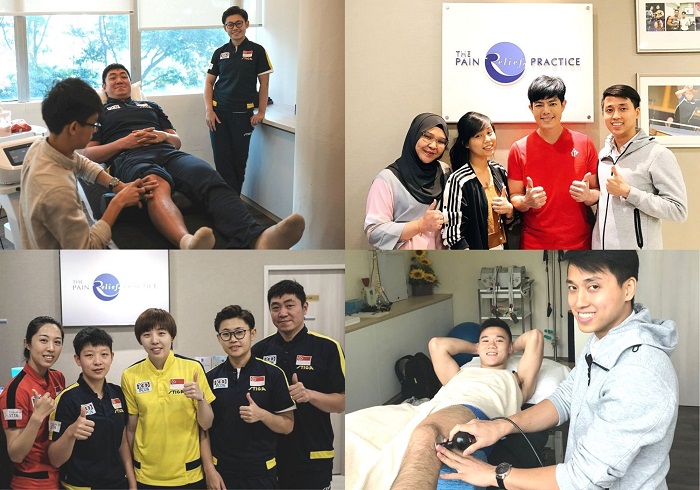
- Celebrities and national athletes who need to perform at top level
Celebrities & National Athletes
Our bursitis physiotherapy approach
-
Thorough assessment
• We gather your pain history
• We analyse your movement – posture, walk, sport and work tasks
• We test strength, flexibility and joints
• We review scans or previous reports -
Clear diagnosis and plan
• We explain what happens to your bursa in simple words
• You receive a step-by-step plan for in-clinic and home care
• We track your progress together -
Integrated care under one roof
• We merge physiotherapy with pain management and rehab
• Image-guided injections or other medical tools may join the mix
• You keep active through tailored exercises -
Performance and prevention mindset
• We ask, “How do we ease your pain?”
• We also ask, “How can you return stronger to your sport or lifestyle?”
See our clinic details and reviews:
https://share.google/UwMU2I9zUCwXVh0Lg
Practical tips to reduce bursitis pain right now
While proper physiotherapy is key, these tips help ease symptoms:
-
Respect the pain but stay moving.
Keep within a “mild to moderate” pain zone that settles in 24 hours. -
Avoid direct compression.
• Use a soft mattress topper or pillow between your knees for hip bursitis.
• Don’t kneel on hard floors; use a pad or cushion. -
Ice for acute flare-ups; heat for stiffness.
• Apply ice for 10–15 minutes to calm a new flare.
• Use gentle heat for older, stiff joints (only if there is no swelling). -
Modify, don’t stop, exercise.
Swap running for brisk walking or heavy presses for pain-free moves. -
Seek help early.
Early care means fewer sessions, less downtime and better results
(source: American Academy of Orthopaedic Surgeons).
Why many Singaporeans choose The Pain Relief Practice
- We have been established since 2007 and have a strong record in musculoskeletal pain care.
- We have treated celebrities and national athletes, giving us deep experience in high-demand cases.
- Our team of physiotherapists and pain doctors focus on fast pain relief with long-term fixes.
- We tailor rehab plans to fit the busy lifestyle of Singaporeans – long desk hours, family duties and local sports like badminton, running, dragon boat, gym and golf.
If bursitis in your shoulder, hip, knee or heel has dragged on and you are tired of temporary fixes, a structured bursitis physiotherapy programme might be the turning point to reclaim healthy joints and life.
FAQ on bursitis physiotherapy in Singapore
-
How long does bursitis physiotherapy take to work?
Many patients feel some relief in 1–3 sessions, especially when we offload pain well. For lasting change – strength, mobility and movement retraining – it often takes 4–8 weeks. This depends on your pain history and how you follow your home plan. -
Is bursitis physiotherapy enough, or do I need injections or surgery?
Most bursitis cases in Singapore improve with targeted physiotherapy, load changes and, when needed, medical pain care. Injections can help in some cases but usually work with physio, not alone. Surgery for pure bursitis is rare and is for severe cases only. -
What should I wear or bring for my first session?
Wear loose, comfortable clothes that let us reach your affected joint – a singlet for shoulder, shorts for hip or knee. Bring past scans (X-ray, MRI, ultrasound), referral letters and a list of medications. Be ready to show your usual movements – how you walk, squat, lift or swing – so we can adapt your physiotherapy to your life.
If you are in Singapore and bursitis stops you from working, exercising or enjoying time with your family, it does not have to last long. With the right bursitis physiotherapy and a clear, personal plan, you can calm the pain, fix the root cause and return to the active life you want.
We are a specialized physio treatment center for savvy people who want real results.
While we are not suitable for someone looking for ‘cheap physiotherapy’ or ‘free exercises available on youtube’, our treatments are affordable and are often claimable with company flexi-benefits, company health insurance, travel insurance, personal accident insurance, and other insurance plans.
Simply whatsapp or call: +65 97821601 and let us know how to help.
If you prefer a convenient nutritional preventive option, Regenerix Gold is our top recommended joint supplement.
We have been recommending this joint supplement for over a decade.
Simply start with 3 capsules, once a day.
If you do not feel better within a week, increase to 2 capsules, twice a day. (4 capsules a day in total)
Our blog readers qualify for a special discount.
Simply use the link below and a discount will automatically be applied during checkout.
