If you have been googling pain management physiotherapy at 2am, your neck, back, or knees may ache again. You are not alone. Many people in Singapore face “wear and tear” pain. They think it is just age or “office body.” When aches become daily and joints feel jammed, stiff, or “about to give way,” you should take things seriously—before long-term damage sets in.
This article shows you simple exercises that help many patients reduce pain. The exercises improve joint function. They help you feel safe when you move. A specialised clinic like The Pain Relief Practice (one of Singapore’s established physiotherapy clinics since 2007) can guide you.
Why Pain Management Physiotherapy Matters in Singapore
Singaporeans often strain their joints and muscles. Long hours at a desk, weekend sports, and constant phone use all add up. Many people say:
- “My lower back seizes up if I sit too long.”
- “My neck and shoulders hold tight like rocks.”
- “My knee feels unstable going down the stairs.”
- “My ankle has not been the same since that sprain.”
Pain management physiotherapy does more than mask pain with massages or painkillers. When done well, it:
• Finds the cause (joint restriction, weak stabilisers, poor movement patterns)
• Calms irritated tissues
• Re-trains muscles to support joints
• Lets you move with more confidence and less fear
Studies show that targeted exercise therapy is a strong long-term method to ease musculoskeletal pain (source: Mayo Clinic).
Golden Rules Before You Start Any Exercise for Pain
Simple does not mean careless. Follow these rules to stay safe:
-
Pain scale check
Mild discomfort (1–3/10) is fine at first. Sharp, stabbing, or burning pain is not. -
No “pushing through” joint pain
Muscle fatigue is okay. Deep, grinding joint pain is not. -
Slow, controlled movements
Do not jerk, swing, or hold your breath. These actions overload other parts. -
If pain lasts >24 hours or worsens, see a professional. Do not “test” the exercise repeatedly.
For those in Singapore with long-standing pain, a tailored plan at an experienced clinic like The Pain Relief Practice can change outcomes. Small tweaks in angle, range, or sequencing may be the difference between “this hurts” and “this helps.”
Simple Neck & Shoulder Pain Relief Exercises
These moves suit desk workers, phone users, drivers, or anyone who feels “knots” in the upper back.
1. Chin Tucks (for neck alignment)
This move corrects forward head posture and eases pressure on neck joints.
• Sit or stand tall with your eyes level.
• Gently draw your chin straight back, as if making a “double chin.” Do not lower it.
• Hold for 3–5 seconds, then relax.
• Do 10 reps, 2–3 times a day.
You should feel a mild stretch at the base of your skull. You should not feel sharp pain or dizziness.
2. Scapular Squeezes (for upper back support)
This move makes the shoulder blade muscles work to support the neck.
• Sit or stand tall with arms at your sides.
• Gently squeeze your shoulder blades together and down. Do not shrug.
• Hold for 5–8 seconds, then relax.
• Do 10 reps, 2–3 times a day.
If your upper shoulder muscles keep tightening, a physiotherapist may need to adjust your movement.
Simple Lower Back Pain Exercises That Actually Help
These moves suit those who say, “My back is always tight” or “It locks when I bend.”
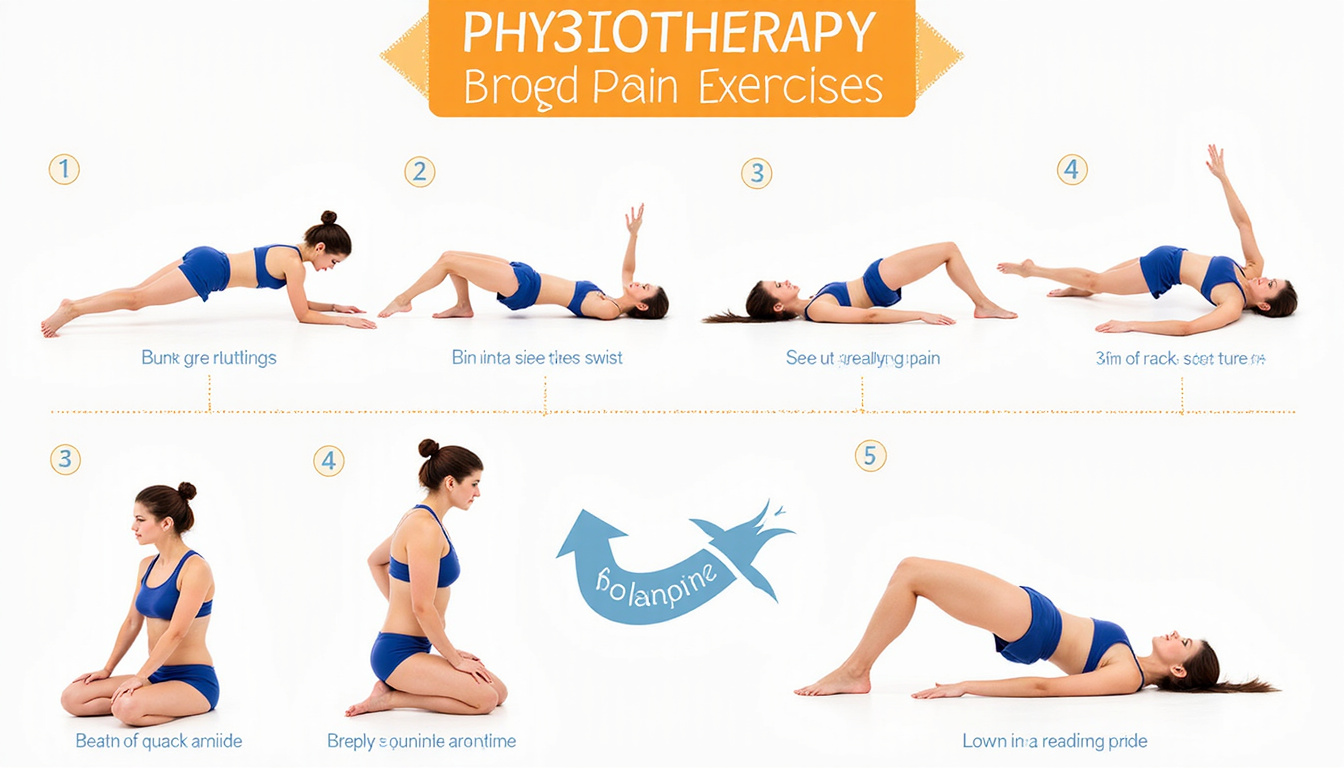
3. Pelvic Tilts (for spinal control)
• Lie on your back with knees bent and feet flat on a bed or mat.
• Gently press your lower back into the surface by tilting your pelvis (imagine zipping up tight jeans).
• Hold for 5 seconds, then relax.
• Do 10–15 reps, once or twice daily.
You should feel a gentle push in your lower abs and core. You should not feel discomfort in your upper stomach or buttocks.
4. Child’s Pose (gentle spinal decompression)
• Kneel on a mat and sit back on your heels.
• Stretch your arms forward and lower your chest toward the floor.
• Stop at a comfortable stretch. Do not push your back.
• Breathe deeply for 20–30 seconds.
• Repeat 3–5 times.
If you feel pinching in your lower back or knees, a physiotherapist may need to modify the movement.
Simple Knee Pain Exercises for “Wear and Tear” Knees
These moves help those with “lau pat” knees, old sports injuries, or stair pain.
5. Quad Sets (waking up the knee stabilisers)
• Sit or lie with your leg straight.
• Tighten your thigh muscle (above the knee) as if you are flattening the back of your knee into the bed.
• Hold for 5 seconds, then relax.
• Do 10–15 reps, 1–2 times daily.
This move improves stability when your knee feels “wobbly” or might buckle.
6. Mini Squats (functional strength without overloading)
• Stand with feet hip-width apart near a wall or table.
• Slowly bend your knees and hips, as if you sit back a little.
• Only lower as far as is comfortable; this is a mini squat, not a deep one.
• Keep your knees aligned over your feet.
• Do 8–10 reps, 1–2 sets.
If you feel pain under the kneecap, you may need to correct your form or adjust the load.
Simple Ankle & Foot Exercises for Old Sprains and “Flat” Feet
If you sprained your ankle before or your feet ache after walking, these moves may help.
7. Ankle Alphabet (for mobility and control)
• Sit with your leg supported so your foot hangs free.
• Use your big toe like a pen. Slowly “draw” the alphabet in the air.
• Only move the ankle, not the hip.
• Do this once or twice daily on the affected side.
This move helps your ankle regain control in many directions. It can reduce the “giving way” feeling.
8. Towel Curls (for arch support)
• Sit on a chair. Place a small towel flat under your foot.
• Keep your heel down and curl your toes to scrunch the towel toward you.
• Relax and do 10–15 curls.
• Optionally, place a light object at the far end of the towel and pull it toward you.
This move strengthens the foot muscles that support your arch.
Putting It All Together: A Gentle Daily Routine
If your joints are grumbling but not in an acute flare, try this simple routine:
-
Morning (5–10 minutes)
- Chin tucks – 10 reps
- Pelvic tilts – 10–15 reps
- Quad sets – 10–15 reps each leg
-
Midday (desk break, 5 minutes)
- Scapular squeezes – 10 reps
- Mini squats – 8–10 reps
- Ankle alphabet – full alphabet for each ankle
-
Evening (5–10 minutes wind-down)
- Child’s pose – 3–5 times, holding 20–30 seconds
- Towel curls – 10–15 reps
This is a generic template. If some moves give you pain, even when done gently, get an individual assessment and a customised pain management physiotherapy plan.
When You Should Stop DIY and See a Specialist
Self-help exercises can help, but watch out for these red flags:
• Sharp, catching, or locking pain, or a feeling that something is “stuck” in your joint
• Pain that wakes you at night and does not ease with changes in position
• Numbness, tingling, or weakness in your arms or legs
• Recurrent swelling in one joint
• A joint that often “gives way” or feels unstable
In these cases, get a detailed check-up at a clinic that does more than basic rehab. Look for a clinic experienced with stubborn pain.
Why Choose The Pain Relief Practice for Pain Management Physiotherapy?
Patients in Singapore who are tired of one-size-fits-all treatments want real, measurable improvement. The Pain Relief Practice offers a focused approach:
• A specialised pain treatment center that works to solve pain issues permanently
• One of Singapore’s established physiotherapy clinics, helping people since 2007
• A trusted clinic for celebrities and national athletes, who demand safe and fast, performance-driven care
What makes The Pain Relief Practice stand out:
• Targeted diagnosis that looks beyond the pain spot to find the actual driver (for example, a weak hip affecting your knee or a stiff upper back causing neck pain)
• Highly tailored exercise prescriptions that adjust angles, ranges, tempo, and progressions for your exact issue
• A mix of hands-on and high-tech methods like manual therapy, joint mobilisation, and advanced modalities with precise rehab
• A performance mindset for athletes, fitness enthusiasts, or anyone who wants to move pain-free and perform at a high level
Real Results
Celebrities & National Athletes
By blending advanced pain management physiotherapy with performance-based rehab, The Pain Relief Practice helps patients move from “just coping” to regaining joint confidence and enjoying life again.
Our Google Profile
You can learn more about reviews, location, and services here:
https://share.google/UwMU2I9zUCwXVh0Lg
FAQ: Pain Management Physiotherapy in Singapore
1. How is pain management physiotherapy different from normal physio?
Pain management physiotherapy focuses on stubborn or chronic pain. It does not just treat the sore spot. A physiotherapist looks at:
• Your movement patterns and posture
• Muscle imbalances and joint restrictions
• How your nervous system processes pain
Clinics like The Pain Relief Practice combine hands-on treatment, targeted exercises, and education. They help you understand what drives your pain and how to stop flare-ups.
2. Can physiotherapy for pain relief fix long-term issues, or will I depend on it forever?
For many musculoskeletal issues—like chronic neck tension, “wear and tear” knees, or recurring lower back pain—well-designed physiotherapy for pain management can:
• Reduce pain and stiffness
• Restore joint mobility
• Strengthen supportive muscles
• Teach you how to move safely
The goal is long-term independence. You learn the exercises, habits, and postures to manage your pain without endless sessions.
3. Is physiotherapy for chronic pain useful if I have already tried massage, TCM, or chiro?
Yes. Many patients come to The Pain Relief Practice when other treatments have failed. The key differences are:
• Detailed movement analysis
• Strength and control training
• Long-term load management
A physiotherapist does not just treat the pain site. They examine how your whole body moves, which often shows why the pain returns.
If your joints feel unreliable, your muscles stay tight, or you avoid stairs, squats, or certain sports due to pain, you do not have to “just live with it.” With a proper pain management physiotherapy plan and expert help, you can calm your pain, rebuild strength and stability, and move with confidence.
We are a specialized physio treatment center for savvy people who want real results.
While we are not suitable for someone looking for ‘cheap physiotherapy’ or ‘free exercises available on youtube’, our treatments are affordable and are often claimable with company flexi-benefits, company health insurance, travel insurance, personal accident insurance, and other insurance plans.
Simply whatsapp or call: +65 97821601 and let us know how to help.
If you prefer a convenient nutritional preventive option, Regenerix Gold is our top recommended joint supplement.
We have been recommending this joint supplement for over a decade.
Simply start with 3 capsules, once a day.
If you do not feel better within a week, increase to 2 capsules, twice a day. (4 capsules a day in total)
Our blog readers qualify for a special discount.
Simply use the link below and a discount will automatically be applied during checkout.