If you live in Singapore and suffer from stubborn back pain, sciatica, or a spine that feels “seized up” every few months, you may know of the McKenzie method. Many patients say, “those movements bring my pain into the center” or “it unlocks my jammed lower back without a crack.” When used well, it calms irritated nerves, loosens tight spinal joints, and helps you walk, work, and sleep without a constant ache.
In this guide, you will learn what the McKenzie method truly is (beyond vague YouTube stretches), how it helps pain from discs and posture, and how people in Singapore can safely add simple daily exercises to their routine. You will also see how The Pain Relief Practice joins McKenzie-style care with advanced physiotherapy for faster, lasting relief.
What Is the McKenzie Method, Really?
The McKenzie method (or Mechanical Diagnosis and Therapy, MDT) is a clear way to treat your pain by:
- Checking your spine and symptoms
- Finding your “directional preference” – the movement that lowers or centralises your pain
- Repeating that movement to ease pressure and restore movement
McKenzie-trained clinicians focus on these details instead of treating all back pain alike:
- Where your pain goes (lower back only, to your buttock, down your leg, or to your foot)
- What happens when you bend forward, backward, or sideways
- Whether your pain now in your leg shifts back to your center (centralisation)
When the right movement is chosen, many patients see that:
- Pain shooting down the leg reverses and moves back to the buttock or lower back
- The locked, “jammed” feeling fades, especially after sitting or long MRT rides
- They can bend, stand, or walk longer before pain starts
That “centralisation” shows the McKenzie method is working.
Why So Many Singaporeans Get “Posture Back” and Disc Pain
City life in Singapore puts strain on our backs. People sit for hours at their desks, hunch over their phones during commutes, carry heavy bags on one shoulder, or bend repeatedly to care for kids and elders. These habits can lead to:
- “Slipped disc” or disc bulge symptoms
- Sciatica, which means nerve pain down one leg
- Stiffness when standing after long sitting periods
- A morning ache that fades only after a “warm-up”
Patients at The Pain Relief Practice often say things like:
- “Every time I stand after sitting, my back takes a few seconds to straighten.”
- “When I bend to wash my face, the pain catches me.”
- “The ache runs from my buttock to my calf when I sit in the car.”
These patterns work well with McKenzie method exercises and proper physiotherapy.
How the McKenzie Method Helps Your Back Heal
The McKenzie method aims for three things:
1. Reduce Pressure on Painful Structures
For people with disc or nerve pain, the right repeated movement can:
- Lower pressure on the disc
- Reduce the load on the irritated nerve root
- Ease that sharp “electric” or “sciatic” pain
When this happens, the pain usually centralises (moves from the leg back toward the spine), a good sign by current back pain guidelines.
2. Restore Lost Movement
If you feel like:
- “I cannot bend backward at all.”
- “My back stays slightly bent and feels stuck.”
McKenzie exercises work to slowly unlock these restricted movements so your spine can move in a normal way again.
3. Teach Self-Management
Unlike treatments you only receive from a therapist, the McKenzie method gives you tools. This way:
- When your back acts up, you know which movement calms it
- You can do a short “reset” anywhere – at the office, at home, or even at Changi Airport before a flight
Simple McKenzie-Style Daily Exercises (General Guidance Only)
These McKenzie-style moves are common for lower back issues. They are not a substitute for a proper check-up because the wrong move might worsen your pain. Use them only if:
- Your pain is linked to movement or posture
- You do not show red-flag symptoms (for example, loss of bladder/bowel control, sudden severe weakness, or a major injury)
1. Prone Lying (Gentle Starter)
This is good if long sitting or forward bending irritates your back.
- Lie on your stomach on a firm bed or a yoga mat.
- Rest your forehead on your hands or a small pillow.
- Let your buttocks and legs relax.
- Breathe normally and stay for 3–5 minutes as comfort allows.
Stop if: leg pain gets worse or you feel more pins and needles.
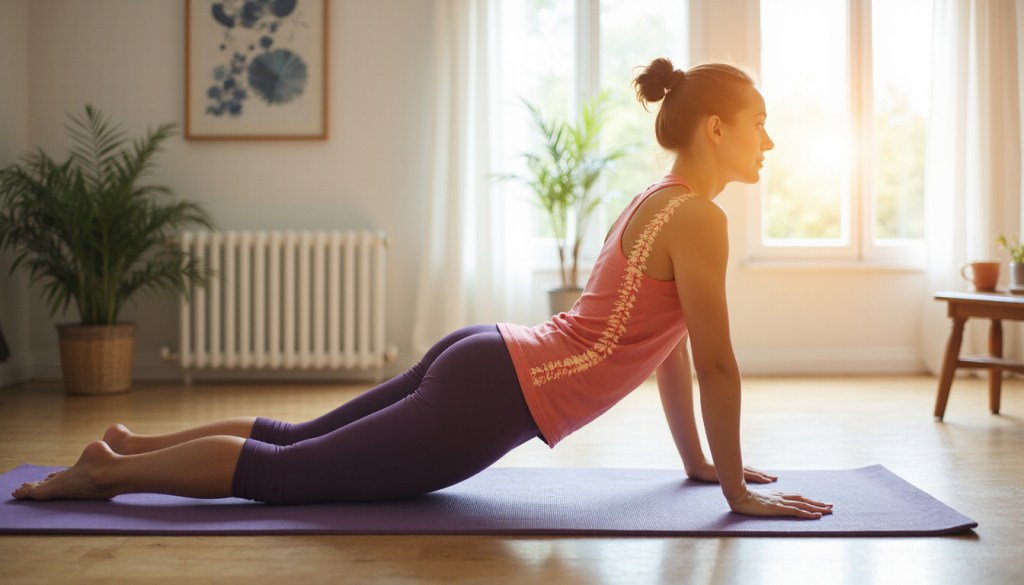
2. Prone Press-Ups (Extension in Lying)
This is a common move in the McKenzie method for disc pain.
- Lie on your stomach.
- Place your hands just under your shoulders as if you are about to push up.
- Let your hips and pelvis remain relaxed on the bed.
- Slowly push up by straightening your elbows, so that your upper body lifts while your lower body stays in place.
- Lift only as high as feels comfortable, pause for 1–2 seconds, and slowly lower down again.
Try 10 repetitions every 2–3 hours during the day, only if:
- Pain centralises (moves from the leg to the buttock or back)
- Leg pain gets less or goes away
Do not continue if:
- Pain moves further down the leg
- You feel new numbness, tingling, or weakness
- Your back pain becomes sharp and intense
3. Standing Back Bends (Extension in Standing)
This move is useful as a “reset” after long periods of sitting, driving, or bending.
- Stand with your feet at shoulder width.
- Put your hands on your hips or lower back.
- Gently lean backwards so your lower back extends.
- Pause for 1–2 seconds, then return to an upright position.
Do 10 reps, 4–6 times a day, especially:
- After long laptop sessions
- After bending during housework
- Before and after long flights or bus rides
Again, only continue if your symptoms are stable or getting better.
Daily McKenzie-Style Routine for Office Workers
If your back pain mainly comes from sitting and computer use, your day might include:
-
Morning (before work)
- 5 minutes of prone lying
- 10 prone press-ups
-
Mid-morning & mid-afternoon (at the office)
- 10 standing back bends
- 20–30 seconds of gentle walking
-
Evening (after work)
- 5 minutes of prone lying
- 10–15 prone press-ups
- Light stretching of your hips and hamstrings as advised by your physiotherapist
Also use:
- A properly set chair (hips slightly higher than knees)
- A screen at eye level to avoid hunching
- A firm sofa instead of a soft, saggy one that “swallows” your back
When McKenzie Method Alone Is Not Enough
Some Singaporeans try McKenzie method exercises from online videos and report:
- “It helped for a while, but the pain returns.”
- “When I extend, my back feels better, but my hip stays stiff.”
- “The nerve pain lessens, yet my muscles remain tight.”
This is because many back issues include a mix of:
- Disc or joint problems
- Nerve irritation
- Muscle guarding and trigger points
- A weak core and glute muscles
- Poor movement patterns (such as overusing the lower back instead of the hips)
At The Pain Relief Practice, we add McKenzie-style assessment with:
- Manual therapy and joint mobilisation to free stiff segments
- Targeted physiotherapy to balance weak and tight muscles
- Shockwave, radiofrequency, or other pain relief when needed
- Advice on posture, ergonomics, and daily habits
This combined approach helps you not only “reset” your pain today but also build strength so that your back does not flare up every few weeks.
Why Choose The Pain Relief Practice for McKenzie-Style Back Pain Treatment in Singapore?
The Pain Relief Practice is an established physiotherapy and pain treatment clinic in Singapore. We have helped patients since 2007 and are known for handling complex spine and joint issues, even for people who have tried “everything else.”
What Sets Us Apart
-
Specialised in pain and performance
We work with people who want to solve pain, regain healthy joints and muscles, and improve their work, sport, and daily life. -
Real-world success with demanding patients
We have treated celebrities and national athletes who need to return to top performance quickly and safely. We offer the same care level to every patient. -
Mechanical + medical insight
We blend mechanical diagnosis (including McKenzie-style checks) with modern physiotherapy, sports rehab, and medical pain management when needed. -
Patient-first, practical plans
You get specific exercises you can follow at home, in the office, or while travelling – not a long list you will never use.
Real Results
Celebrities & National Athletes
Our Google Profile
Find more about our clinic, read reviews, and see our location here:
https://share.google/UwMU2I9zUCwXVh0Lg
Signs You Should Get a Professional McKenzie Assessment in Singapore
See a clinician trained in the McKenzie method and spine rehab if:
- You have back pain or sciatica for more than 1–2 weeks
- Your pain returns every few months, even if it eases in between
- It hurts to stand up straight after sitting, or you feel bent forward
- Coughing or sneezing sends pain down your leg
- Home stretches help a little, but the relief is short-lived
Seek urgent care instead of exercises if you notice:
- Sudden loss of bladder or bowel control
- Numbness in the saddle area
- Severe weakness in one or both legs
- Back pain after a major fall or accident
- Fever or unexplained weight loss with back pain
What to Expect at The Pain Relief Practice
For back pain patients trying the McKenzie method with us, your journey will look like this:
-
Detailed Assessment
- We gather your symptom history (when it started, its pattern, what makes it better or worse)
- We check how your pain affects your daily life (sitting, walking, sleeping)
- We perform mechanical tests (bending, repeating movements, loaded positions)
-
Mechanical Diagnosis & Directional Preference
- We find out if extension, flexion, side-glide, or another move helps
- We watch how your pain changes: does it go to the center or move outward?
-
Targeted Treatment Plan
- We prescribe specific McKenzie-style exercises with clear use and frequency
- We use manual therapy, soft-tissue release, and joint mobilisation if needed
- We advise you on proper sitting, sleeping, lifting, and setting up your workstation
-
Progression and Strengthening
- Once your pain eases, we work on strength for your core, glutes, and hips
- We retrain safe bending, lifting, and even sport-specific moves
-
Long-Term Prevention Strategy
- You get a quick “reset” routine for flare-up days
- You have regular check-ins if you have a high-demand job or are an athlete
Quick Summary: Making McKenzie Method Work for You
To use the McKenzie method safely and well:
- Do not just copy random videos – get a proper mechanical check-up
- Look for the centralisation of symptoms as a good sign
- Combine exercises with strength work, changes in posture, and healthy movement habits
- Seek expert help if the pain is stubborn, recurring, or stops you from daily activities
The Pain Relief Practice helps smart patients in Singapore cut through the confusion, pinpoint what drives their back pain, and design a clear, realistic path to healthy, pain-free movement.
FAQ: McKenzie Method & Back Pain in Singapore
-
What is the McKenzie method for lower back pain?
The McKenzie method is a structured system. It checks your spine, finds the best movement (usually extension or flexion) to centralise your pain, and reduces disc and nerve irritation while restoring mobility. It focuses on self-management with repeated movements based on how your pain responds. -
Does McKenzie therapy work for sciatica and slipped disc?
McKenzie therapy can work very well for sciatica and disc pain, especially if your pain changes with posture or repeated movement. When the correct move is chosen and your pain centralises (for example, shifting from calf to thigh to buttock), it is a positive sign. Getting a proper assessment at a clinic experienced in the McKenzie method, like The Pain Relief Practice, is key. -
Where can I get McKenzie method treatment in Singapore?
You can get a McKenzie-style check-up and treatment at specialised physiotherapy and pain clinics. At The Pain Relief Practice, we use McKenzie principles with advanced physiotherapy, manual therapy, and modern pain-relief tools. We have helped Singapore patients with spine and joint problems since 2007, including celebrities and national athletes.
We are a specialized physio treatment center for savvy people who want real results.
While we are not suitable for someone looking for ‘cheap physiotherapy’ or ‘free exercises available on youtube’, our treatments are affordable and are often claimable with company flexi-benefits, company health insurance, travel insurance, personal accident insurance, and other insurance plans.
Simply whatsapp or call: +65 97821601 and let us know how to help.
If you prefer a convenient nutritional preventive option, Regenerix Gold is our top recommended joint supplement.
We have been recommending this joint supplement for over a decade.
Simply start with 3 capsules, once a day.
If you do not feel better within a week, increase to 2 capsules, twice a day. (4 capsules a day in total)
Our blog readers qualify for a special discount.
Simply use the link below and a discount will automatically be applied during checkout.