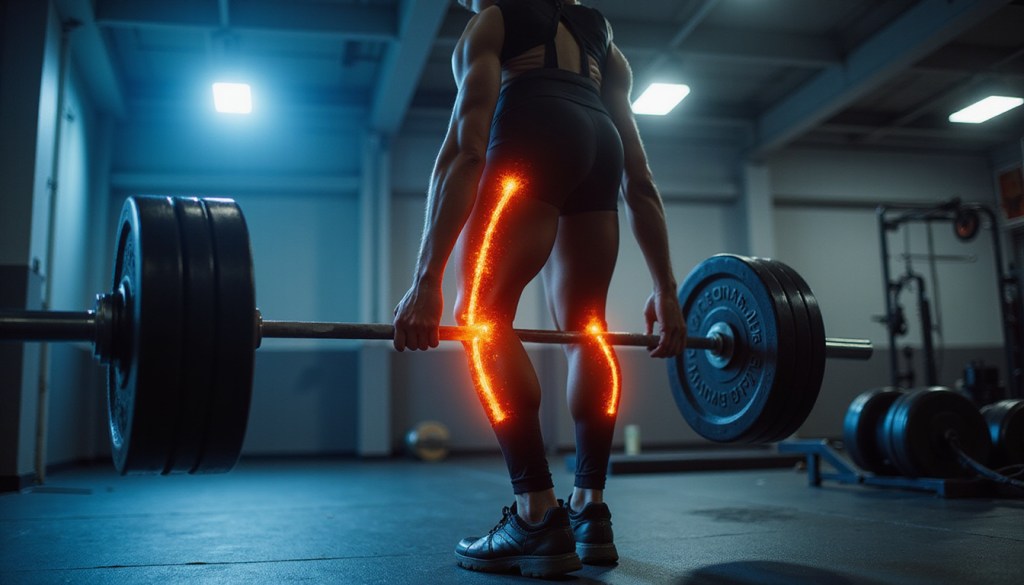
If you feel “off” in your body—one knee aches, one shoulder is tight, or your lower back stays on edge—muscle imbalance may be the cause. In Singapore, many jog at East Coast, lift at the gym, do Pilates, or sit long hours at a desk. Hidden imbalances then load your joints until pain, clicks, or instability appear.
This guide shows you how to spot imbalances, explains why they hurt your performance, and offers safe, effective fixes.
What exactly is a muscle imbalance?
A muscle imbalance happens when one muscle group is:
- Stronger than its opposite, or
- Tighter or shorter than it should be, or
- Slower or weaker at “switching on” when you move
You might see this in:
- One thigh doing most work during squats or stairs
- One glute firing while the other stays silent
- One shoulder or arm working harder when you lift or carry bags
- One ankle rolling in or feeling wobbly
Over time, these patterns pull your joints out of place. Your cartilage, discs, tendons, and ligaments then take extra load. This extra load leads to:
- A deep ache in the knees
- Stabbing pain in the shoulder when lifting overhead
- Lower back tightness that never fades
- A hip or groin that feels pinched or jammed with movement
Correcting imbalance is not only about symmetry. It is about unloading your joints so they can heal, move freely, and perform better.
Why Singaporeans are so prone to muscle imbalances
Our lifestyles make imbalance common:
-
Long sitting hours—in the office, on the MRT, while driving, or gaming
- Hip flexors tighten and glutes slow
- Upper back weakens while chest and neck tighten
-
Weekend warrior habits—rest all week then aggressive sports on weekends
- A weak base and overworked joints emerge
- One side may compensate, especially after an old injury
-
High stress with little recovery
- Muscles stay in tense protection
- Small niggles grow until they become chronic
If you are stiff yet weak and tight yet unstable, treating just the painful joint (icing the knee or using a patch) will not fix your muscle imbalance.
Classic signs your pain comes from a muscle imbalance
These signs mean you should check your movement:
- One side feels tighter or sorer after a workout
- You carry your bag on the same side every day
- Squats or lunges load one leg more
- Running form breaks down on one side after a few kilometers
- Shoulder or neck pain flares when you work at the laptop too long
- An old sprain or injury makes one side “feel off” consistently
Pain is often the last sign. The imbalance may be present for months or years.
How muscle imbalances kill strength & performance
When some muscles overwork and others underwork, your body cheats:
- Compensation patterns force other muscles to help
- Your power leaks from core, hips, and shoulders, rather than moving smoothly
- One side tires out faster, which slows you down and makes you unstable
- The risk of strains, tears, and overuse injuries rises
For example:
- Runners with weak glutes and tight hip flexors often suffer knee pain, ITB tightness, or shin splints.
- Lifters with weak rotator cuffs and tight chest muscles risk shoulder impingement.
- Office workers with weak core and glutes and tight hip flexors develop chronic lower back pain.
Fixing the imbalance can unlock strength, improve range of motion, and ease joint pain without extra stress on the painful area.
Simple self-checks for common muscle imbalances
These quick tests do not replace a professional check-up but can show clear red flags.
1. Single-leg sit-to-stand
- Sit on a regular chair.
- Cross one leg over the other.
- Stand using only the planted leg.
- Compare left and right.
If one side feels shaky, painful, or “dead,” your hip and thigh strength likely differ.
2. Single-leg balance
- Stand on one leg for 30 seconds. Do not use support.
- Repeat on the other side.
Ask yourself:
- Is one ankle more wobbly?
- Do you grip your toes more on one side?
- Does one hip drop more than the other?
3. Wall angel for upper body
- Stand with your back flat against a wall.
- Hold your arms in a “goalpost” shape.
- Slide your arms up and down while keeping them against the wall.
If one side loses contact, you may have uneven tightness and weakness near your shoulder blade and upper back.
If any test causes pain, get a professional assessment before increasing your gym or sports load.
Muscle imbalance hacks: Correct weaknesses the smart way
Follow this practical framework to address muscle imbalance safely.
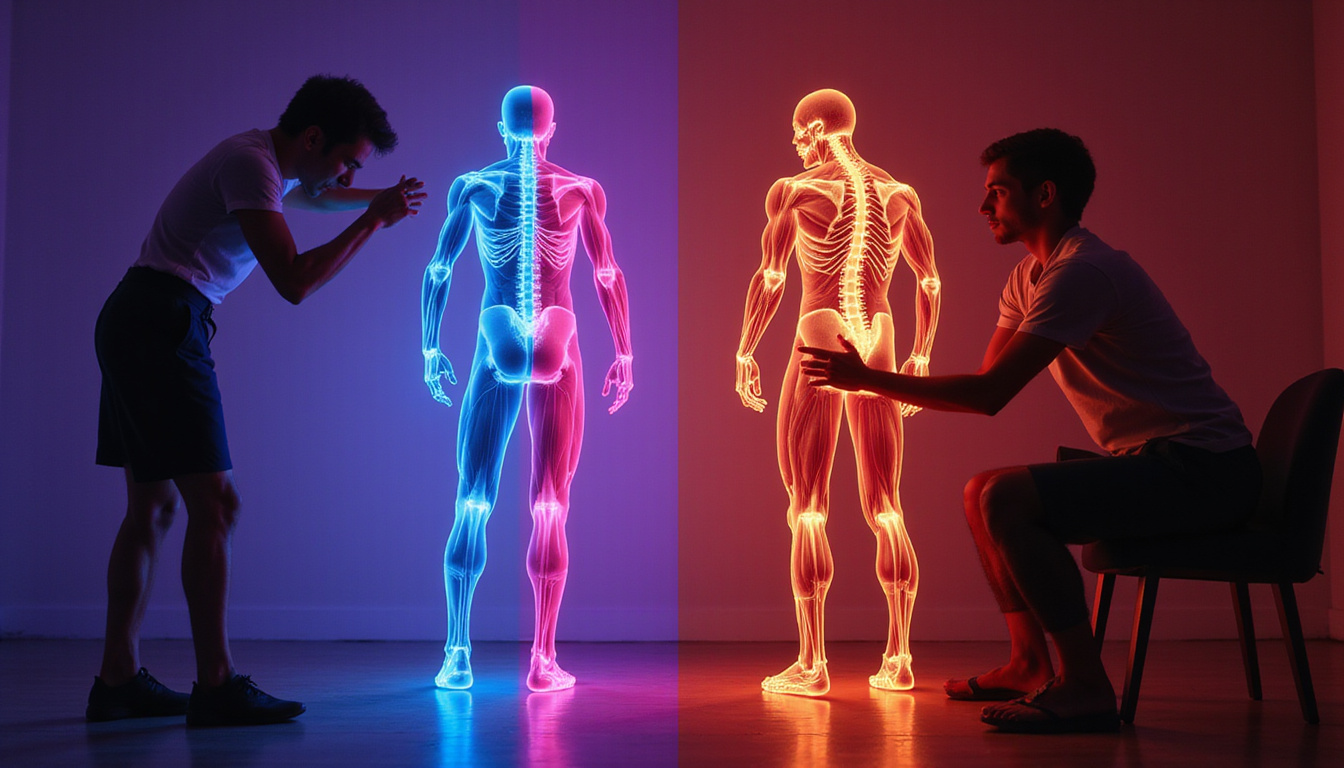
1. De-load the overused muscles
When a muscle is tight, cramping, or overworking, do not just stretch it hard. It is tight because it is protecting an unstable joint.
Try these:
- Gentle soft tissue release (foam roller, ball, or professional therapy)
- Mild, comfortable stretches
- Lower training volume and intensity temporarily
Common overworked areas for desk workers and hobby athletes:
- Upper traps and neck
- Hip flexors
- Lower back erectors
- Calves
2. Activate the “sleepy” muscles
Many imbalances exist because some muscles do not work enough. These include:
- Glutes (especially on one side)
- Deep core stabilizers
- Rotator cuff and mid-back muscles
- Foot and ankle stabilizers
Begin with low-load, high-quality exercises before your main workout:
- Clamshells, hip bridges, and single-leg glute bridges
- Dead bugs, Pallof presses, and bird-dogs
- External rotations and Y-T-W exercises for the shoulder blades
- Short foot exercises and proper calf raises
The goal is to teach these muscles to fire correctly, not to exhaust them.
3. Prioritize unilateral training
Bilateral exercises like barbell squats may let your stronger side take over. To fix imbalance, include:
- Single-leg squats or split squats
- Step-ups
- Single-arm presses and rows
- Single-leg deadlifts and hip hinges
Check that you use your weaker side to set the weight and volume.
4. Clean up movement patterns
Many joint irritations come from poor movement patterns rather than weak muscles alone. Focus on these patterns:
- Hip hinge: bend from your hips, not your lower back
- Knee tracking: let your knees line up with your toes and avoid collapsing inward
- Scapular control: keep shoulder blades stable and gliding, not raised
- Core bracing: keep your ribs over your pelvis rather than flaring or over-arching
Work with a clinician who knows biomechanics to save time and avoid errors.
When to see a professional for muscle imbalance
Self-care works well, but some signs call for professional help:
- Pain that stops you from walking, climbing stairs, or carrying groceries
- Unexplained weakness in one limb
- Repeated sprains or strains on one side
- Persistent swelling or joint locking/clicking with pain
- Pain that wakes you at night or does not improve after 2–3 weeks of rest and modification
Unresolved imbalance can eventually lead to serious conditions like early osteoarthritis, tendon tears, or disc issues
(source: American Academy of Orthopaedic Surgeons).
Why many savvy patients choose The Pain Relief Practice
For those in Singapore who want to fix their joints and performance instead of just hiding pain, The Pain Relief Practice has been a trusted centre since 2007. What makes us different:
- Specialised in pain and performance. We treat musculoskeletal pain including stubborn neck and back issues, sports injuries, and complex muscle imbalances.
- We treat the cause, not just the pain site. We look at strength, mobility, neuromuscular control, and your movement habits.
- Celebrities and national athletes trust us. Top performers who cannot risk downtime rely on us for a safe, quick return to peak condition.
- We are an established, evidence-based physiotherapy clinic in Singapore. For nearly 20 years, we have helped desk-bound executives, weekend warriors, and elite athletes find confident, pain-free movement.
You will work with clinicians who understand:
- The fear that one wrong move might hurt your back or knee
- The feeling that your body is uneven and holding you back
- The desire to train harder without damaging your joints
Real Results
Celebrities & National Athletes
A sample plan to tackle muscle imbalance
Every body is different, but many follow this plan:
-
Assessment & diagnosis
- A detailed history of your pain, training, and past injuries
- Hands-on testing of your joints, muscles, and nerves
- A strength and mobility check between left and right
- Movement and gait analysis when needed
-
Phase 1: Calm the irritated joints
- Manual therapy and joint mobilisation
- Soft tissue work targeted to the problem
- Pain-relief techniques as needed
- Strategies to reduce load on inflamed areas
-
Phase 2: Correct the imbalance
- Individualised activation drills
- Unilateral strength exercises
- Progressive loading that fits your tolerance
-
Phase 3: Performance & resilience
- Conditioning that fits your sport or lifestyle
- Programs to return you to the gym or your sport
- Ongoing tune-ups so the imbalance stays fixed
Practical everyday tips for preventing muscle imbalance
These habits can support treatment or prevent the issue from getting worse:
- Switch the shoulder you use to carry your bag
- Take a micro-break every 45–60 minutes when desk working
- Spend 5–10 minutes on mobility and activation before any workout or run
- Form and train with single-leg and single-arm movements at least once a week
- Avoid always sleeping curled to the same side if that causes pain or stiffness
- Respect small niggles; make changes early instead of ignoring them
FAQ: Muscle imbalance, pain and physiotherapy in Singapore
-
Can a muscle imbalance really cause knee or back pain?
Yes. When some muscles are too tight or too weak, your joints move out of line. This extra load can stress the kneecap, discs, or facet joints. Treating the imbalance—rather than just rubbing the painful spot—is key for lasting relief. -
How long does it take to fix a muscle imbalance?
It depends on the imbalance’s severity and duration. Many people feel better in 3–6 sessions when they combine physiotherapy with consistent home exercises. More long-standing imbalances may take a few months of gradual rehab. -
Is physiotherapy enough to fix muscle imbalances, or do I need surgery?
Most imbalances improve with targeted physiotherapy. Surgery is rarely needed and is considered only if there is major structural damage (like a severe ligament or tendon tear) that does not respond to conservative care. A full assessment can guide the choice.
Ready to correct your muscle imbalance and move with confidence?
If your joints feel off, one side stays tighter or weaker, or pain stops you from training or living fully, get a personal assessment.
Since 2007, The Pain Relief Practice in Singapore has helped people:
- Solve stubborn pain issues
- Restore healthy joint and muscle function
- Boost performance in sports, the gym, and daily life
You do not have to live with a lopsided, fragile, or unpredictable body. The sooner you fix your muscle imbalance, the faster your joints will recover. This lets you move powerfully and pain-free.
Our Google Profile
https://share.google/UwMU2I9zUCwXVh0Lg
We are a specialized physio treatment center for savvy people who want real results.
While we are not suitable for someone looking for ‘cheap physiotherapy’ or ‘free exercises available on youtube’, our treatments are affordable and are often claimable with company flexi-benefits, company health insurance, travel insurance, personal accident insurance, and other insurance plans.
Simply whatsapp or call: +65 97821601 and let us know how to help.
If you prefer a convenient nutritional preventive option, Regenerix Gold is our top recommended joint supplement.
We have been recommending this joint supplement for over a decade.
Simply start with 3 capsules, once a day.
If you do not feel better within a week, increase to 2 capsules, twice a day. (4 capsules a day in total)
Our blog readers qualify for a special discount.
Simply use the link below and a discount will automatically be applied during checkout.