
If you’ve ever waited weeks for a polyclinic physiotherapy appointment in Singapore while your knee clicks, your lower back locks, or your frozen shoulder stays stiff, you are not alone. Many people with joint and muscle pain learn they need more than a basic rehab sheet and five rushed minutes with a therapist. You deserve proven techniques, personal care, and true results. These results let you walk, train, and sleep without paying for pain the next day.
This guide lists nine proven physiotherapy and pain‑relief techniques. They speed recovery, especially for Singaporeans with stubborn musculoskeletal problems. The guide also tells you when polyclinic care works and when it is best to see a specialised centre like The Pain Relief Practice for more targeted treatment.
Why polyclinic physiotherapy often feels “too slow”
Polyclinic physiotherapy is important and affordable. Still, many patients with long-term pain share these issues:
- Appointments happen after long wait times
- Sessions last only 10–15 minutes of active therapist time
- Exercises follow a standard plan that may not fix complex pain
- The clinic has limited access to advanced technology or special techniques
If you have spent months on “rest, painkillers and basic exercises” and your knee still flares after climbing stairs, or your neck jams when you feel stressed, you may need more advanced techniques. These techniques can speed recovery and protect your joints.
1. Targeted manual therapy: more than just “massage”
Many people say, “They pressed here and there and sent me home.” Good manual therapy is precise.
Skilled hands-on treatment can:
- Release deep muscle knots that return
- Free stiff joint capsules that feel blocked
- Reduce nerve irritation and referred pain (for example, buttock pain from your lower back)
- Improve circulation so tissues heal instead of staying inflamed
At The Pain Relief Practice, manual therapy pairs skilled hands with clear reasoning. Your therapist follows the pain pattern (for example, from hip to knee to ankle) and works at the real source instead of only the sore spot. Many patients feel lighter and freer even after one session. This result can be hard to reach in rushed polyclinic settings.
2. Clinical exercise therapy: not just generic “do 10 of this”
Many who try standard physiotherapy complain, “They gave me a photocopied sheet of exercises, but my pain never got better.”
Clinical exercise therapy stays true to your needs:
- It matches your specific diagnosis (for example, meniscus tear vs patellofemoral pain vs early knee arthritis)
- It grows every week based on how you respond (load, reps, angles, speed)
- It cares about movement quality, not just how many repetitions you do
A simple squat can be changed in many ways. You can reduce knee stress, load the hips more, protect your sensitive back, or fix poor movement. That way, you build strength without hurting the same tissues each time.
At The Pain Relief Practice, we design joint‑friendly strength programmes. They work around your pain while still building muscle and stability so you do not feel like you are “babying” your joints.
3. Shockwave therapy for stubborn tendon and ligament pain
If your heel, elbow, or shoulder pain flares when you walk or train, you might have tendinopathy. This state is an irritated, worn tendon that does not settle with rest or simple stretches.
Shockwave therapy (Extracorporeal Shockwave Therapy) sends acoustic waves that:
- Stimulate tissue repair
- Increase blood flow in tendons that lack many blood vessels
- Break up calcifications and adhesions
- Reduce chronic pain in conditions like plantar fasciitis, tennis elbow, Achilles pain, and rotator cuff tendinopathy
Polyclinics rarely offer shockwave therapy. At The Pain Relief Practice, we have used it since 2007. We often pair the therapy with specific loading exercises. Patients then return to walking, running, or court sports with less fear of flare-ups.
4. Spinal & joint decompression: relief for “pinched nerve” and disc pain
If you have a “slipped disc”, spinal stenosis, or nerve impingement, you know the pain. You may feel a sharp, shooting pain, tingling in the leg or arm, or an electric shock when you move wrongly.
Decompression therapy gently unloads the discs and joints. It:
- Lessens pressure on pinched or irritated nerves
- Boosts fluid exchange and nutrition to damaged discs
Modern decompression machines work precisely. They control angles, hold times, and resistance levels. Many patients with long-term sciatica or neck-arm pain find that adding decompression and stabilisation exercises helps more than rest and painkillers alone (source: NHS – Back Pain Treatment).
5. Movement retraining: fixing the way you walk, stand and train
Pain can return because of poor movement patterns. For example:
- Your knees collapse inward when you squat or climb stairs
- You strike hard with your heel when you walk, jarring your back and hips
- You arch your lower back when you stand, which compresses the spine
- You limp in a way that never resets after you heal
Polyclinic physiotherapy may not have time for a detailed movement study. At The Pain Relief Practice, therapists watch you move from many angles. Sometimes they use video to help you see the problem. Then they teach you to:
- Realign your feet, knees, pelvis, and spine
- Engage the proper muscles (for example, use glutes instead of overusing quads and lower back)
- Build efficient, pain-free patterns for daily tasks and sports
This retraining is very important for runners, gym-goers, and weekend athletes who aim for better performance and longer-lasting joints.
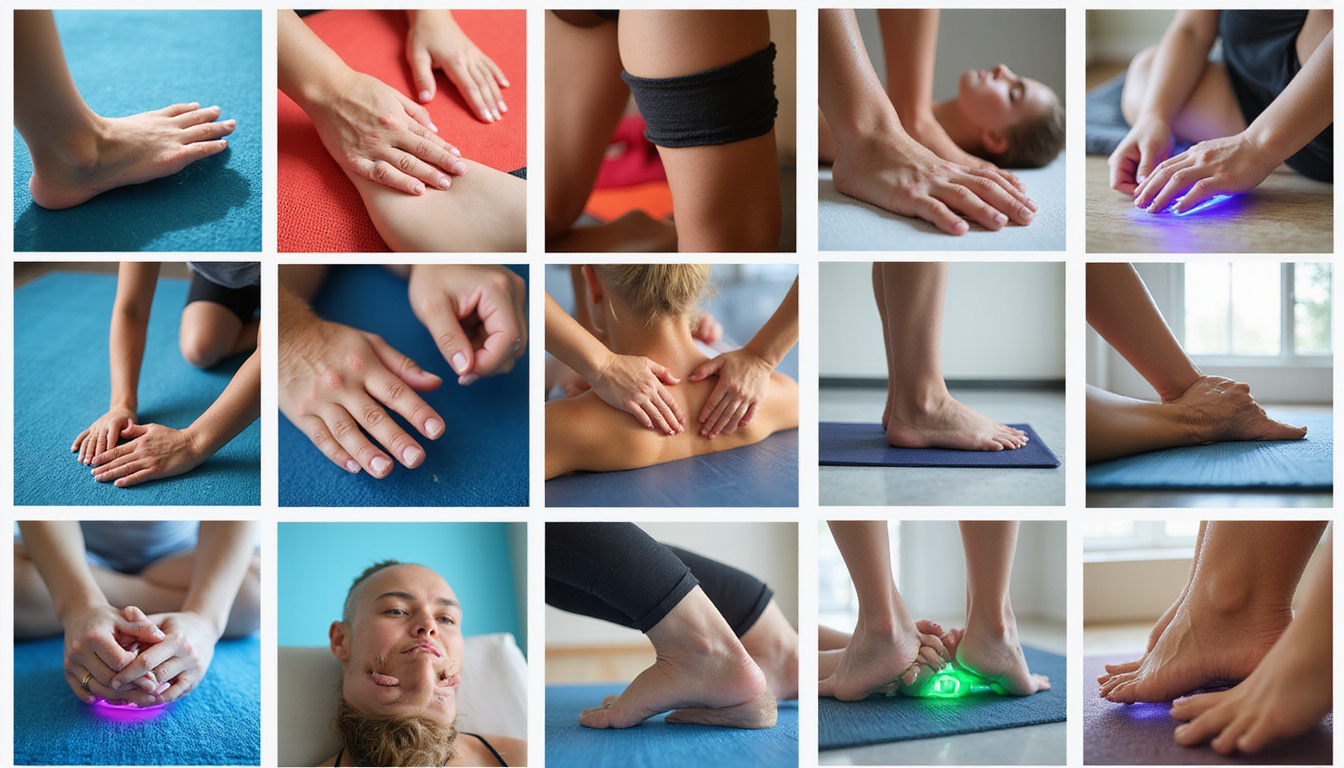
6. Neuromuscular re‑education: waking up “lazy” stabilisers
Many joint problems remain because some muscles turn off after injury or long-term pain. You may hear “weak glutes”, “lazy core”, or “unstable scapula.”
Neuromuscular re‑education works by:
- Reconnecting your brain with key stabiliser muscles
- Training timing and order of muscle use, not just strength
- Reducing compensation from tight or overworked areas
For example, after a knee injury, your quadriceps might not fire correctly even when you try your best. Clear cues, right positions, and sometimes gentle electrical stimulation can reboot the system. This approach is key if you want to trust your joints during stairs, quick turns, or landing from a jump.
7. Pain‑modulating technologies: TENS, ultrasound & more (used smartly)
Some people see a TENS or ultrasound session and think it is “just for show.” On its own, a modality may not create lasting change.
Used strategically, however:
- TENS calms nerves so you can move and exercise
- Therapeutic ultrasound helps in some soft tissue conditions
- Other tools (for example, laser, radiofrequency, heat/cold) can reduce inflammation during an acute flare‑up
At The Pain Relief Practice, these tools are secondary. They support your rehab so you sleep better, move more confidently, and get more from each session.
8. Education & self‑management: learning how not to “undo” all the progress
Many people get stuck because they unknowingly:
- Sit for long hours in pain-causing positions
- Overload irritated joints repeatedly at work
- Sleep in positions that compress nerves or jam the neck
- Train hard on “angry joints” without proper warm-up or change
Polyclinic physiotherapy often does not go deep into your daily habits. Specialised centres like The Pain Relief Practice spend time helping you:
- Adjust your workstation ergonomics
- Plan safer training and progression schedules
- Learn “rescue strategies” for flare-up days
- Understand which pain is “safe” and which is a red flag
This education helps you take control instead of waiting for your next appointment.
9. Integrated, personalised care at The Pain Relief Practice
For many Singaporeans, polyclinic physiotherapy is a good start for acute and simple issues. But if you face:
- Long-standing pain in your neck, back, knee, hip, or shoulder
- Recurring sports injuries or shifting, mysterious pain
- Early arthritis that limits daily life or training
- Old injuries that flare when you move more
…then you need an integrated approach. This method uses the best techniques together under one roof.
The Pain Relief Practice is:
- One of Singapore’s established physiotherapy and pain treatment clinics, helping patients since 2007
- Trusted by celebrities and national athletes who want fast, safe, and performance‑focused recovery
- Known for blending advanced technology, hands-on skills, and carefully designed rehab plans
Real Results
Celebrities & National Athletes
Patients who switch from basic polyclinic physiotherapy to The Pain Relief Practice often say:
- “They finally found the real source of my pain, not just where it hurt.”
- “I got a clear plan instead of just ‘see how’.”
- “My joint doesn’t feel fragile anymore—I can climb stairs, carry my kid, and still train.”
When is polyclinic physiotherapy enough—and when to upgrade?
Here is a quick guide:
-
Polyclinic PT may be enough if:
- Your injury is recent, mild, and steady to improve
- The pain stays in one spot and does not spread
- You need basic rehab after a simple strain or sprain
-
Consider a specialised centre like The Pain Relief Practice if:
- Pain lasts more than 6–8 weeks despite rest and basic exercises
- You have nerve issues (for example, numbness, tingling, weakness, or shooting pain)
- Pain returns when you increase activity
- The pain affects your sleep, work, family time, or sports
- You have tried polyclinic physiotherapy and seen little progress
Choosing the right care early saves you months or years of frustration, flare-ups, and joint wear‑and‑tear.
Embedded Google Profile
Learn more about The Pain Relief Practice, patient reviews, and our location on our Google profile:
https://share.google/UwMU2I9zUCwXVh0Lg
FAQ: polyclinic physiotherapy and advanced pain treatment in Singapore
1. Is polyclinic physiotherapy enough for chronic knee arthritis?
For mild arthritis, polyclinic physiotherapy helps with basic strengthening and education. But if your knee still feels “grindy”, unstable, or swollen after proper care, a specialised clinic like The Pain Relief Practice uses targeted manual therapy, joint unloading, shockwave (if needed), and custom loading plans. This plan protects your cartilage while you stay active.
2. How is a specialised clinic different from polyclinic physio for back pain?
Polyclinic physiotherapy often uses standard exercises and basic advice. A specialised pain centre studies your back pain deeply. They may add spinal and joint decompression, neuromuscular retraining, movement correction, and load management. This approach helps if you have disc problems, sciatica, or long-term “slipped disc” pain.
3. Can I combine polyclinic physiotherapy with treatment at The Pain Relief Practice?
Yes. Many patients continue polyclinic physiotherapy while adding targeted sessions at The Pain Relief Practice. They use advanced techniques (like shockwave or decompression) to break plateaus and refine your exercise plan. This combined approach speeds recovery and lessens future flare-ups.
If your body sends warning signals—catching knees, backs that spasm with a twist, or shoulders that hurt when raised—it is time to move beyond basic polyclinic physiotherapy. Get a personalised, high‑level plan. The Pain Relief Practice exists to help savvy patients in Singapore fix pain issues, restore joint health, and move freely and confidently.
We are a specialized physio treatment center for savvy people who want real results.
While we are not suitable for someone looking for ‘cheap physiotherapy’ or ‘free exercises available on youtube’, our treatments are affordable and are often claimable with company flexi-benefits, company health insurance, travel insurance, personal accident insurance, and other insurance plans.
Simply whatsapp or call: +65 97821601 and let us know how to help.
If you prefer a convenient nutritional preventive option, Regenerix Gold is our top recommended joint supplement.
We have been recommending this joint supplement for over a decade.
Simply start with 3 capsules, once a day.
If you do not feel better within a week, increase to 2 capsules, twice a day. (4 capsules a day in total)
Our blog readers qualify for a special discount.
Simply use the link below and a discount will automatically be applied during checkout.

 PROVIDING FAST, EASY & INSURANCE CLAIMABLE PAIN RECOVERY SINCE 2007