If you live in Singapore, you battle stiff necks, aching knees, and a lower back that “catches” when you stand. You know that your daily life depends on care based on evidence. Behind each successful treatment is a set of clear, practical physiotherapy guidelines. Your clinician uses these guidelines to move you from “I’m in pain” to “I’m back to my normal life.”
This article lays out the key guidelines every physiotherapist should know. We write in plain language for anyone struggling with worn joints, recurring strains, or long-lasting injuries.
Why physiotherapy guidelines matter to real patients (not just textbooks)
When your knee cracks with every step or your shoulder feels “jammed” when you reach overhead, you do not care about fancy words. You care that your physio:
- Understands your pain clearly
- Chooses the right treatment
- Does not worsen your condition
- Improves your function over time
Good physiotherapy guidelines turn “random massage and ultrasound” into a structured, step-by-step care plan that:
- Calms pain
- Restores range of motion
- Strengthens weak areas
- Lowers the risk of the same problem returning
In Singapore, many of us sit long hours, rush between the MRT and office, and play sports on weekends. Many joint and muscle issues happen again and again. That is why a clinic like The Pain Relief Practice stands out. Since 2007, we have helped people with a guideline-driven approach that gives lasting results instead of just short-term relief.
Guideline 1: Thorough assessment – more than “Where is your pain?”
A good physiotherapy session never rushes into treatment. Instead, strong physiotherapy guidelines begin with a complete assessment that makes you feel heard and understood.
Your clinician will:
-
Collect a detailed history
- When did the pain start?
- What makes it worse – climbing stairs, getting out of bed, or carrying groceries?
- Do you notice any locking, catching, clicking, or joint giving way?
- Do you feel numbness, tingling, or “pins and needles”?
-
Perform a focused physical exam
- Check your posture (for example, rounded shoulders or sway back)
- Test your joint range of motion by asking, “How far can you bend before it hurts?”
- Assess your muscle strength and endurance
- Carry out tests (for the meniscus, rotator cuff, or nerve tension)
-
Learn about your lifestyle and goals
- Are you an office worker with long sitting hours?
- Do you play football, badminton, or run on weekends?
- Do you care for children or elderly parents at home?
If you have ever felt rushed with a “press here, press there” treatment that feels generic, that is a red flag. At The Pain Relief Practice, we use a planned and systematic assessment, especially when dealing with long-term issues like chronic back pain, runner’s knee, or frozen shoulder.
Guideline 2: Clear diagnosis and explanation in everyday language
After the assessment, you deserve a clear answer. You should not just hear “muscle strain” or “wear and tear.”
Good physiotherapy guidelines require your clinician to:
-
Use accurate terms (for example, patellofemoral pain syndrome, lumbar disc irritation, gluteal tendinopathy)
-
Explain in plain English:
- “Your kneecap is tracking slightly off because your hip muscles are weak and your outer thigh is tight.”
- “Your lower back joints are stiff and overloaded because you sit long hours and your core muscles do not support well.”
-
Explain what is not happening:
- “You are not ‘bone-on-bone’ yet.”
- “Your nerve is irritated, but you do not have severe nerve damage.”
Many patients with chronic joint pain say, “No one ever explained what was wrong.” Clear explanations reduce fear, build trust, and help you stick with your rehab plan.
Guideline 3: Evidence-based treatment – not just what “feels nice”
There is a difference between a treatment that feels good for 10 minutes and one that truly improves your pain and function.
International physiotherapy guidelines (from bodies such as the Chartered Society of Physiotherapy) always recommend a mix of:
-
Manual therapy (hands-on work)
- Joint mobilisations
- Soft tissue release and trigger point work
- Gentle stretching techniques
These methods reduce pain, loosen tight areas, and free joints that feel stuck.
-
Targeted exercise therapy
- Exercises to activate weak muscles
- Strengthening stabilisers (for example, glutes for the knee and back, or the rotator cuff for the shoulder)
- Flexibility and mobility drills
- A steady increase in load to build resilience
-
Education and self-management
- Advice on how to adjust your sitting, standing, and sleeping positions
- Guidance on which movements are safe and which ones to avoid temporarily
- Tips on pacing your activities to prevent flare-ups
-
Additional therapies when needed
- Modalities like electrotherapy or shockwave therapy when evidence supports their use
- Taping or bracing for sports or instability issues
Good clinicians in Singapore update their practices based on current research and clinical guidelines so you do not receive outdated treatments.
Guideline 4: Individualised rehab, not cookie-cutter exercises
If every patient receives the same exercises, such as “3 sets of clamshells, planks, and TheraBand rows,” something is amiss.
Individualised guidelines mean your program reflects:
- Your condition (for example, disc-related back pain versus muscular tightness)
- Your stage (a very early flare-up versus a later stage needing strengthening)
- Your environment (whether you have gym access or can only exercise at home)
- Your goals (walking without pain, running a 10K, returning to tennis, or simply sleeping without pain)
A well-structured plan usually moves through phases:
-
Pain reduction phase
- Gentle movements that unload painful areas
- Positions that ease your symptoms (for example, lying with knees supported)
-
Mobility and control phase
- Regain movement without provoking pain
- Improve deep muscle control around the spine, hips, or shoulders
-
Strength and endurance phase
- Build load tolerance with squats, lunges, lifts, pushes, and pulls
- Prepare your joints for daily and sports activities
-
Return-to-sport or high-demand phase (if needed)
- Sports-specific drills
- Exercises for agility, acceleration, deceleration, and change of direction
- Impact loading where necessary
At The Pain Relief Practice, we follow this phased, individualised approach. This method has helped everyone—from desk-bound executives to national athletes—return to peak performance.

Guideline 5: Monitoring progress with real markers, not vague “How is it?”
Every session should build upon the last. Good physiotherapy guidelines include clear measures so you see how you improve.
Examples to track are:
- Pain levels in different activities (beyond just a “10 out of 10”)
- Range of motion: “Can you now bend to touch your ankles instead of just your knees?”
- Strength changes, such as the quality of a single-leg squat, repetition count, or load used
- Functional milestones:
- Walking to the MRT without limping
- Climbing stairs without holding the handrail
- Sleeping through the night without pain
Your physiotherapist adjusts your plan based on these results, increasing the load when you are ready or modifying exercises when needed.
Guideline 6: Practical load management for Singapore lifestyles
Many people in Singapore work long hours on laptops, travel by public transport, and play intense sports on weekends. These habits can lead to:
- Chronic neck and shoulder tightness
- Lower back aches from long sitting periods
- Knee and ankle issues from sudden weekend sports
Good physiotherapy guidelines include advice on how to live better in your body day-to-day:
- Set up your workspace ergonomically at home and in the office
- Take short movement breaks during long meetings
- Learn safe ways to increase your running mileage or court time for racket sports
- Follow warm-up routines that truly protect your joints
Your physiotherapist will turn theory into simple, everyday rules that fit your busy Singapore lifestyle—rather than just offering generic advice.
Guideline 7: Knowing when to collaborate or refer
Not every problem comes from a mechanical issue. When you see red-flag signs—severe, unrelenting night pain, sudden weakness, bladder or bowel changes, or unexplained weight loss—you need urgent medical input.
Good clinical guidelines ensure your physio:
- Screens for serious conditions
- Refers you to an orthopaedic specialist, sports physician, or neurologist when needed
- Works closely with doctors for imaging, injections, or surgical opinions when appropriate
At The Pain Relief Practice, we frequently partner with top doctors and surgeons in Singapore. Celebrities and national athletes trust us as part of their care team.
Why savvy patients choose The Pain Relief Practice
If you are tired of “hit-or-miss” treatments and want structured, guideline-driven care, consider The Pain Relief Practice:
- Established since 2007 – We are one of Singapore’s most experienced physiotherapy clinics.
- Specialised focus on pain and performance – We focus on musculoskeletal pain, sports injuries, and helping you regain strong, healthy joints and muscles.
- Trusted by celebrities and national athletes – The same principles that help professionals get back on court or screen work for office workers, parents, and seniors too.
- Real, measurable results – Every assessment, treatment, and progression follows clinical physiotherapy guidelines rather than mere intuition.
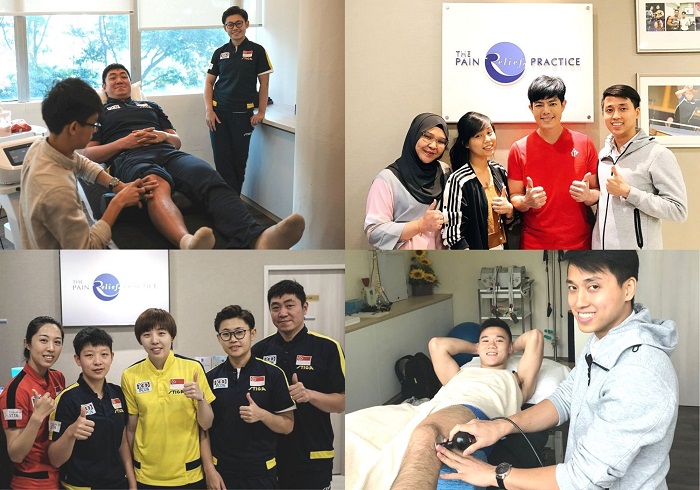
Real Results
Celebrities & National Athletes
What to expect when you visit us
Your journey at The Pain Relief Practice follows strong physiotherapy guidelines:
- In-depth consult and movement assessment
- Clear explanation of your diagnosis and treatment options
- Hands-on treatment from day one (when appropriate)
- An individualised exercise plan with clear instructions
- A review and adjustment of progress at every session
- Guidance on safely returning to work, the gym, or sports
Our goal is to help you go beyond “less pain” to achieve better performance and more enjoyment in life.
FAQ: Common questions about physiotherapy guidelines
-
What are physiotherapy clinical guidelines and why should I care?
Physiotherapy clinical guidelines are evidence-based recommendations for conditions like back pain, knee osteoarthritis, or shoulder impingement. When your therapist follows these guidelines, your care becomes more structured, safer, and aims at lasting results rather than quick fixes. -
How do I know if my physiotherapist follows proper guidelines in Singapore?
Look for a thorough assessment (not a five-minute check), clear explanations of your diagnosis, a customised exercise plan, tracked progress, and adjustments made over time. If every session is the same or if you only receive passive treatments without progressive strengthening, your clinician might not be up to date with modern physiotherapy practices. -
Can guideline-based physiotherapy help with chronic joint pain that I’ve had for years?
Yes. International guidelines support active, exercise-based rehab combined with manual therapy and education even for long-lasting conditions. While old injuries and “wear and tear” might not reverse completely, your function, strength, and pain levels can improve significantly. Many patients with 5–10 years of knee, back, or shoulder pain see great results from structured, guideline-based care.
Ready to move better and hurt less?
If your joints feel “rusty,” your muscles flare up, or you are no longer sure of your body’s ability, you do not have to guess your recovery steps.
Let a team that understands both physiotherapy guidelines and real-world Singapore lifestyles guide you back to comfortable movement, strong performance, and an active life.
You can explore our clinic profile and reviews here:
https://share.google/UwMU2I9zUCwXVh0Lg
When you are ready, book a session at The Pain Relief Practice. Take the next, structured step toward pain-free, confident movement.
We are a specialized physio treatment center for savvy people who want real results.
While we are not suitable for someone looking for ‘cheap physiotherapy’ or ‘free exercises available on youtube’, our treatments are affordable and are often claimable with company flexi-benefits, company health insurance, travel insurance, personal accident insurance, and other insurance plans.
Simply whatsapp or call: +65 97821601 and let us know how to help.
If you prefer a convenient nutritional preventive option, Regenerix Gold is our top recommended joint supplement.
We have been recommending this joint supplement for over a decade.
Simply start with 3 capsules, once a day.
If you do not feel better within a week, increase to 2 capsules, twice a day. (4 capsules a day in total)
Our blog readers qualify for a special discount.
Simply use the link below and a discount will automatically be applied during checkout.
