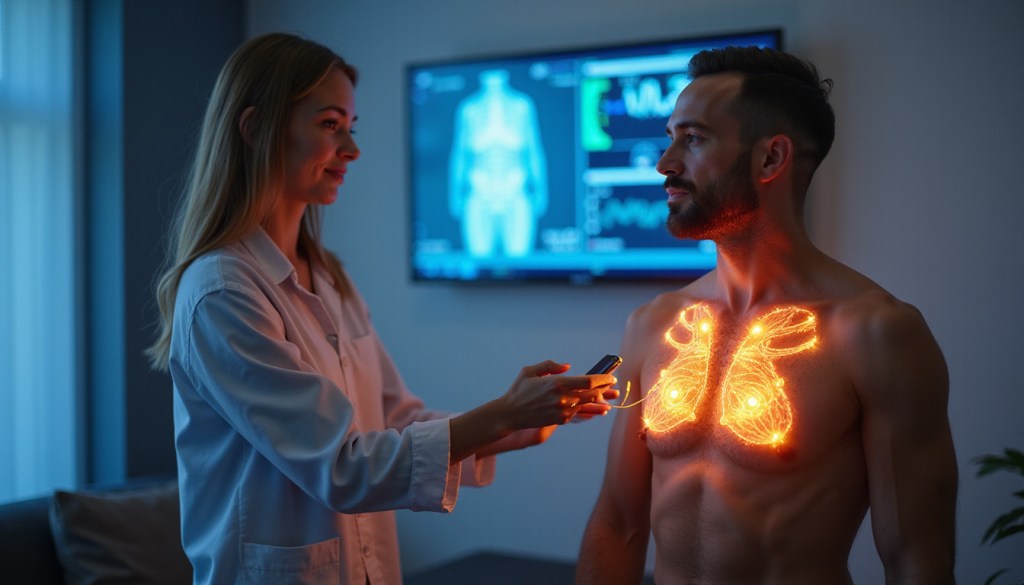
If you have neck pain, back stiffness, or knee pain that endures, biofeedback physiotherapy may help.
At The Pain Relief Practice in Singapore, patients learn to see their own muscle and joint work in real time. This real-time view lets the body learn to move better and hurt less.
What Is Biofeedback Physiotherapy?
Biofeedback physiotherapy uses sensors and devices. These tools measure muscle, joint, or nerve work. The data appears on a screen or through sound.
You no longer guess when you "engage your core" or "relax your shoulders." You see:
• Which muscles fire
• How strong they work
• If they work too hard or too slow
• If your side-to-side movement stays equal
You may see:
• Surface EMG (sEMG) – skin sensors show muscle contractions
• Pressure and force sensors – these measure standing, walking, squatting, or landing
• Motion and posture sensors – these track joint angles and body alignment
If your back locks or your knees feel unstable, biofeedback helps you and your therapist see the true source of pain.
Why People With Joint and Muscle Pain Struggle to Recover
If you have pain for months or years, you may see these signs:
• You stretch often, but tightness comes back
• Your muscles feel weak or "jelly-like"
• Your back catches if you move too fast
• You avoid deep squats, overhead reaches, or long walks
The pain may not just come from injured tissue. It may come from poor muscle activation and bad movement patterns. Your body may:
• Overuse some muscles that never relax
• Underuse muscles that should provide balance
• Load joints unevenly
Biofeedback physiotherapy fixes these issues. It retrains the link between your brain and your muscles. Your body then learns better, more efficient movements.
How Biofeedback Physiotherapy Helps You Heal Faster
Think of biofeedback as a mirror for your muscles and joints. The feedback shows you how your body works and how to improve it.
1. Re-trains Weak or “Sleeping” Muscles
After an injury, some muscles, like the core, glutes, and rotator cuff, may "switch off." Surface EMG shows this on a screen. Your therapist helps you:
• Activate the right muscles
• Stop other muscles from taking over
• Build strength and control in clear steps
2. Breaks Guarding and Over-Tensing
Many describe neck and shoulder pain as "rock hard" or always tight. Biofeedback shows when you clench your neck, shoulders, or back. With clear visual or audio signals, you learn to:
• Release extra tension
• Breathe with your diaphragm
• Move without unnecessary bracing
This process cuts pain and the feeling of being stuck.
3. Optimises Your Movement and Joint Loading
If you have knee pain when going down stairs, hip pain while walking, or back pain with bending, biofeedback helps you see:
• If you overload one leg
• If your knees slump inward
• If your spine arches too much or too little
• How posture changes with fatigue
You then learn proper alignment and even joint loading.
4. Keeps You Engaged and Motivated
Many patients doubt if they do exercises right. Biofeedback offers proof:
• You see muscle output improve session by session
• You notice more balanced, smoother movements
• You become sure of your exercise technique
This evidence builds your confidence and helps you stick to your programme.
Conditions That May Benefit From Biofeedback Physiotherapy
At The Pain Relief Practice, we use biofeedback in personalized plans for those with:
• Chronic neck and shoulder tightness (from desk work or device use)
• Lower back pain and stiffness (including recurring back strains)
• Knee pain – from patellofemoral issues, early wear-and-tear, or post-injury
• Hip pain and glute weakness – including piriformis tightness and deep buttock pain
• Post-injury or post-surgery weakness – such as ACL, meniscus, shoulder, or ankle issues
• Sports-related overuse injuries – for runners, cyclists, gym-goers, or racket sports players
• Balance and control issues – when joints feel unstable
Research shows that EMG biofeedback can improve muscle activity and help conditions like knee osteoarthritis and patellofemoral pain (source: National Library of Medicine).

What a Typical Biofeedback Physiotherapy Session Is Like
If you have not tried it before, here is what happens at The Pain Relief Practice:
-
Detailed Assessment
We ask about your pain. We learn what hurts, what triggers it, and what you have tried. We then check your posture, movement, muscle strength, and joint motion. -
Sensor Placement
Small sensors stick on your skin over key muscles or joints. There are no needles, and you feel no pain. -
Real-Time Feedback
As you move or exercise, you see graphs, numbers, or images that show your body at work. -
Guided Corrections
Your therapist guides you as you change your movement. You quickly learn when you do the exercise right. -
Progressive Training
As you get better, we add sport or lifestyle moves like stairs, squats, running, or lifting. -
Home Programme With Clarity
You leave with clear steps. You know which muscles to use, how to sense proper activation, and how to keep old habits from coming back.
Why Choose The Pain Relief Practice for Biofeedback Physiotherapy in Singapore
There are many clinics that offer physiotherapy. But few specialise in biofeedback. At The Pain Relief Practice:
• We are a well-established physiotherapy clinic in Singapore since 2007.
• We serve people who want to solve pain permanently rather than just cope with it.
• We have helped celebrities and national athletes stay pain-free and perform at their best.
• We blend biofeedback, hands-on therapy, targeted exercise, and performance rehab to treat pain and improve performance.
• We give clear explanations, so you know exactly how to fix the root cause of your pain.
If you are tired of quick fixes that only give short-term relief, our method may give you lasting results.
Real Results
Celebrities & National Athletes
Who Is a Good Candidate for Biofeedback Physiotherapy?
You might fit if:
• You have persistent pain or stiffness that keeps returning even after rest or massage.
• You feel your muscles do not fire as they should or your joints feel unstable.
• You have tried other treatments with only short-term relief.
• You want clear, objective data and a scientific approach.
• You are ready to take an active role in your recovery with a tailored plan.
Biofeedback suits many ages. It fits younger athletes and older adults with joint wear-and-tear. The treatment scales with your fitness and comfort.
What Makes Biofeedback Different From “Normal” Physio?
Traditional physiotherapy often uses:
• Manual tests by a therapist’s hands and eyes
• Your own feeling of effort or tightness
• General instructions like "do 3 sets of 10 squats"
Biofeedback physiotherapy adds:
• Objective measurements of muscle work and movement
• Real-time visual or sound cues that show what really happens
• Precision training that targets the right muscles
Combining expert assessment with cutting-edge tools makes the treatment focused and efficient.
Practical Tips If You’re Considering Biofeedback Physiotherapy in Singapore
Before you choose your therapist, think about:
• Their experience with chronic and complex pain
• Whether they have tools like EMG and movement analysis
• If they combine biofeedback with hands-on therapy and strength work
• How they track clear outcomes such as pain, strength, and movement quality
• A plan that suits your work, sport, and lifestyle
At The Pain Relief Practice, you are not just lying down. You actively learn to move better and protect your joints each day.
Our Google Profile
You can learn more about our location, reviews, and services here:
https://share.google/UwMU2I9zUCwXVh0Lg
FAQ on Biofeedback Physiotherapy
1. Is biofeedback physiotherapy effective for chronic pain?
Yes. It is very effective for chronic musculoskeletal pain. When poor muscle activity and bad movements cause pain, biofeedback helps retrain your muscles and joints. This lowers pain triggers and boosts your daily function.
2. How many biofeedback physio sessions will I need?
It depends on your condition and how long you have had pain. Many begin to see clearer muscle control after 3–6 sessions along with a home programme. More complex cases may take a few months of gradual training to see full benefits.
3. Is biofeedback physiotherapy suitable for older adults with knee or back wear-and-tear?
Yes. Older adults with osteoarthritis or long-term back issues can benefit from biofeedback. It improves muscle support and joint alignment. The process is non-invasive and safe alongside other treatments your doctor recommends.
If your body sends warning signs—aching joints, repeated strains, and muscles that do not feel quite right—you do not have to live with pain. With biofeedback physiotherapy at The Pain Relief Practice, retrain your body, build movement confidence, and return to the activities you love.
We are a specialized physio treatment center for savvy people who want real results.
While we are not suitable for someone looking for ‘cheap physiotherapy’ or ‘free exercises available on youtube’, our treatments are affordable and are often claimable with company flexi-benefits, company health insurance, travel insurance, personal accident insurance, and other insurance plans.
Simply whatsapp or call: +65 97821601 and let us know how to help.
If you prefer a convenient nutritional preventive option, Regenerix Gold is our top recommended joint supplement.
We have been recommending this joint supplement for over a decade.
Simply start with 3 capsules, once a day.
If you do not feel better within a week, increase to 2 capsules, twice a day. (4 capsules a day in total)
Our blog readers qualify for a special discount.
Simply use the link below and a discount will automatically be applied during checkout.