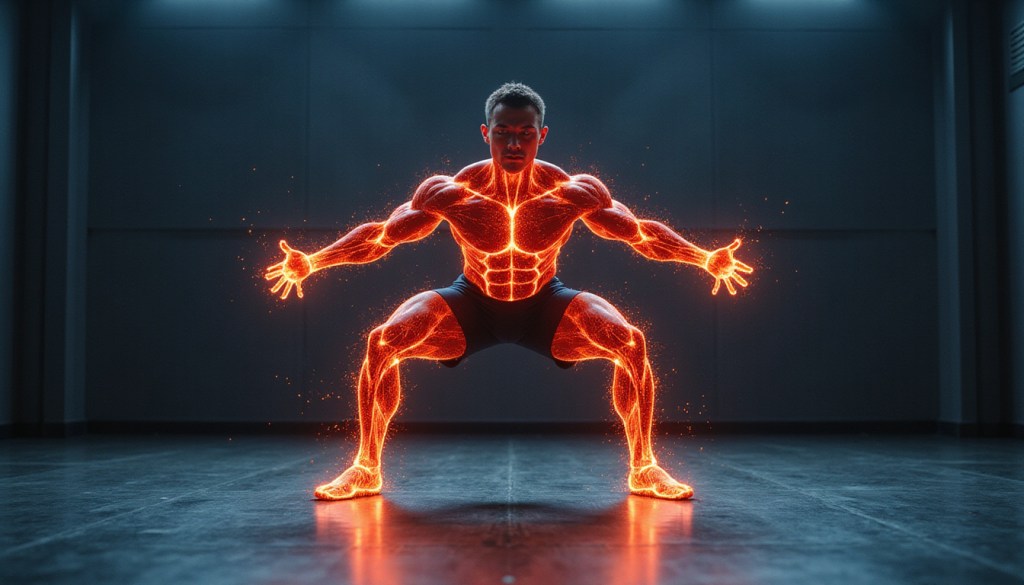
If you train hard and you feel no power, your muscles don’t fire properly, or your joints ache, you are not alone.
Many people in Singapore suffer from knee pain, shoulder impingement, chronic back tightness, or old sports injuries. They share a common issue: poor muscle activation.
When the right muscles do not fire at the right time, your body compensates. The joints bear extra load while already-tight areas work too hard.
This is why smarter workouts matter. They focus on proper activation rather than just heavy weights. In this way, you build strength faster while protecting your joints.
What Is Muscle Activation (And Why Your Joints Care)?
Muscle activation is your body’s skill to recruit the right muscle fibres at the exact time and in the proper order to move.
When activation is good, you feel your movement as:
- Stable
- Controlled
- Powerful, yet effortless
When activation is poor, you may notice:
- Your knees collapse during squats or stair climbing.
- Your lower back works too hard during core exercises.
- Your shoulders click or feel unstable overhead.
- Your hamstrings stay tight even with regular stretching.
- One side feels weak and wobbly.
Over time, poor activation forces your joints and passive structures (ligaments, cartilage, discs) to carry too much load. This increases the risk of:
- Early wear-and-tear (degeneration)
- Recurrent sprains and strains
- Persistent aches
For people with knee osteoarthritis, rotator cuff issues, neck stiffness from desk work, or past ACL and ankle injuries, this cycle continues: pain → poor activation → compensations → more pain.
Why “Just Getting Stronger” Is Not Enough
It is possible to have strong muscles that are badly coordinated.
At The Pain Relief Practice in Singapore, we see that traditional strength training has often:
- Built muscle bulk, but
- Not improved movement quality, and sometimes
- Worsened joint pain
Examples include:
- Strong quads with weak glutes cause knee and hip pain.
- Overactive upper traps with underactive lower traps and rotator cuff lead to shoulder and neck tension.
- A strong rectus abdominis (“six-pack”) paired with a weak deep core and multifidus causes recurring low back pain.
If you keep adding heavy loads on these faulty patterns, it is like driving a car with misaligned wheels. Eventually, uneven wear and breakdown occur.
Smart strength training begins with muscle activation, not with added weight.
Signs Your Muscle Activation Is Not Working Well
If these signs feel familiar, your activation likely needs work:
- You feel the exercise in the wrong place
- Squats hurt your lower back instead of your glutes
- Rows stress your neck instead of the area between your shoulder blades
- One side feels weaker or shakier
- You cannot “find” certain muscles despite trying
- “I am not sure how to squeeze my glutes.”
- “My core does not switch on.”
- You experience constant tightness that stretching does not fix
- Your joints feel unstable or “loose” during cutting, jumping, or stair descent
- Pain flares when you increase your workout volume, even if the weights are light
When joint irritation exists, it is crucial to correct activation before increasing intensity.
How Proper Muscle Activation Builds Strength Faster
Proper activation does three important things:
-
It targets the right muscles.
Every repetition becomes efficient because the correct muscles work. The benefit increases and the load on joints decreases. -
It improves joint alignment and stability.
When stabilisers and prime movers fire in the proper sequence, the joints track smoothly. This protects cartilage, ligaments, and tendons. -
It sends a stronger signal to your nervous system.
Strength is not just muscle size; it is also how your brain recruits muscle fibres. Better activation means a stronger neural drive and faster strength gains.
Elite athletes spend much time on activation drills and perfecting movement quality. At The Pain Relief Practice, we help celebrities and Singapore national athletes achieve optimal body function.
The 3-Step Approach to Smarter, Joint-Friendly Workouts
To benefit from muscle activation, structure your sessions like this:
Step 1: Reset – Reduce Protective Tension
When a joint is painful or irritated, your body locks some muscles while overworking others. Before activation, work on:
- Releasing chronically tight areas
- Improving basic joint mobility
- Calming the nervous system’s protective response
We focus on:
- Hip flexors and quads
- Calves
- Chest and front of shoulders
- Neck and upper traps
This reset uses manual therapy, targeted stretching, and soft tissue work. At home, foam rolling, gentle stretching, and breathing exercises help.
Step 2: Activate – Switch On the Right Muscles
Teach your body to fire the right muscles in the right order at low loads.
Key regions include:
- Glutes (for hip and knee health)
- Deep core (for back and hip stability)
- Scapular stabilisers/rotator cuff (for shoulder and neck comfort)
- Foot and ankle stabilisers (for balance and knee tracking)
Step 3: Integrate – Strengthen with Good Patterns
Once individual muscles can activate, integrate them into functional movements: squats, hinges, lunges, pushes, and pulls. Keep proper form and joint control as you gradually add weight and workload. Always maintain the activation you have trained and do not let old compensations return.
Practical Muscle Activation Drills You Can Start With
Below are general examples. Modify them if you have specific injuries. They show how to blend activation into your routine:
1. Glute Activation (For Knee & Hip Pain)
a. Bent-Knee Glute Bridge (with core engaged)
• Lie on your back with bent knees and feet hip-width apart.
• Brace your core gently (like expecting a poke).
• Drive through your heels, squeeze the buttocks, and lift the hips.
• Do not arch the lower back. Focus on the glutes.
• Perform 2–3 sets of 8–12 reps.
b. Side-Lying Clamshells (for hip stability)
• Lie on your side with hips and knees bent.
• Keep your feet together and open the top knee like a clam.
• Do not rotate your pelvis backward.
• Perform 2–3 sets of 10–15 reps per side.
2. Core Activation (For Back & Hip Support)
a. Dead Bug (anti-extension core)
• Lie on your back with arms up and hips and knees at 90°.
• Flatten your lower back gently toward the floor.
• Slowly extend the opposite arm and leg while keeping the ribs down.
• Return and alternate sides.
• Perform 2–3 sets of 6–8 reps per side.
b. Side Plank (for lateral stability)
• Begin with knees bent, later progress to feet straight.
• Keep the body in a straight line; do not let the hips sag.
• Hold for 15–30 seconds.
• Perform 2–3 sets per side.
3. Shoulder & Scapular Activation
a. Wall Slides
• Stand with your back and arms against a wall, elbows at 90°.
• Gently press your shoulder blades into the wall.
• Slide your arms up while keeping contact with the wall.
• Focus on smooth rotation of the shoulder blades; do not shrug.
• Perform 2–3 sets of 8–10 reps.
b. “W” Retractions
• Sit or stand tall with elbows by your sides at 90°.
• Squeeze your shoulder blades together and down.
• Rotate your forearms outward to form a “W.”
• Perform 2–3 sets of 10–12 reps.
How to Structure Your Session Around Muscle Activation
A joint-friendly, activation-focused workout might look like this:
-
Warm-Up (5–10 minutes)
• Light cardio (bike, brisk walk)
• Dynamic mobility for hips, thoracic spine, and shoulders -
Activation Block (10–15 minutes)
Pick 3–5 drills covering key areas:
• Glutes
• Core
• Shoulders/scapular region
• Feet/ankles (for example, single-leg balance or calf raises) -
Main Strength Work (20–30 minutes)
Focus on controlled, compound movements:
• Squats or leg presses
• Hip hinge exercises (Romanian deadlifts, hip thrusts)
• Horizontal push (push-ups, bench press)
• Horizontal pull (rows)
• Vertical push or pull if your shoulders can handle it -
Cool Down (5–10 minutes)
• Gentle stretching for tight muscles
• Breathing exercises to reduce tension
When You Should Not Push Through Pain
Some muscle discomfort is normal. Joint pain is different. Stop and get assessed if you notice:
• Sharp, catching, or locking pain in a joint
• Swelling or warmth after training
• Numbness, tingling, or a limb giving way
• Pain that lingers or worsens over several sessions
For Singaporeans with busy office jobs and active weekends, ignoring these signs can lead to serious issues like meniscus tears, rotator cuff injuries, or disc problems. Early, tailored help makes a big difference.
How The Pain Relief Practice Helps You “Switch On” Properly
At The Pain Relief Practice—one of Singapore’s established physiotherapy clinics since 2007—we help people who:
• Suffer from persistent joint or muscle pain
• Feel that their body is always compensating
• Want to move, train, and perform better instead of just managing day-to-day
Our approach to muscle activation is:
• Individualised – We assess movement patterns, muscle firing, joint range, and strength, not only the pain spot.
• Evidence-based – We use manual therapy, targeted activation, and progressive loading guided by the latest clinical research (for example, neuromuscular training research from the Cochrane Library).
• Performance-oriented – We apply the same principles used with celebrities and national athletes to office workers, active seniors, and recreational athletes.
We have helped patients who:
• With knee osteoarthritis wish to hike or play badminton
• With rotator cuff and shoulder impingement need to lift kids or weights
• With chronic neck and back pain from desk work and gym training
• With old ankle and ACL injuries struggle with balance and agility
Our goal is not just pain relief. We help you:
• Regain healthy, confident movement
• Reactivate underused muscles and calm overactive areas
• Build joint-friendly strength so you can enjoy sports, the gym, and daily life again
Real Results
Celebrities & National Athletes
Find Us on Google
Explore more patient stories, ratings, and directions to our clinic on our Google profile:
https://share.google/UwMU2I9zUCwXVh0Lg
FAQs on Muscle Activation & Joint-Friendly Training
-
How do I know if my muscle activation is working properly?
You should feel the exercise in the target muscles—not in the joints or your usual problem spots. For instance, squats should light up your glutes and quads instead of your lower back. If strengthening always triggers joint pain or poor form, your activation patterns need assessment and retraining. -
Can muscle activation exercises alone fix my knee or shoulder pain?
They can help a great deal when poor control or compensations cause pain. Still, many Singaporeans with long-standing joint issues improve most by combining activation with manual therapy, mobility work, and progressive strength training. A thorough assessment helps determine the best approach. -
How often should I do muscle activation before workouts?
For most, 10–15 minutes of focused activation before each workout works best. If your joint issues are severe, short daily sessions—even on non-gym days—can re-educate your nervous system faster. Your program should match your pain history and specific goals.
If your joints protest and your body works against you instead of with you, smarter muscle activation could be the missing link. With proper guidance, you can reduce pain, protect your joints, and finally build the strength and confidence your body can achieve.
We are a specialized physio treatment center for savvy people who want real results.
While we are not suitable for someone looking for ‘cheap physiotherapy’ or ‘free exercises available on youtube’, our treatments are affordable and are often claimable with company flexi-benefits, company health insurance, travel insurance, personal accident insurance, and other insurance plans.
Simply whatsapp or call: +65 97821601 and let us know how to help.
If you prefer a convenient nutritional preventive option, Regenerix Gold is our top recommended joint supplement.
We have been recommending this joint supplement for over a decade.
Simply start with 3 capsules, once a day.
If you do not feel better within a week, increase to 2 capsules, twice a day. (4 capsules a day in total)
Our blog readers qualify for a special discount.
Simply use the link below and a discount will automatically be applied during checkout.