
If you live in Singapore with limb loss, you often feel off‑balance, tired, or frustrated with your prosthetic. You are not alone. Many amputees bear back pain, hip or knee strain, skin breakdown, and compensation pain on the other side. Amputee physiotherapy can change this. It moves you from merely “getting by” to walking, climbing stairs, and moving without fear.
This guide speaks to people in Singapore who feel the daily strain in their joints, muscles, and stumps. It gives practical, expert‑backed ways to move better and hurt less.
Why Amputees Suffer Aches, Pains, and Compensation
After an amputation, your body does not let go of the past. Even when your wound heals and you wear a prosthesis, your muscles and joints work hard to cope with:
- Losing normal weight distribution
- A changed centre of gravity
- Weak or inactive core and hip stabilisers
- Tight muscles from long‑term awkward movement
Amputees in Singapore often say:
- “My good leg feels like it is breaking down.”
- “My lower back aches after 10–15 minutes of walking.”
- “My stump gets sore after a short walk.”
- “I fear falling on MRT platforms and stairs.”
Targeted amputee physiotherapy helps fix these issues. It does not only use exercise. It retrains how your body moves as a whole.
What Is Amputee Physiotherapy – And Why It Is Different
Amputee physiotherapy is a special kind of rehab. Skilled physiotherapists understand:
- How prosthetic alignment and socket issues affect you
- How to care for your residual limb and protect your skin
- How phantom limb pain and nerve sensitivity arise
- How to retrain your gait to stop limping or hobbling
- How muscle imbalance overloads your good side
It is not simply “standard physio with one less limb.” Your therapist must know the changes in ankle/foot, knee, and hip mechanics that a prosthesis brings. They also study the effects on your spine, shoulders, and neck.
The goal is clear:
- Walk with a smooth, natural pattern
- Ease overuse pain in your “good” knee, hip, and back
- Boost balance and confidence in crowded, quick places
- Save energy so you do not feel drained after short distances
- Return to work, sports, and social life without each step causing worry
Real Results
Key Problems Amputees Face – And How Physio Targets Them
1. “My Good Leg Is Breaking Down”
You protect your amputated side instinctively. Your good leg then does 60–80% of the work. Over time, this imbalance may cause:
- Knee degeneration and early osteoarthritis
- Hip and SI joint pain
- Heel and plantar fascia pain from heavy landings
Amputee physiotherapy targets these issues by:
- Strengthening the hip abductors and gluteal muscles on both sides
- Training you to load the prosthetic leg safely and confidently
- Correcting over‑striding or vaulting that stresses your good leg
2. Back and Hip Pain From Poor Gait
Many amputees walk with a dropped pelvis on one side. They lean their trunk to feel stable. They take small, shuffling, or overly big swinging steps. Soon, your lumbar spine, SI joint, and hips protest.
Physio management uses:
- Core and pelvic stability training (not just sit‑ups)
- Gait analysis and real‑time correction
- Manual therapy and joint mobilisation to ease stiff segments
- Posture education for standing, walking, and sitting
3. Stump Pain, Skin Irritation, and Pressure Points
Even a good prosthetist may not prevent residual limb pain. This pain happens because:
- Muscles around your stump may be weak or unbalanced
- Scar tissue tightens and pulls your skin
- You load the socket in the wrong places because of poor movement
Physiotherapist steps include:
- Strengthening muscles around the stump for better control in the socket
- Scar mobilisation and desensitisation work
- Advice on sock handling, donning/doffing, and pressure relief
- Working with your prosthetist to adjust fit and alignment
4. Fear of Falling and “Wobbly” Balance
If you have nearly fallen on wet tiles, unexpected escalators, or crowded MRTs, you may feel tense and cautious.
Amputee physiotherapy gives you:
- Static and dynamic balance drills (eyes open/closed, single‑limb tasks)
- Reaction training with safe, sudden perturbations
- Surface training that simulates slopes, uneven surfaces, steps, and curbs
- Dual‑task practice, like walking while turning your head or carrying items
What a Good Amputee Physio Program in Singapore Should Include
When you join a team like The Pain Relief Practice, expect the following:
-
Detailed Assessment
- Examining your prosthetic type and fit
- Measuring limb length and alignment
- Checking range of motion in your spine, hips, knees, and ankles
- Evaluating strength, muscle imbalances, and flexibility
- Gait video analysis from several angles
-
Personalised Treatment Plan
Not a list of generic “leg exercises.” The plan depends on:- Your stump level (transtibial, transfemoral, through‑knee, etc.)
- Your pain areas and daily needs (office work, delivery riding, or caring for grandkids)
-
Hands‑On Treatment When Needed
- Joint mobilisation for stiff backs, hips, and knees
- Soft tissue release for tight hip flexors, IT band, and hamstrings
- Scar work and desensitisation for stump comfort
-
Targeted Strength & Control Training
Focus on these trouble spots:- Glutes that do not fire
- Quads and hamstrings that tire quickly
- Weak or shaky core muscles
- Shoulder and upper back tension from crutches or canes
-
Real‑Life Functional Retraining
- Navigating MRT stations, lifts, and stairs
- Handling wet floors and curbs
- Getting in and out of cars, taxis, or buses
- Returning to sports, gym workouts, or recreational activities
-
Home Exercise Prescription You Can Follow
Short, practical routines you can fit into your day. No 45‑minute marathons that no one can maintain.
Celebrities & National Athletes
Why Choose The Pain Relief Practice for Amputee Physiotherapy in Singapore
For patients who do not want to “wait and see” while their joints wear out, The Pain Relief Practice is a specialised pain and performance centre—not just another physio clinic.
Established, Trusted, and Experienced Since 2007
We stand as one of the more established physiotherapy clinics in Singapore. Since 2007, we have helped people with complex joint, muscle, and nerve issues. We see every case: new amputees starting out and long‑term prosthetic users with worn‑out backs, knees, and hips from years of compensation.
Treated Celebrities and National Athletes
Elite performers demand zero tolerance for pain and sub‑optimal performance. Celebrities and Singapore national athletes trust us with their rehab and performance. This trust shows:
- High clinical standards
- Advanced problem‑solving for complex biomechanical issues
- A focus on both pain relief and performance enhancement
Amputee physiotherapy uses the same principles. The goal is not just to be pain‑free, but to move better, last longer, and enjoy life more.
Pain‑Focused, Joint‑Friendly Approach
Many amputees already face joint degeneration. Our approach:
- Protects your “good” limb and spine from overload
- Improves your mechanics instead of merely increasing repetitions
- Uses modern pain science principles to calm irritated tissues and sensitive nerves (source: International Association for the Study of Pain – IASP)
Integrated Care for Real‑World Results
Your care does not live in a vacuum. We:
- Communicate with your prosthetist when we suspect alignment or socket issues
- Work around existing conditions like diabetes, cardiac issues, or neuropathy
- Tailor exercise and loading plans to your work, family, and social life
In the end, you do not just “exercise.” You function better every day in Singapore.
Practical Strategies to Start Today
If walking flares your joints or stump, these tips often come up in your physiotherapy sessions:
-
Shorter, More Frequent Walks
Instead of one long 30‑minute walk, try 3 × 10‑minute walks with rest breaks. This helps reduce flare‑ups. -
Strengthen Your Hip Abductors and Extensors
These muscles save your joints by reducing stress on your knees and lower back. -
Prioritise Stump Comfort
If your socket bites or rubs, no amount of physio will fix your gait. Tell your physio right away so they can work with your prosthetist. -
Train Balance in Safe Settings
Practice balance with your therapist before you face wet floors, escalators, or crowded spots. -
Respect Pain, But Do Not Fear Mild Discomfort
Mild, short muscle soreness is normal. Sharp joint or nerve pain is a sign to adjust your routine.
What a Typical Amputee Physio Session Might Look Like
Each clinic is different. At a specialised centre like The Pain Relief Practice, a session may include:
- Reviewing your pain and walking log since the last visit
- Recording a short video of your gait to track progress
- Hands‑on work for stiff or tight areas that cause issues
- Progressive strength and control drills
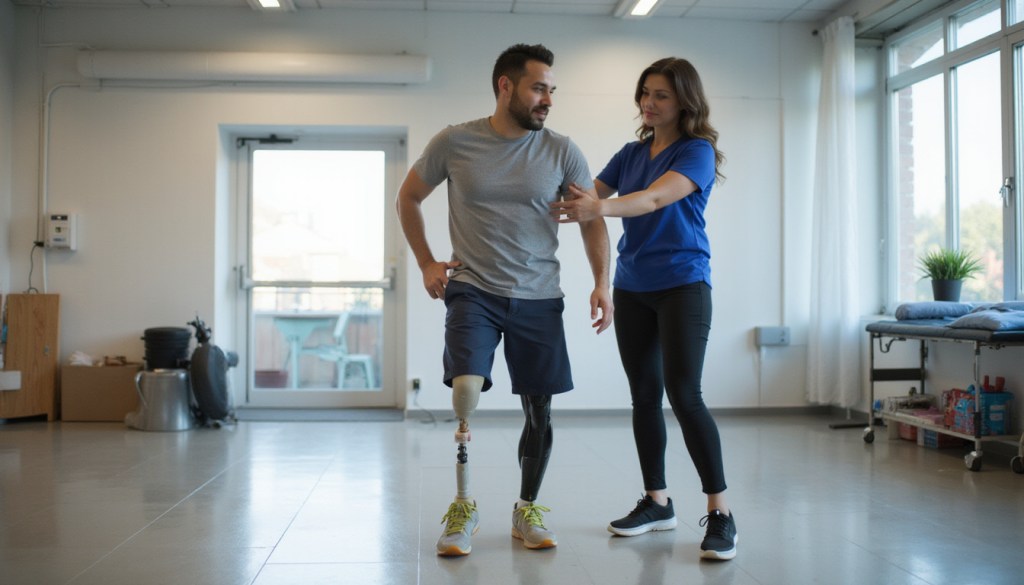
- Gait and balance tasks that mimic your everyday challenges
- Clear guidance on what to do (and avoid) until your next session
You leave the session knowing exactly why you do each exercise and what result to expect.
Simple Checklist: Are You Due for Amputee Physiotherapy?
You might need a specialised assessment if you notice:
- Increasing pain in your good knee, hip, or lower back
- Red, sore, or blistered areas on your stump after daily wear
- Fear of walking in crowded or fast‑moving places
- Feeling “one bad step away” from a fall
- Fatigue after short walks that used to be easy
- Limping or uneven wear on your shoe soles
If you recognise these signs, do not delay. Early, targeted amputee physiotherapy can prevent further joint damage and help you regain the activities you love.
Visit The Pain Relief Practice
Learn more about our services and read patient reviews here:
https://share.google/UwMU2I9zUCwXVh0Lg
FAQ – Amputee Physiotherapy in Singapore
-
How is amputee physiotherapy different from normal physiotherapy?
Amputee physiotherapy focuses on using your prosthetic, caring for your stump, training your balance, and correcting your gait for limb loss. The approach looks at socket fit, limb alignment, and how your body compensates. This protects your joints and reduces long‑term wear. -
When should I start physiotherapy after amputation?
Rehab ideally starts in the hospital and continues as soon as your doctor permits. Early therapy keeps your joints mobile, prevents muscle wasting, and prepares your body and stump for a prosthesis. If you missed early rehab, it is never too late to benefit—even years later. -
Can amputee physiotherapy help with phantom limb and stump pain?
Yes, it can help. Techniques such as desensitisation, graded motor imagery, mirror therapy, targeted strengthening, and manual therapy around the stump can reduce pain. We also address gait and posture issues that might be stressing your nerves and tissues.
If your joints, stump, or “good leg” are screaming for help, specialised amputee physiotherapy gives you a clear, structured way forward. You can then walk, stand, and live with more confidence and much less pain.
We are a specialized physio treatment center for savvy people who want real results.
While we are not suitable for someone looking for ‘cheap physiotherapy’ or ‘free exercises available on youtube’, our treatments are affordable and are often claimable with company flexi-benefits, company health insurance, travel insurance, personal accident insurance, and other insurance plans.
Simply whatsapp or call: +65 97821601 and let us know how to help.
If you prefer a convenient nutritional preventive option, Regenerix Gold is our top recommended joint supplement.
We have been recommending this joint supplement for over a decade.
Simply start with 3 capsules, once a day.
If you do not feel better within a week, increase to 2 capsules, twice a day. (4 capsules a day in total)
Our blog readers qualify for a special discount.
Simply use the link below and a discount will automatically be applied during checkout.
 PROVIDING FAST, EASY & INSURANCE CLAIMABLE PAIN RECOVERY SINCE 2007