If you wake up in the morning and feel sharp heel pain with your first steps, you are not alone. In Singapore, many people report plantar fasciitis. People who stand a lot, wear work shoes all day, or play sports like running, badminton, or futsal are at risk.
This guide is for Singaporeans who feel a nagging pull under the heel or arch, a “stone bruise” in the foot, or an ache that grows after visiting malls, climbing MRT stairs, or standing at work. If this sounds like you, read on.
What Exactly Is Plantar Fasciitis?
The plantar fascia runs from your heel to your toes. It works as a shock absorber. When you overload it, tiny tears and irritation occur. This makes plantar fasciitis.
People here usually complain of:
- Sharp heel pain on the first steps in the morning
- Pain after sitting and then standing
- Ache or burning along the arch after long walks
- Pain that eases with movement but flares after long standing or walking
- A feeling of a stone or nail in the heel when stepping
Risk factors in Singapore include:
- Long hours standing at work (teachers, retail, F&B, healthcare, security)
- Frequent walking on hard surfaces (malls, MRT, concrete)
- Flat feet or very high arches
- A sudden increase in running or gym load
- Wearing slip-ons or slippers with thin, hard soles
- Tight calf muscles and Achilles tendon
The good news is that with the right stretches, footwear, and focused treatment, most people can walk without pain. This is possible without injections or surgery.
Morning Heel Pain: Why It Is Worst at the Start
When you have plantar fasciitis, you may dread getting out of bed. Overnight, your foot stays pointed. The plantar fascia then shortens. When you stand, your weight stretches it quickly. This stretch causes sharp pain.
People say:
- “It gets better after I warm up, but it returns later.”
- “My heel feels like it is tearing when I step.”
- “By evening my foot throbs after shopping or taking the MRT.”
This pattern is classic plantar fasciitis. It is a sign you need a proper relief plan, not just to “tahan” (endure) the pain.
Proven Stretches for Plantar Fasciitis Relief
Stretching gently and consistently eases tension along the calf–heel–arch chain. These steps are based on evidence and help many of our patients.
1. Towel Stretch Before Getting Out of Bed
Do this before your first step:
- Sit on the bed with your legs straight.
- Loop a towel or yoga strap around the ball of the painful foot.
- Gently pull the towel toward you. You should feel a stretch in your calf and under your arch.
- Hold for 20–30 seconds and repeat 3 times.
This stretch pre-loads the plantar fascia. Your first steps will hurt less.
2. Wall Calf Stretch (Gastrocnemius)
- Stand facing a wall and place both hands on it.
- Step the painful side back. Keep your heel down and your knee straight.
- Lean toward the wall until you feel a stretch in the upper calf.
- Hold for 30 seconds and repeat 3 times, two to three times daily.
3. Bent-Knee Calf Stretch (Soleus)
- Stand similarly as before, but bend your back knee slightly.
- Keep your heel on the ground.
- You will feel the stretch lower in the calf, near the Achilles.
- Hold for 30 seconds and repeat 3 times.
4. Plantar Fascia Stretch (Seated)
- Sit on a chair and cross the painful leg over the other knee.
- Pull your toes toward your shin gently.
- Use your other hand to massage the tight band under your arch.
- Hold for 20–30 seconds and repeat 3–5 times.
5. Rolling Massage (Bottle or Ball)
Rolling helps release tight spots and breaks up the “stone-in-heel” feeling.
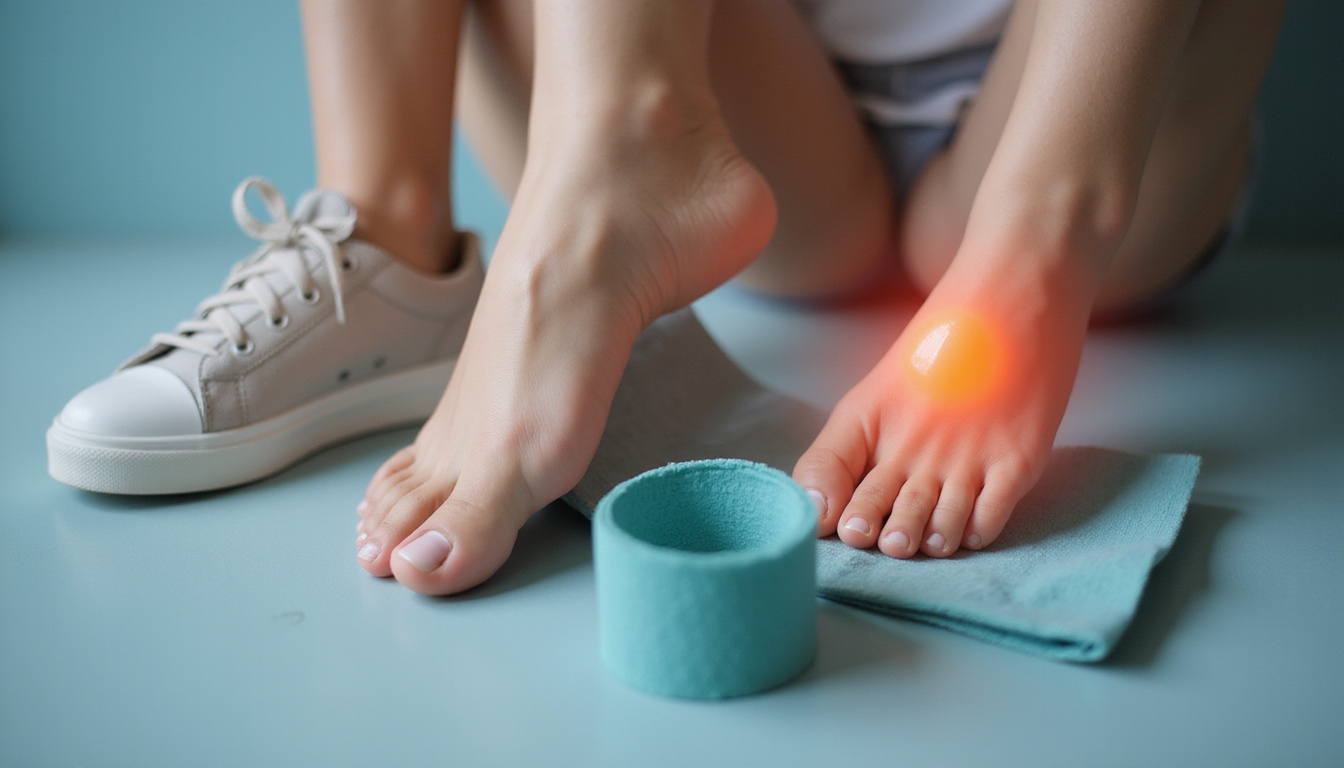
- Sit in a chair.
- Place a frozen water bottle or massage ball under your arch.
- Roll from your heel to the ball of your foot for 3–5 minutes. Do this 1–2 times a day.
Best Types of Shoes for Plantar Fasciitis in Singapore
Wrong shoes can restart your pain in one day if you have plantar fasciitis. Look for shoes with:
- A firm heel counter so the back does not collapse when pressed.
- Good arch support, especially if you have flat feet.
- A cushioned midsole to absorb impact on hard floors.
- A slight heel elevation (not high heels) to reduce pull on the fascia.
- Minimal twisting; the shoe should not twist like a slipper.
Common Singapore Footwear Mistakes
- Very flat slippers or sandals with no cushioning
- Old running shoes with worn-out soles
- Fashion shoes with no arch support when you walk a lot
- Safety boots or dress shoes worn all day without extra support
Are Insoles Worth It?
For many with plantar fasciitis, supportive insoles show a clear difference. This is especially true if you:
- Stand for long hours in uniform shoes.
- Have flat feet or collapsing arches.
- Notice pain after walking in otherwise “comfortable” shoes.
At The Pain Relief Practice, we study your foot load during standing, walking, and running. We then suggest off-the-shelf or custom orthotics that suit you best.
What Actually Helps Plantar Fasciitis Heal?
Plantar fasciitis is more than an inflammation. In long cases, the tissue degenerates because of overload. This is why painkillers or anti-inflammatory gels alone rarely work.
A good plan includes:
- Changing your activity (not complete rest, but smart load management)
- Targeted stretching and strengthening
- Changing your footwear and using insoles
- Hands-on treatments and special methods
- A gradual return to full activity
Strengthening the Foot and Calf
When pain is better, strengthening helps stop the problem from returning.
Examples are:
- Towel curls to scrunch a towel with your toes.
- Marble pick-ups to use your toes to pick up small objects.
- Calf raises, starting with both legs and then one leg.
- Balance exercises, like standing on one foot for stability.
Real Results
When Home Remedies Are Not Enough
See a musculoskeletal professional if:
- The pain lasts more than 2–3 weeks despite rest and basic stretches.
- The heel pain in the morning is so bad that you limp.
- The pain affects your walking, sports, or mood.
- You have tried different shoes, insoles, and online stretches with little change.
- You begin to feel pain in both feet, knees, or your lower back from compensation.
Persistent plantar fasciitis can change your walking pattern. This may lead to extra strain in your knees, hips, or lower back. Early, targeted treatment stops this chain reaction.
Why Choose The Pain Relief Practice for Plantar Fasciitis in Singapore?
The Pain Relief Practice is a specialized pain center. We do not only cover symptoms, but we resolve stubborn musculoskeletal issues like plantar fasciitis.
Highlights:
- One of Singapore’s well-known physiotherapy clinics, helping patients since 2007.
- Experience with celebrities and national athletes who need fast, lasting results.
- We focus on people who want to cure their pain, regain healthy joints and muscles, and boost performance and life quality.
- We give a tailored, evidence-based plan instead of using one-size-fits-all sheets.
At our clinic, treatment for plantar fasciitis usually includes:
-
Detailed assessment
- Analysis of gait and posture
- Checking foot mechanics (arch, pronation, leg alignment)
- Testing calf and Achilles flexibility and strength
- Reviewing your daily load (work, sports, and life)
-
Targeted manual therapy
- Soft tissue work on the calf and plantar fascia
- Joint mobilizations if needed
-
Advanced modalities (when suitable)
- Shockwave therapy and other proven techniques that target stubborn heel pain
(Supporting literature: American Academy of Orthopaedic Surgeons – plantar fasciitis overview and treatment options. Source: https://orthoinfo.aaos.org/en/diseases–conditions/plantar-fasciitis)
- Shockwave therapy and other proven techniques that target stubborn heel pain
-
Personalized exercise and load program
- Stage-based stretches and strength drills
- Advice tailored for your sport or work
-
Footwear and insole advice
- Practical tips for Singapore conditions: work shoes, school runs, public transport, gym, and casual outings
Celebrities & National Athletes
Our work with celebrities and national athletes shows we understand the need for quick, measurable results. They cannot afford to miss action for long and require real improvement.
Practical Daily Tips to Protect Your Plantar Fascia
Support your treatment and stop flare-ups with these tips:
- Do not walk barefoot on hard floors at home. Always use supportive house slippers.
- Do your calf and plantar fascia stretches, especially after long walks or runs.
- Increase your training load gradually. Avoid sudden “weekend warrior” spikes.
- Replace running shoes regularly (typically every 600–800 km).
- Listen to your body. Tightness, burning, or a “pulling” under the arch are warning signs.
Simple Daily Routine (5–10 Minutes)
- Morning: Towel stretch in bed and 1–2 minutes of rolling massage.
- Midday: A quick set of wall calf stretches if you can.
- Evening: Plantar fascia stretch and strengthening (like towel curls or calf raises).
A small, daily commitment beats occasional intense effort.
Our Google Profile
Learn more about The Pain Relief Practice, read patient reviews, and get directions here:
https://share.google/UwMU2I9zUCwXVh0Lg
FAQ: Plantar Fasciitis in Singapore
-
How do I know if my heel pain is plantar fasciitis or another problem?
Plantar fasciitis brings sharp heel pain on your first steps after waking or resting. You may feel pain under the heel or along the arch, and the discomfort worsens after long standing or walking. If you also face numbness, tingling, night pain, or swelling, or if the pain does not match the usual pattern, get assessed. This helps rule out nerve issues, stress fractures, or heel spur irritation. -
What is the fastest way to relieve plantar fasciitis pain?
A mix of activity changes, supportive footwear/insoles, and targeted stretching (especially in the morning) gives quick relief. Rolling an ice bottle over your foot may also ease end-of-day pain. If your pain is stubborn, a structured treatment at a specialized clinic like ours speeds recovery compared to self-treatment. -
Can plantar fasciitis go away on its own with rest?
Sometimes mild heel pain calms down with rest, but true plantar fasciitis often returns if you do not fix the causes—tight calves, poor foot mechanics, unsupportive shoes, or sudden load increases. Many in Singapore try to “tahan” for months, only to see chronic pain. Active management using stretches, strengthening, proper shoes, and professional help works best for lasting relief.
If your heel or arch pain affects your steps, commute, or training, do not wait until it becomes a long-term problem. With the right mix of stretches, proper shoes, and targeted treatment, you can overcome plantar fasciitis. This helps you walk, run, and live in Singapore without thinking about every step.
We are a specialized physio treatment center for savvy people who want real results.
While we are not suitable for someone looking for ‘cheap physiotherapy’ or ‘free exercises available on youtube’, our treatments are affordable and are often claimable with company flexi-benefits, company health insurance, travel insurance, personal accident insurance, and other insurance plans.
Simply whatsapp or call: +65 97821601 and let us know how to help.
If you prefer a convenient nutritional preventive option, Regenerix Gold is our top recommended joint supplement.
We have been recommending this joint supplement for over a decade.
Simply start with 3 capsules, once a day.
If you do not feel better within a week, increase to 2 capsules, twice a day. (4 capsules a day in total)
Our blog readers qualify for a special discount.
Simply use the link below and a discount will automatically be applied during checkout.