
If you run, lift, play court sports, or golf on weekends in Singapore, you may feel tight here and sore there. Your kinetic chain likely causes this cycle.
That knee flares when you descend stairs.
That lower back seizes after deadlifts.
That shoulder aches after tennis.
These pains rarely come from one problem alone.
They connect steadily through your body.
This article breaks down the kinetic chain in simple terms.
It shows where your pain starts and what you can do.
It matters if you aim for strong performance and real relief.
What exactly is the kinetic chain?
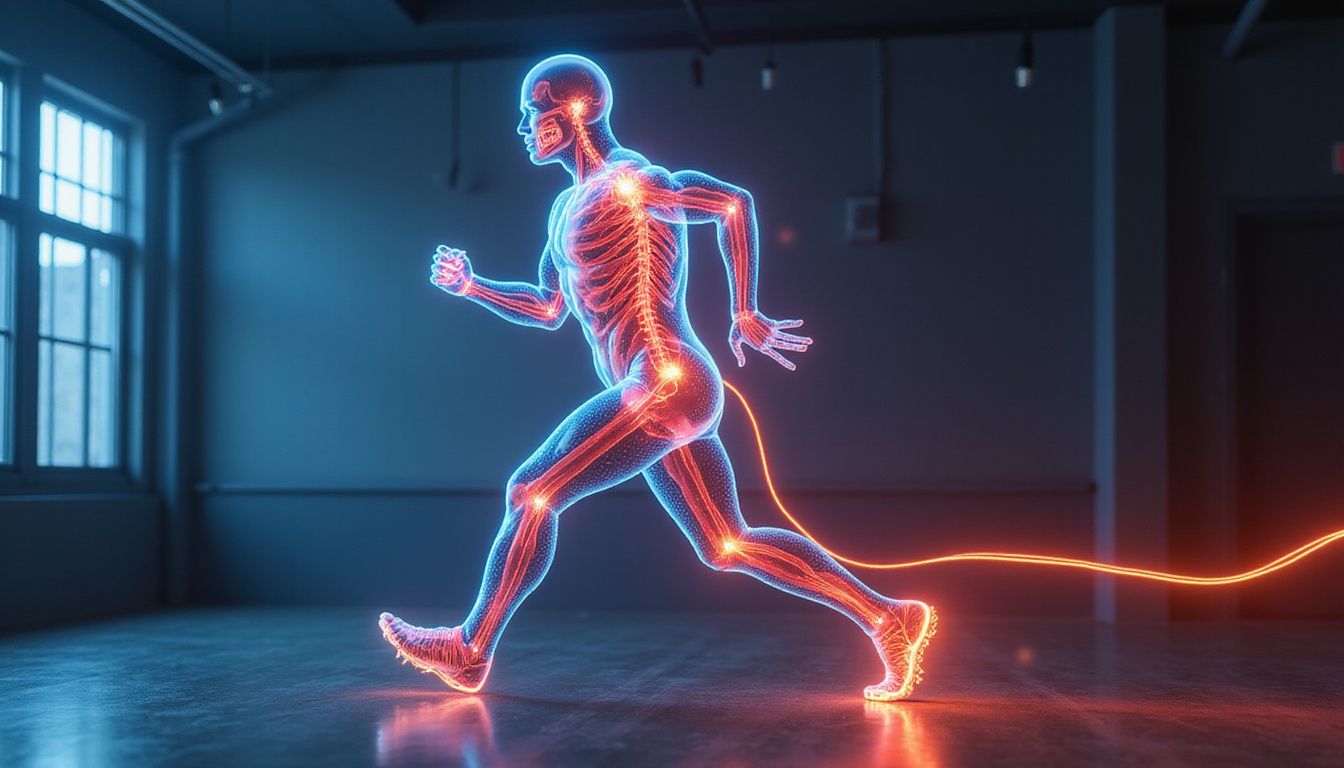
Imagine your body as links that connect one after the other.
Your feet, ankles, knees, hips, pelvis, spine, shoulders, elbows, and wrists all join together.
The kinetic chain lets force and movement move from one link to the next when you walk, sprint, jump, or swing a racket.
When each link works well, you experience:
• Smooth and efficient movement.
• Joints that do not complain after training.
• Natural, powerful motion.
When one part is stiff, weak, or out of sync, you may feel:
• A joint that pops, clicks, or grinds.
• Pain on one side, such as the same knee or hip every time.
• A pinching pain in the front of the hip or shoulder.
• Hamstrings or calves that stay tight.
Often, the painful spot is a victim.
A hurting knee may suffer because the foot or hip does not support the chain well.
Closed vs open kinetic chain – why it matters for your joints
You might hear these terms at the gym or from your physio:
• Closed kinetic chain (CKC)
Your hand or foot is fixed on something solid.
Examples include squats, lunges, step-ups, push-ups, and wall slides.
These moves share the load among many joints in patterns that match real sports.
• Open kinetic chain (OKC)
Your hand or foot is free in the air.
Examples include leg extensions, leg curls, seated knee extensions, and bicep curls.
These moves focus on one joint or muscle.
For Singaporeans with cranky knees, stiff shoulders, or chronic back pain, closed-chain exercises are safer if done right.
They share the load, improve balance and control, and mimic real-life movement patterns.
Yet, even these safe moves can trigger pain if your chain is misaligned.
Common kinetic chain breakdowns Singapore athletes face
If you are active in Singapore—running at East Coast Park, playing badminton at the community centre, lifting at the gym, or chasing your kids—you may see these patterns:
1. Flat feet and collapsing arches → knee & hip pain
When your foot rolls inward too much:
• The knee caves inward.
• Hip muscles work extra hard for stability.
• You feel pain around or behind the kneecap.
• Hips ache after walking or standing.
• The IT band feels tight on the outside of the thigh.
Over time, this stress wears the knee and hip.
This happens especially if you run, do HIIT, or play court sports.
2. Stiff hips → overloaded knees and lower back
After long hours in the office, you may go straight into intense sports.
Tight hip flexors and weak glutes mean:
• You cannot extend the hip fully during runs or stairs.
• The lower back and knees take extra impact.
• You feel a jammed or locked lower back, heavy or tired knees after short runs, and hamstrings that remain tight.
3. Rounded shoulders and stiff mid-back → shoulder & neck pain
Hours at a laptop or on your phone can cause:
• Shoulders to roll forward.
• The mid-back (thoracic spine) to stiffen.
• Poor control of the shoulder blades.
When you later play badminton, tennis, or do overhead presses, you may feel:
• A pinching pain on the front or top of the shoulder.
• A snap in the shoulder during overhead moves.
• Neck tightness and even headaches after training.
The shoulder may hurt, but the whole upper-body chain is affected.
Why “spot treating” pain often fails
If you have tried knee guards, patella straps, back braces, pain gels, medicated plasters, or even random YouTube stretches—and your pain returns—you have likely treated only the symptom.
Research shows that many joint issues (like runner’s knee) stem from weakness in the hip and trunk.
A hurt joint does not heal in the long run if the underlying kinetic chain faults remain.
How The Pain Relief Practice looks at your kinetic chain
At The Pain Relief Practice in Singapore, we treat joint and muscle pain by fixing the entire kinetic chain.
We are an established centre for physiotherapy and pain treatment since 2007.
We help everyone—from busy adults to national athletes—who need high performance and safe, fast returns to sport.
When you come in with knee pain, we look beyond the knee.
A typical check may include:
• Foot and ankle: We check arch stability, pronation, supination, and mobility.
• Hip: We test glute strength and hip flexor tightness, and range of motion.
• Pelvis and core: We check control, symmetry, and stability under load.
• Gait and movement: We watch how you squat, lunge, run, or land.
After, we create a tailored plan.
This plan may include manual therapy for stiff joints, movement re-education to fix faulty patterns, joint-friendly closed-chain exercises, and sport-specific kinetic chain drills to return you to peak performance.
You are treated as a savvy athlete—whether you train twice a week or compete at the highest level.
The focus remains: Fix the chain, not just the link.
Real Results
Key kinetic chain secrets to protect your joints and boost performance
1. Train from the ground up
Your feet are the foundation of your chain.
• Choose shoes that fit your arch and match your activity, not just fashion.
• Keep your ankles both mobile and strong—this is key if you have had sprains.
• Feel the “tripod foot” by sensing your big toe, little toe, and heel on the ground for stability when lifting or landing.
2. Make your hips the engine
Strong and mobile hips relieve stress on your knees and back.
• Activate your glutes with bridges, hip thrusts, and monster walks.
• Control hip rotation with clam shells and controlled lunges.
• Improve hip flexor mobility, especially if you sit for long hours.
When your hips drive your movements, you feel less tightening in the knees and less strain in the lower back.
3. Own your core… functionally
Your core is more than just planks.
It transfers force between your upper and lower body during everyday moves.
Train your core with moves that focus on:
• Anti-rotation, such as the Pallof press or suitcase carry.
• Anti-extension, with proper planks or dead-bugs.
• Dynamic stability, like single-leg balance with a reach or loaded carries.
A strong core keeps your joints steady when you cut, sprint, or change direction.
4. Get your shoulder blades doing their job
If you suffer from recurring shoulder or neck tightness:
• Work on shoulder blade control with Y/T/W exercises, wall slides, or serratus punches.
• Increase mid-back (thoracic) mobility.
• Avoid heavy overhead lifts if your form breaks down.
A strong upper kinetic chain lets you hit, throw, or press with less risk of pain or impingement.
Simple self-checks for kinetic chain issues
If you see these signs, your chain may need work:
-
Single-leg squat test:
• Does your knee collapse inward?
• Does one hip drop unevenly?
• Do you feel wobbly or unsafe on one leg? -
Overhead reach test:
• Do your ribs flare and your lower back arch too much?
• Do your shoulders feel pinched as you reach up? -
Walking or running video:
• Ask someone to film you from the front and side.
• Look for knee collapse, foot rolling, or too much trunk lean.
These tests do not diagnose problems but give clues that your chain may not move safely.
Celebrities & National Athletes
The Pain Relief Practice has helped celebrities and Singapore national athletes return from stubborn injuries by fixing their kinetic chain imbalances.
We use the same principles for everyday athletes.
Our approach scales to meet your fitness level and goals.
Why athletes and serious weekend warriors choose The Pain Relief Practice
If you read this, you likely:
• Are tired of rest and painkillers as your only answer.
• Want to understand and fix your body, not just mask the pain.
• Care about performance—whether running, lifting, or playing with your kids.
At The Pain Relief Practice, we see ourselves as a specialised pain treatment centre.
Our patients want to:
• Solve pain at its root.
• Regain healthy joints and muscle balance.
• Boost performance and enjoy life instead of just surviving the week.
We bring together a deep understanding of kinetic chain biomechanics, hands-on treatment to calm irritated joints and muscles, and realistic rehab that fits a busy Singapore lifestyle.
Since 2007, we have learned to spot which part of your chain is failing and what to fix first.
What a typical visit might look like
-
History and discussion:
• When do you feel pain?
• Which sports or training do you do?
• What methods have worked or not worked? -
Kinetic chain assessment:
• We check your posture and alignment.
• We test your movement (squat, lunge, reach, sport-specific drills).
• We check joint mobility and muscle control. -
Immediate pain relief strategies:
• We apply manual therapy, specific treatment modalities, or taping if needed.
• We offer movement corrections that you feel right away. -
Custom plan:
• We decide which exercises to focus on.
• We suggest temporary training modifications.
• We plan how you can load your chains back for full performance.
Embedded Google profile
You can read more about us and patient experiences on our Google profile:
https://share.google/UwMU2I9zUCwXVh0Lg
FAQ – kinetic chain questions Singapore athletes ask
1. How does the kinetic chain affect knee pain?
Knee pain often hides a problem in the middle of your chain.
The knee sits between your foot/ankle and your hip.
If your foot collapses inward or your hip muscles stay weak, your knee twists or tracks poorly.
By checking and correcting the entire chain, we can relieve knee pain more effectively than by treating the knee alone.
2. Can kinetic chain exercises really help my chronic backache?
Yes.
Chronic lower back pain often means your hips, core, or even ankles are not sharing the load correctly.
Improving the alignment and strength of your hips and core takes pressure off your spine.
This makes your back feel less fragile and more resilient during daily activities and sport.
3. Is kinetic chain therapy only for elite athletes?
Not at all.
While elite and national athletes use kinetic chain treatments, the same ideas help weekend warriors, office workers, or active seniors.
If you walk, climb stairs, carry groceries, or play sports casually, your kinetic chain works.
And if it does not work well, you feel it in your joints.
We adjust our methods to match your fitness level and goals.
If your joints keep talking to you and you think there is more than age or overuse behind the pain, working on your kinetic chain can be a turning point.
A proper assessment and a smart plan can help you move better, hurt less, and enjoy your favorite sports and activities again.
We are a specialized physio treatment center for savvy people who want real results.
While we are not suitable for someone looking for ‘cheap physiotherapy’ or ‘free exercises available on youtube’, our treatments are affordable and are often claimable with company flexi-benefits, company health insurance, travel insurance, personal accident insurance, and other insurance plans.
Simply whatsapp or call: +65 97821601 and let us know how to help.
If you prefer a convenient nutritional preventive option, Regenerix Gold is our top recommended joint supplement.
We have been recommending this joint supplement for over a decade.
Simply start with 3 capsules, once a day.
If you do not feel better within a week, increase to 2 capsules, twice a day. (4 capsules a day in total)
Our blog readers qualify for a special discount.
Simply use the link below and a discount will automatically be applied during checkout.

 PROVIDING FAST, EASY & INSURANCE CLAIMABLE PAIN RECOVERY SINCE 2007